
This reference uses the specific documents linked in the article and listed below. Check their scope, publication dates and the statements they support.
Animal at a glance
| Topic | Overview |
|---|---|
| Animal group | Domestic bovines derived from banteng |
| Production roles | Meat, breeding stock and regional livestock roles |
| Life stages | Calf, replacement, breeding adult and growing food animal |
A distinct animal within a familiar farm role
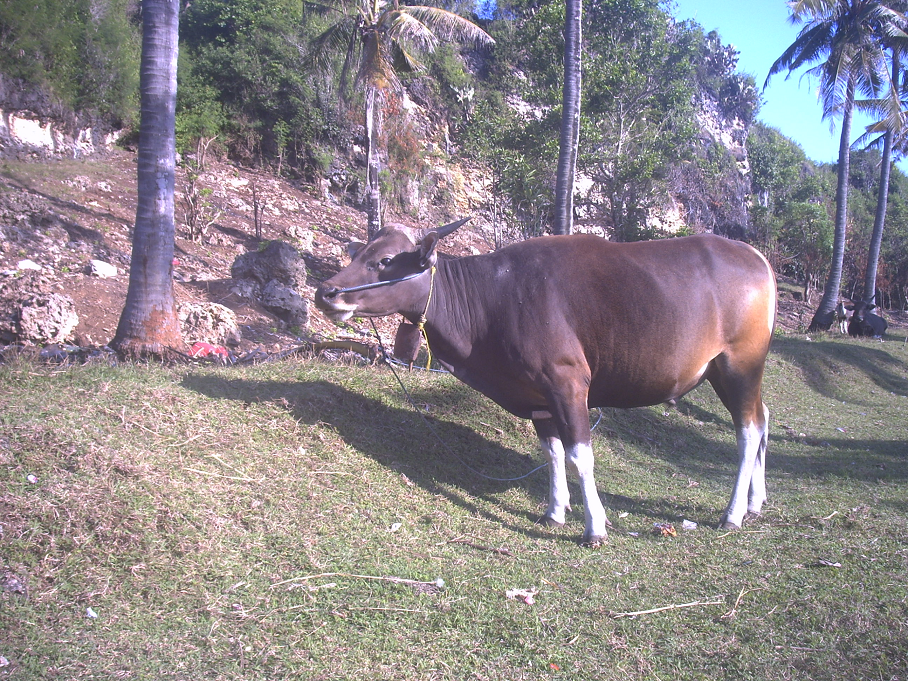
Bali cattle descend from domesticated banteng and should not be treated as a color variety of European cattle. Their size, production history and local adaptation need to be considered when choosing breeding stock, facilities and performance expectations. ACIAR's work on eastern Indonesian production brings together research on practical constraints, particularly seasonal nutrition.
Hardiness is useful, but it is not a substitute for adequate care. An animal can survive a poor season while losing the condition needed for pregnancy, milk production and calf growth. Judge the system by the welfare and development of cows and calves, not survival alone.
Bridge the dry-season feed gap
Plan the forage supply before the preferred grasses become scarce. Crop residues, cut forage and locally suitable tree legumes may contribute, but ingredients vary greatly in quality and safe use. An adviser familiar with the region can help choose a balanced combination rather than relying on the bulk of fresh material carried to the pen.
Keep cut feed off contaminated ground. A bundle placed under tethered cattle may be trampled and mixed with manure before it is eaten. Provide accessible feeding space and clean water, and remove spoiled leftovers. Where animals are tethered, move or maintain the area so the animal can rest comfortably and cannot become entangled while reaching feed.
Changes should be gradual, especially when adding concentrate to a forage-based system. Increased feed cost is not automatically better nutrition: first establish whether low intake, poor digestibility, competition or a deficiency is the actual problem. Feed analysis and body-condition assessment are more useful than a universal recipe.
Protect the breeding cow through calving
ACIAR reports show why strategic feeding around critical stages matters to both the cow and her calf. A thin cow entering late pregnancy has little reserve for the next demands. Review condition early enough to make an effective change, rather than waiting until milk supply or rebreeding performance declines.
Choose bulls and mating arrangements that fit herd size and available handling. Avoid mating animals too closely related, and obtain advice when females fail to conceive or repeatedly lose calves. A reproductive problem can involve nutrition, disease, the bull or management; it should not be reduced to the assumption that every thin cow needs a fertility medicine.
Give calves a good start
Prepare a clean, sheltered place for birth and watch that calves stand and nurse. Prompt colostrum and help for a weak calf are part of basic care. Small calves should not have to compete with adults at a single trough, and their growing ration must replace nutrients as milk intake declines.
Weaning should be planned around health, feed readiness and environmental stress. Combining weaning, transport, a complete diet change and mixing unfamiliar animals on the same day adds several challenges at once. Where possible, make the transitions in stages and make sure the destination already has appropriate feed and water.
Housing, movement and herd health
Use shade and ventilation appropriate to the climate, with a resting surface that does not stay waterlogged. Inspect feet and gait, especially where animals stand on hard, rough or muddy surfaces. Strong posts, safe gates and calm movement reduce the need to pull or force a frightened animal.
Develop the vaccination, parasite and movement plan with the local veterinarian or animal-health authority. Imported cattle advice can miss regionally important infections or legal controls. Marked fever, mouth lesions, persistent diarrhea, sudden lameness, difficult birth or an animal unable to rise require timely assessment. Do not purchase an apparently cheap sick animal on the assumption that it can be treated after joining the herd.
Do Bali cattle need less care because they are locally adapted?
No. Adaptation can support a well-designed system, but poor forage, inadequate water, unsafe tethering and untreated illness still compromise welfare and production.
Is a larger adult always a better breeder?
Not necessarily. Selection should consider soundness, fertility, calf performance and suitability to the available feed, rather than size alone.
Continue reading
Cite this reference
LivestockDefense. “Bali cattle: dry-season feeding, breeding cows and calf care.” Updated 2026-11-02. https://livestockdefense.com/animals/bali-cattle/
Add the date you accessed the page. This identifies the current reference; keep a permitted saved copy if your work depends on its exact wording. A citation alone does not establish support for a claim.
How to cite a page and its revision ↗Sources & boundaries
Read the evidence in context.
These documents support the statements identified in this reference. Check their scope and dates when deciding whether they answer your question.
- FAO: The state of livestock diversity
Source update: 2015. Most recent check: 2026-11-02.
Bounded production identity and species context cited in the global livestock hubs. Practical examples are editorial suggestions. Historical sources do not establish current local market permissions or clinical protocols.
- Australian Centre for International Agricultural Research: Strategies to improve Bali cattle in eastern Indonesia
Source update: Not provided. Most recent check: 2026-11-02.
Bali cattle dry-season nutrition, cow condition, calf growth and locally adapted production systems.