
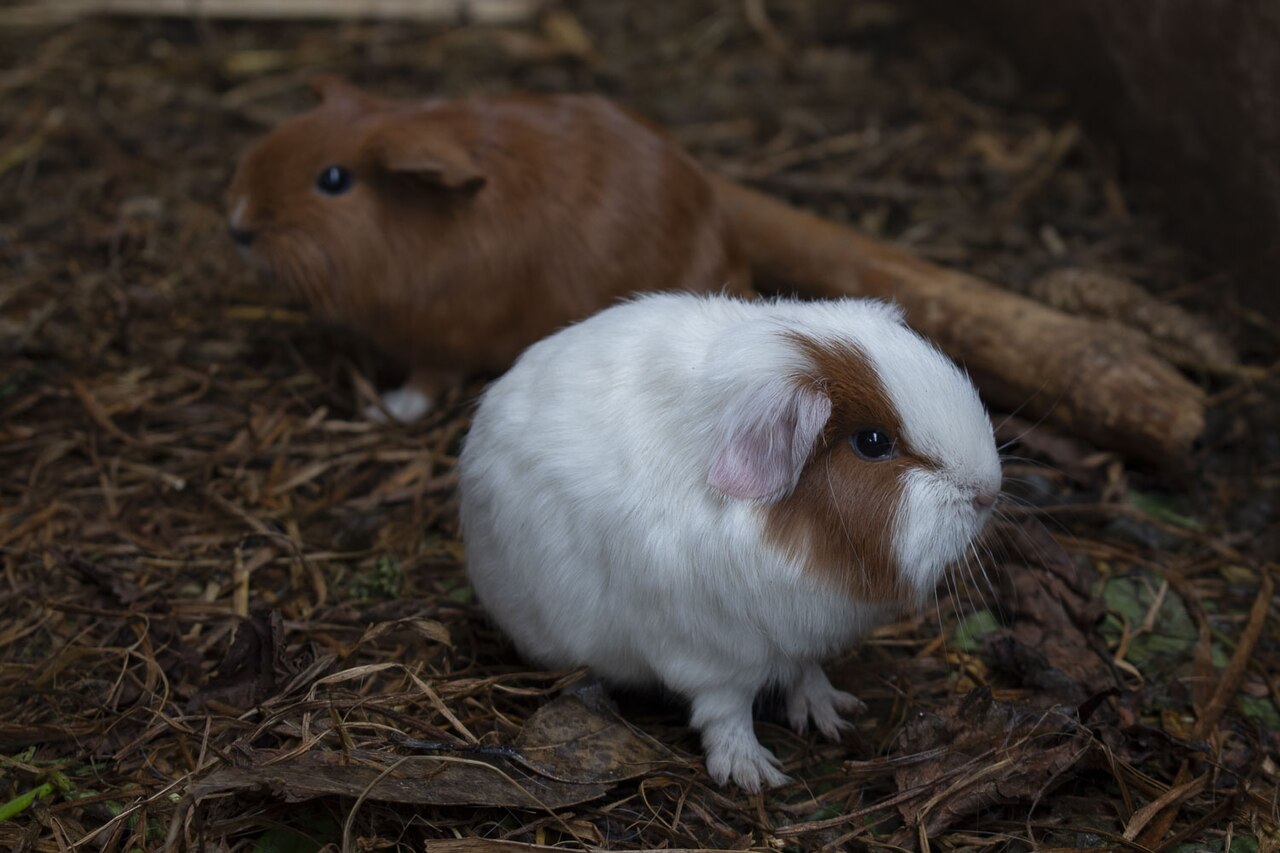
This reference uses the specific documents linked in the article and listed below. Check their scope, publication dates and the statements they support.
Animal at a glance
| Topic | Overview |
|---|---|
| Animal group | Herbivorous rodents; also known as cavies or cuy |
| Production roles | Regional food-animal and breeding production |
| Life stages | Breeding adult, newborn young and growing cavy |
Feed a guinea pig, not a miniature rabbit
Guinea pigs are hindgut fermenters: plant fibre supports digestion and the long chewing time their continuously growing teeth require. Good-quality grass hay or appropriate forage should be the foundation of an adult diet. Fresh water, a guinea-pig feed appropriate to the life stage and suitable fresh vegetables complete the feeding plan. Rabbit pellets are not an interchangeable substitute because guinea pigs need dietary vitamin C. Merck explains these nutritional differences.
Buying fortified feed is only the first step. Protect it from heat, damp and prolonged storage, and follow its use-by and storage instructions. Make gradual dietary changes so the animals do not abruptly lose familiar food. Young, pregnant and lactating animals have different requirements from mature animals being maintained at a stable weight. The NC State veterinary feeding guide is useful for the biology; a food-animal nutrition adviser should adapt the ration to the actual production animals and local ingredients.
Housing that keeps feet, lungs and feed in good condition
Use a solid, comfortable floor with absorbent, low-dust bedding and ventilation that removes moisture without leaving animals exposed to harsh drafts. A floor that looks clean from the aisle may still be wet beneath a water point. Lift bedding in that area during cleaning rather than continually covering wet material with a fresh layer.
Provide enough accessible hiding places that a subordinate animal does not have to choose between shelter and being chased. Arrange food and water so one dominant animal cannot control every access point. Cover the enclosure against predators and avoid hot, poorly ventilated boxes. A guinea pig hiding quietly all day is not necessarily content: watch how the group behaves when fresh feed arrives.
Breeding and caring for growing animals
Plan breeding around maternal condition and the ability to feed and house the next generation. Uncontrolled mixed-sex housing creates pregnancies before a keeper has prepared space for females, young and surplus males. Obtain competent advice on identifying sex and forming groups; visual size alone is unreliable.
Growing guinea pigs need access to appropriate feed and water that they can physically reach. Check for individual small animals being pushed away, rather than assuming a full trough means all are eating. Protect mothers and young from repeated disturbance, crowding and poorly planned introductions. If a female strains without producing young, becomes weak or stops eating, seek veterinary assistance rather than attempting a home delivery procedure.
Spot a health problem while it is still an appetite change
A guinea pig that stops eating, produces fewer droppings, loses condition, drools or struggles to chew needs prompt assessment. Dental disease, poor diet and other illnesses can look alike from outside. Breathing difficulty, substantial diarrhea, severe weakness or injury require urgent veterinary attention. Do not give leftover medicines intended for another species; some drugs tolerated by other livestock can seriously harm guinea pigs.
A useful daily check is practical: approach quietly, offer the normal feed and watch every animal move and eat. A hidden animal, an unchanged hay pile or a persistently wet chin is more informative than a general impression that the pen is quiet. Keep the sick animal comfortable and prevent competition while arranging help; do not force food or fluid into an animal that cannot swallow normally.
Questions about food-animal guinea pigs
Does vitamin C replace hay?
No. Vitamin C and fibre meet different needs. A supplement cannot compensate for poor-quality forage, an unbalanced ration or inadequate access to water.
Can production animals use the same care principles as pets?
Their basic biology is the same. Commercial group size, breeding workload, food-chain medicine restrictions and locally available forage require additional planning; a pet-care portion size should not be scaled blindly across a breeding herd.
Continue reading
Field guides for this animal
Browse all Guinea pigs field guides for husbandry advice, health explanations and practical farm routines.
Cite this reference
LivestockDefense. “Guinea pigs / cuy: feeding, housing, breeding and health.” Updated 2026-11-02. https://livestockdefense.com/animals/guinea-pigs/
Add the date you accessed the page. This identifies the current reference; keep a permitted saved copy if your work depends on its exact wording. A citation alone does not establish support for a claim.
How to cite a page and its revision ↗Sources & boundaries
Read the evidence in context.
These documents support the statements identified in this reference. Check their scope and dates when deciding whether they answer your question.
- Merck Veterinary Manual: Housing and nutrition of guinea pigs
Source update: 2026-05. Most recent check: 2026-11-02.
Bounded production identity and species context cited in the global livestock hubs. Practical examples are editorial suggestions. Historical sources do not establish current local market permissions or clinical protocols.
- North Carolina State University Veterinary Hospital: Caring for your pet guinea pig
Source update: Not provided. Most recent check: 2026-11-02.
Hay-based feeding, life-stage distinction and dietary vitamin C; pet-care context, not a commercial production ration.