
This reference uses the specific documents linked in the article and listed below. Check their scope, publication dates and the statements they support.
Start with forage and the class of animal
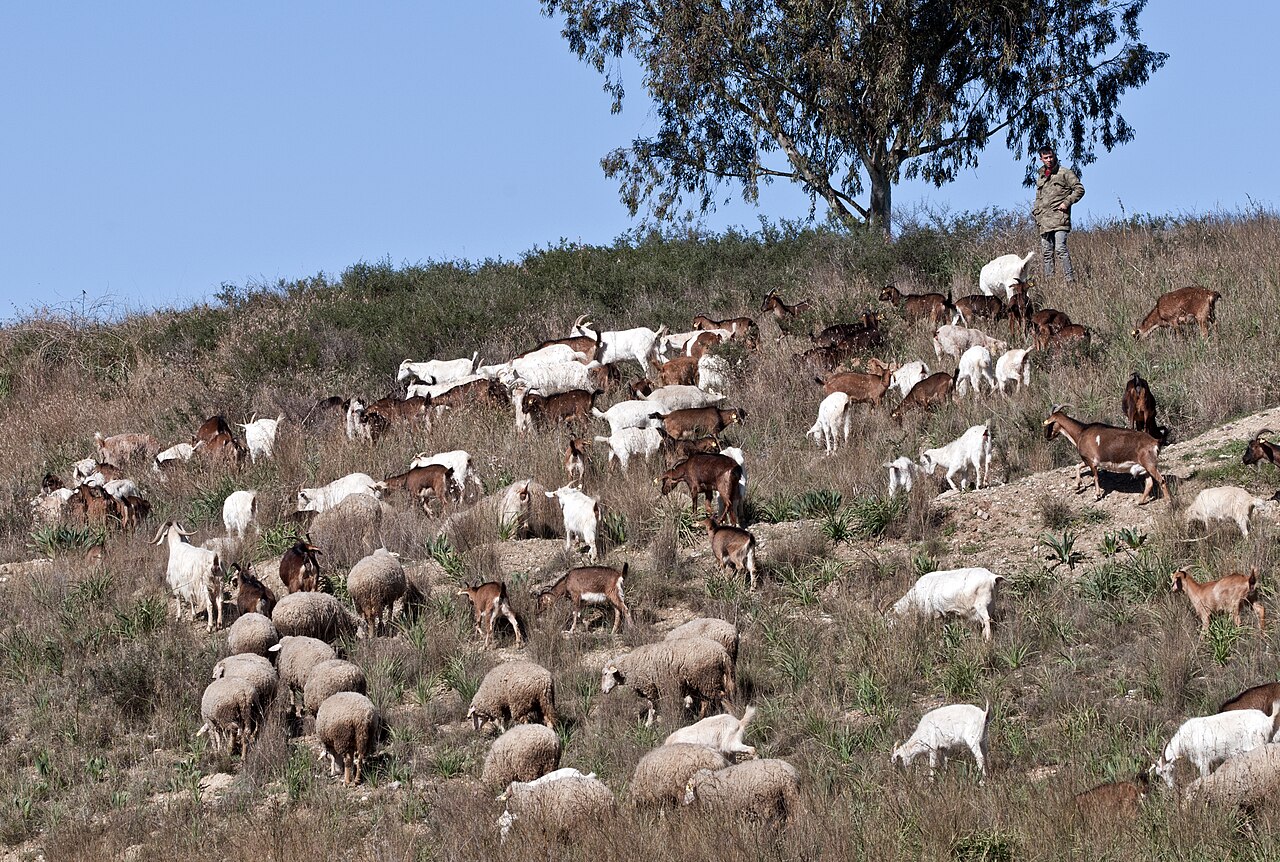
A dry adult, growing youngster and female supporting late pregnancy or milk production do not make the same demand on a feed supply. Separate those questions before comparing bags of supplement. A mixed group can look well provided while the youngest or lowest-ranking animals repeatedly miss the best feed.
Assess the available pasture, browse and conserved forage through the difficult season. Bulk is not the same as nutritional adequacy: mature stems may fill a feeder without supporting the production expected. Use forage analysis and qualified ration advice when quality is uncertain or high-demand animals are falling behind. Nutritional requirements of sheep and Nutrition of goats provide species-specific nutrition contexts.
The purpose is not to buy the richest possible feed. It is to provide the right balance for the animals using it. A maintenance group can gain excessive condition on a ration intended for demanding production, while lactating females may fail to maintain themselves on the maintenance supply.
Shared grazing does not mean shared minerals
Sheep are particularly susceptible to excessive copper, so a mineral intended for cattle or goats should not automatically be available to them. Products also differ in other ingredients and intended use. Read the species designation and ask an adviser to assess the whole ration rather than deciding from the colour or size of the container.
Providing two tubs side by side does not reliably assign each species its own supplement. If sheep can reach the goat product, the products are effectively shared. Use a physical arrangement that actually controls access, or obtain a feeding plan designed for the mixed system. Recheck it when young animals grow or groups change.
Avoid combining a fortified complete feed, mineral mix, lick and additional supplement without understanding the overlap. More ingredients do not necessarily create better balance. Trace-mineral needs depend on the existing feed and local conditions; blanket supplementation can create a different problem from the deficiency it was intended to prevent.
If feed contamination or supplement poisoning is suspected, contact a veterinarian promptly and prevent further access. Keep the actual feed available for professional identification. Do not attempt a home antidote based on the assumption that the product is merely a nutritional extra.
Make feeding access real
Observe the group during feeding, not only after everyone has dispersed. Look for animals waiting at the edge, being butted away or unable to place their heads safely at the feeder. A ration can be adequate on paper while the group arrangement prevents some animals consuming it.
Goats establish social hierarchies, and subordinate animals need room to avoid aggression. General management of goats explains why usable escape space matters. Place feeders and water points so an animal can approach and retreat without being trapped in a corner. Separate vulnerable animals for feeding when that is the practical way to meet their needs.
Prevent feed from becoming contaminated by feet, manure and wet bedding. Choose rack and barrier designs that do not trap heads or horns. The best arrangement is one that animals use safely and that the keeper can clean and refill reliably.
Change diets progressively
Moving onto very different pasture, changing hay or increasing concentrate alters the feeding situation. Plan the transition rather than waiting until the old supply is exhausted. Ask for specific advice when moving animals with previous digestive problems or when high levels of supplementary feed are proposed.
Keep drinking water available whenever animals need it, including during freezing weather. Inspect actual access and cleanliness. Water shortage can undermine a feeding plan even when the forage and concentrate are suitable.
Do not change several feeds at once merely because condition is poor. First examine the animals, resource access and the existing ration. Dental problems, parasites and other illnesses can interfere with intake or nutrient use; a feed change may be part of care without being the whole explanation.
Assess the animal beneath the fleece or coat
Learn appropriate body-condition assessment for each species. Visual appearance alone can be misleading. A sheep’s fleece may conceal weight loss, while gut fill and breed shape can complicate comparisons between individuals.
Interpret condition alongside age, pregnancy, lactation, teeth, appetite and movement. A declining individual needs attention even if the group average is stable. Conversely, a thin subgroup may expose a wider competition or ration problem. Practical assessment should lead to a feeding or health decision rather than simply another supplement purchase.
Know when to obtain help
Urgent signs include marked abdominal swelling with distress, collapse, inability to rise, severe breathing difficulty or neurological changes. Straining without effective urination, persistent refusal to eat and serious weakness also require prompt veterinary advice. Do not assume that every problem beginning after a feed change is a simple dietary upset.
The sheep overview and goat overview connect feeding with breeding, housing, feet and young-stock care.
Can a “small-ruminant” label settle suitability?
It is a starting point, not the complete decision. Confirm intended species, use, ingredients and how the product fits the existing diet.
Is it enough to provide one mineral for both species?
Only when a qualified feeding plan establishes that the arrangement meets both groups’ needs safely. Convenience alone is not the evidence.
Cite this reference
LivestockDefense. “Feed sheep and goats well without sharing unsuitable minerals.” Updated 2026-11-02. https://livestockdefense.com/guides/feeding-small-ruminants-without-sharing-minerals/
Add the date you accessed the page. This identifies the current reference; keep a permitted saved copy if your work depends on its exact wording. A citation alone does not establish support for a claim.
How to cite a page and its revision ↗Sources & boundaries
Read the evidence in context.
These documents support the statements identified in this reference. Check their scope and dates when deciding whether they answer your question.
- Merck Veterinary Manual: Nutrition of goats
Source update: Not provided. Most recent check: 2026-11-02.
Bounded species biology, feeding context and production or husbandry statements attributed to this document in the animal overview sections. No numerical feeding, medication, restraint or breeding protocol reproduced.
- Merck Veterinary Manual: Nutritional requirements of sheep
Source update: Not provided. Most recent check: 2026-11-02.
Bounded species biology, feeding context and production or husbandry statements attributed to this document in the animal overview sections. No numerical feeding, medication, restraint or breeding protocol reproduced.
- Merck Veterinary Manual: General management of goats
Source update: Not provided. Most recent check: 2026-11-02.
Social hierarchy, avoidance space, preventive husbandry and signs needing assessment.