
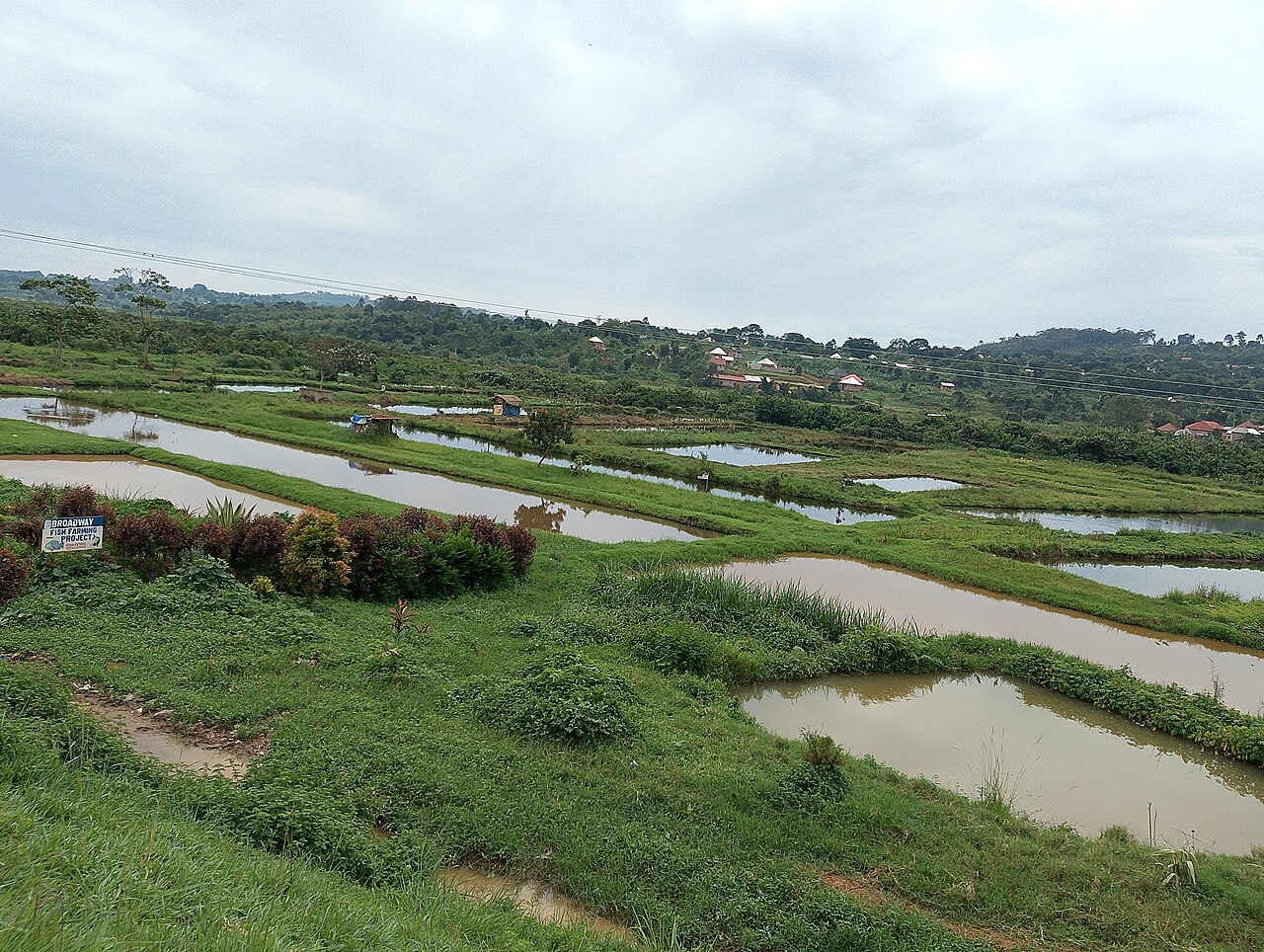
State the contrast you need to understand
Describe what was observed in the focal pond and what was actually assessed elsewhere. Not reported is not the same as examined and found unaffected. The apparent contrast may depend on different observation coverage, and that difference belongs beside the question.
Use stable pond and cohort identifiers. A pond name may persist while its stock changes, or one cohort may be divided among several units. Preserve the actual stocking and movement links so a result does not follow a location label onto unrelated fish.
Organize existing evidence by pond
Keep mortality records, water measurements, equipment events and relevant introductions under their actual units and dates. Do not copy a convenient central reading into every pond’s row. Unknown local conditions should remain unknown.
Record the intended water connections and verified operation separately. A shared source does not establish identical conditions in every pond during the concern. Likewise, separate-looking ponds may have relevant equipment contacts that a water-only map misses.
| Assessment question | Existing information to provide |
|---|---|
| What differs? | Actual observations and coverage |
| Which fish? | Cohort identity and movements |
| Which environment? | Pond-specific readings and timing |
| Which contacts? | Verified water and equipment history |
| What does the result represent? | Professional submission and report identity |
Let the qualified team define the submission
Send the question and available records to the aquatic-health professional. The clinician and laboratory determine whether and how a diagnostic submission is appropriate. Their current instructions govern identity, handling and interpretation.
This article supplies no animal selection algorithm, collection count, tissue procedure, preservation recipe or pathogen-testing sequence. Do not improvise collection or combine material to make a form simpler. If the requested instructions or represented population are unclear, resolve that with the responsible team.
Work through a farm-wide label
In this fictional farm, pond B has documented losses, while ponds A and C have only brief routine observations. A proposed submission form uses farm fish as the represented population, and the water attachment contains an average across all three ponds.
The revised handoff preserves B’s actual records and the limited coverage elsewhere. The laboratory and clinician can now define the relevant question without inheriting an unsupported farm-wide representation. The correction does not establish that A and C are unaffected or that B has a unique cause.
Read the report at its represented scope
Retain accession, pond and cohort links, actual material identity and report qualifications. A result from the focal submission should not automatically be assigned to every neighboring unit. Keep the professional interpretation separate from the farm’s earlier theory.
If an identifier is corrected, update dependent tables and diagrams. An amended report is not automatically another pond event, and an uncertain match should not be repaired by guessing from the date alone.
Preserve the contrast on follow-up
Record movements, operational responses and changes in observation coverage. If all ponds are assessed more closely after the first concern, the later counts may not be directly comparable with the earlier routine notes.
Use aquaculture references, gill-concern evidence planning and water-reading interpretation. The useful preparation is a clear represented population and professional question, not a generic owner-run sampling recipe.
Make the contrast understandable before discussing a result
Start with what was actually observed in the focal pond. Then describe the observation coverage elsewhere. This prevents “only one pond reported” from quietly becoming “all other ponds examined and unaffected.” The difference can matter even before any diagnosis is available.
Keep the existing environmental information in its actual scope. A central reading, a pond-specific measurement and a farm average answer different questions. Give the professional team the original positions and times rather than replacing them with one reassuring summary. Missing local information should remain explicit.
The submission question can then be stated in ordinary language: what explains the documented concern in the identified cohort and pond? The aquatic-health professional and laboratory decide the appropriate assessment. A clear question improves the handoff without requiring the owner to invent a selection or collection procedure.
Questions about a single-pond concern
Does a shared water source make every pond equivalent?
It documents one relationship. Actual conditions and operating histories may still need their own records. Preserve the verified connection without treating it as a complete measurement of each pond.
Can an unassessed neighboring pond be marked negative?
No. Keep it unassessed or describe the limited observations actually available. Not reported, not observed under a defined review and professionally interpreted negative findings are different evidence states.
Does one report describe the whole farm?
Use the population and material represented in the issued report. A broader conclusion needs an appropriate professional basis. Do not expand its scope merely because the form used a generic farm label.
How should later wider assessment affect the trend?
Record the increased observation coverage and any group changes. More detected concerns after a more detailed review do not automatically establish new events during that same interval. Keep recognition and occurrence distinguishable in the follow-up summary.
Cite this reference
LivestockDefense. “Define the pond-specific question before a professional diagnostic submission.” Updated 2026-11-03. https://livestockdefense.com/guides/sampling-strategy-when-only-one-aquaculture-pond-shows-disease/
Add the date you accessed the page. This identifies the current reference; keep a permitted saved copy if your work depends on its exact wording. A citation alone does not establish support for a claim.
How to cite a page and its revision ↗