
This reference uses the specific documents linked in the article and listed below. Check their scope, publication dates and the statements they support.
One genus includes different disease patterns
T. parva is associated with East Coast fever and T. annulata with tropical theileriosis. These can produce serious acute illness. The T. orientalis group includes types with different clinical importance, some associated with significant anemia in susceptible cattle. Merck’s theileriosis chapter explains why the genus alone is not a sufficient clinical description.
The NSW diagnostic-service account specifically distinguishes pathogenic T. orientalis types from less pathogenic findings in its Australian setting. Its local context should remain attached to the interpretation rather than become a statement that the same types or disease status apply everywhere.
Cell targets help explain the differences
Theileria biology involves blood-cell stages, but the contribution of different cell populations varies among species. In the highly pathogenic T. parva and T. annulata, important multiplication and disease effects involve white blood cells. Less pathogenic species multiply predominantly in red cells, with anemia becoming a major clinical concern for pathogenic T. orientalis infection.
This is not a reason for owners to identify a species from one visible sign. It explains why fever with enlarged lymph nodes and a severely ill animal may lead to a different investigation from an anemia-centered presentation. The veterinarian needs the exact suspected parasite and local likelihood, not a universal tick-fever checklist.
Signs worth taking seriously
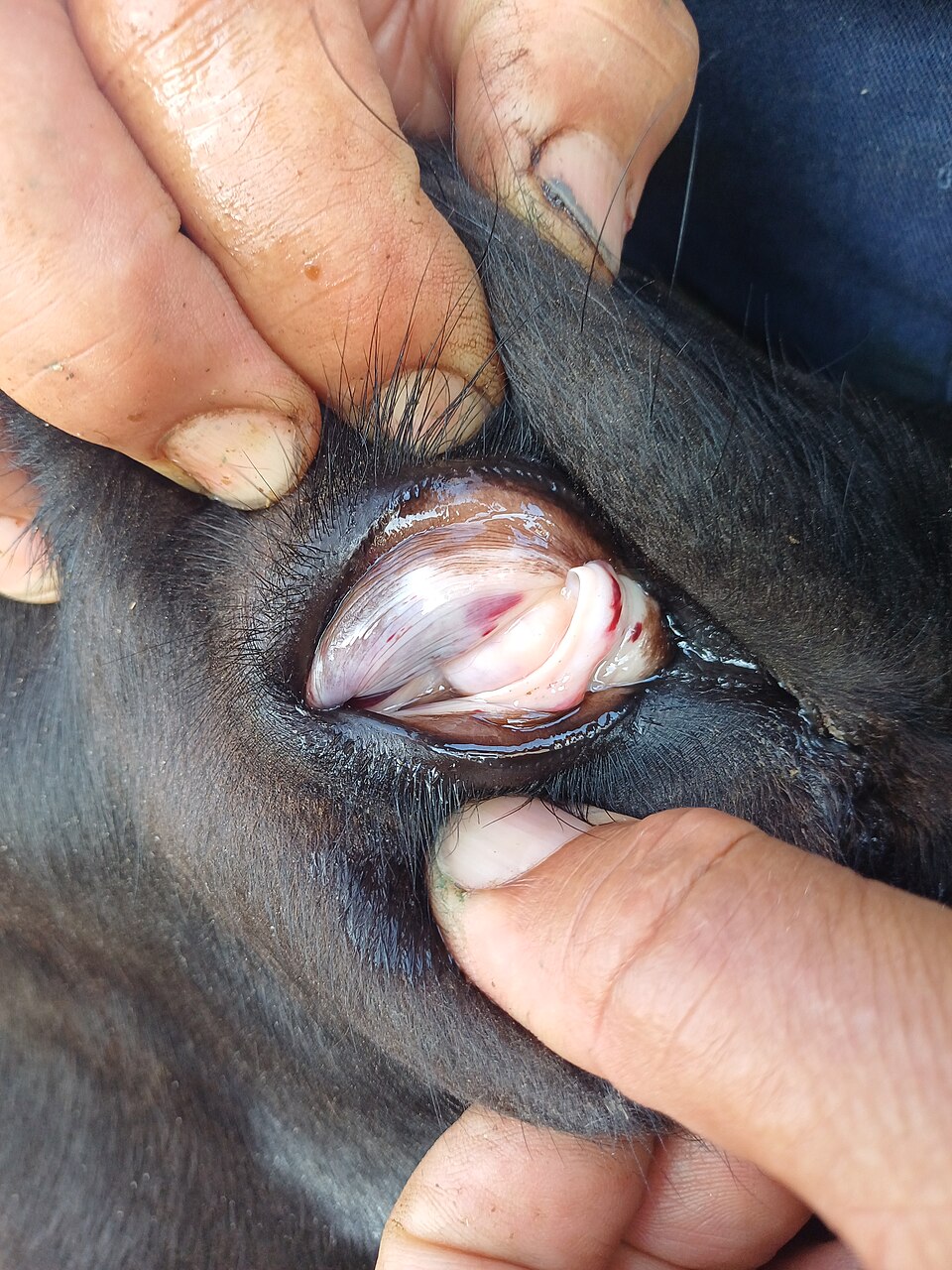
Fever, reduced appetite, weakness, reduced milk and loss of condition can occur. Enlarged superficial lymph nodes can be important in some forms. Anemia-associated disease may produce pale mucous membranes, exercise intolerance and increased breathing or pulse; reproductive losses may accompany significant illness.
Marked breathing effort, collapse, inability to rise or rapidly progressive weakness requires urgent assessment. Keep handling calm and avoid unnecessary exertion. A severely anemic animal should not be forced to walk repeatedly to demonstrate whether it can keep up.
The clinical picture overlaps with anaplasmosis, babesiosis and other infectious or noninfectious problems. Finding a tick or observing pallor does not establish which parasite is involved. The tick-fever overview helps separate the terms.
Infection and disease need separate interpretation
Some Theileria findings can represent infection without the same degree of clinical disease expected from a highly pathogenic type. Conversely, a sick animal may have an important infection even when a simple visual assessment suggests only a modest abnormality. The identity, burden, host susceptibility and full examination matter.
The NSW resource uses subtype-aware interpretation for T. orientalis and describes the value of laboratory methods that can clarify the finding. A report of the genus should not be rewritten as definite East Coast fever, and an older label of benign theileriosis should not be used to dismiss every anemia-associated T. orientalis case.
How diagnosis becomes specific
The clinician first assesses severity and possible alternatives. Blood examination and laboratory methods can help identify the organism or type, while some forms call for additional clinically selected investigations. Sampling and interpretation should be arranged through the veterinarian and diagnostic service rather than attempted from procedural internet instructions.
Ask what the result actually identifies: genus, species or a particular subtype, and whether it supports active disease or an infection/exposure finding. The answer influences both individual care and the wider herd response.
A negative or positive test is also interpreted with timing and the clinical syndrome. The available methods and their use differ among Theileria diseases. A test appropriate to one type is not automatically the best investigation for every animal called theileriosis-positive.
Care must fit the species and location
Veterinary treatment options differ by parasite species, severity and jurisdiction. A treatment used for a highly pathogenic Theileria species in one region should not be assumed available, approved or effective for another form elsewhere. Food-animal requirements are part of that decision.
Supportive care may be needed for anemia, reduced intake or severe systemic disease. The prognosis depends on the animal's condition and the extent of complications. Prompt assessment is more useful than waiting for a familiar textbook sign to appear before seeking help.
The veterinarian should distinguish the goals of clinical recovery, assessment of remaining infection and prevention of additional cases. A cow looking better does not settle every epidemiological or introduction question.
Prevention depends on the actual tick-parasite system
Work with local advisers on relevant vector control, incoming animals and exposure of susceptible cattle. Tick species, parasite types and regional control options differ. A generic acaricide schedule or borrowed vaccination claim cannot stand in for that assessment.
Maintain the wider cattle husbandry foundations, including suitable feed, water and low-stress handling. These support welfare while specific risk is managed, but do not establish freedom from a tick-borne infection.
Does every Theileria-positive animal have East Coast fever?
No. East Coast fever is associated with T. parva. Other Theileria species or types have different biology and clinical significance, so the actual laboratory identification matters.
Can apparently mild infection be ignored in an anemic cow?
No. Some T. orientalis types can be clinically important. Assess the individual and interpret the parasite finding with the veterinarian rather than rely on a broad historical label.
Cite this reference
LivestockDefense. “Theileriosis in cattle: species differences, anemia and severe disease.” Updated 2026-11-02. https://livestockdefense.com/threats/bovine-theileriosis/
Add the date you accessed the page. This identifies the current reference; keep a permitted saved copy if your work depends on its exact wording. A citation alone does not establish support for a claim.
How to cite a page and its revision ↗Sources & boundaries
Read the evidence in context.
These documents support the statements identified in this reference. Check their scope and dates when deciding whether they answer your question.
- Merck Veterinary Manual: Theileriosis in animals
Source update: 2026-07. Most recent check: 2026-11-02.
Cattle Theileria species differences, cellular effects, clinical patterns, diagnosis and local control limitations. No invasive sampling, drug doses or vaccine procedures reproduced.
- NSW Department of Primary Industries and Regional Development: Theileriosis (cattle)
Source update: Not provided. Most recent check: 2026-11-02.
T. orientalis subtype and anemia distinctions, symptoms and species-aware diagnosis. The Australian context is retained; laboratory prices, specimen procedures and local legal status are not generalized.