
This reference uses the specific documents linked in the article and listed below. Check their scope, publication dates and the statements they support.
BVD affects more than the digestive tract
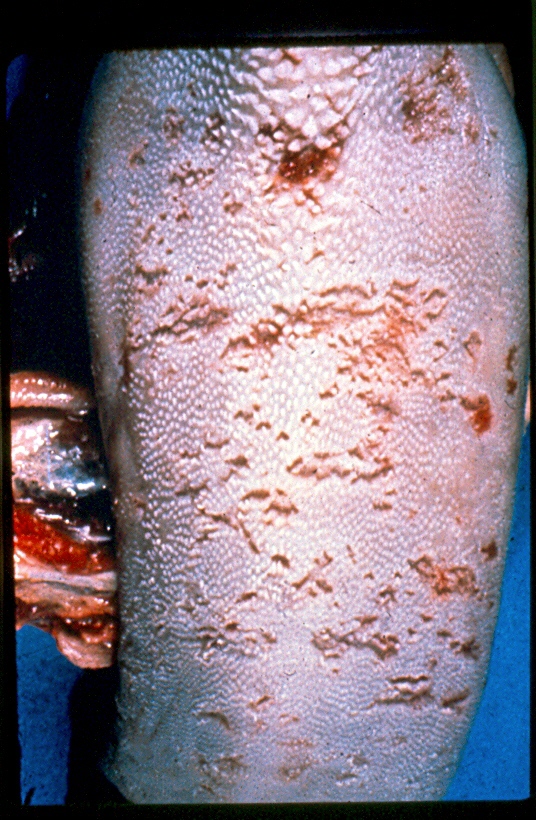
The Merck Veterinary Manual describes a variable infection that can involve immune suppression, reproductive loss and several organ systems. Some cattle show little outward illness; others develop fever, diarrhea or severe systemic disease. The name alone can mislead a reader into looking only for diarrhea.
This breadth makes a precise history useful. Identify whether the question concerns a sick animal, a pattern of reproductive losses, an arrival group or herd screening. Those purposes can require different evidence even when BVDV is being considered in each case.
Temporary infection and persistent infection
A transient infection occurs after exposure in an animal capable of responding to the virus. Persistent infection can be established during fetal development. A persistently infected animal, often called a PI animal, can remain an important source of virus. Mucosal disease is a distinct, usually fatal presentation associated with PI cattle; it is not a synonym for every BVD infection.
South Dakota State University explains why identifying PI animals is central to control. A herd program needs to account for the animals actually present and those introduced later. Testing an incomplete list can leave a gap that is invisible in a summary labeled “herd tested.”
What a positive or negative result means
| Record item | Why it matters |
|---|---|
| Animal ID and age | Connects the finding to the right animal and testing options |
| Test and sample type | Identifies whether the assay looks for viral material, antigen or antibodies |
| Collection and result dates | Separates the biological observation from the report date |
| Vaccination history | Helps interpretation of relevant findings |
| Individual or pooled result | Defines which animals can be identified from the result |
| Confirmation or follow-up plan | Shows which question remains open |
A positive antibody result and detection of viral material answer different questions. Merck cautions that a single antibody result often cannot establish acute infection because exposure and vaccination affect interpretation. Use the original report rather than reducing several result types to a single “BVD positive” column.
Why laboratory protocols differ
The Cornell diagnostic guidance lists age- and sample-dependent options and limits on pooled testing. Cornell specifies that its pooled approach is intended for apparently healthy animals being screened for PI detection. A pool finding needs individual resolution before it identifies a particular animal.
SDSU also discusses maternal-antibody interference, differing assay sensitivity and preservation problems. These explain why apparently conflicting reports need interpretation rather than a vote between positive and negative results. Follow the receiving laboratory’s current protocol; instructions for one assay or laboratory should not be transferred to another.
The confirmation approach depends on the assay and circumstances. Ask the veterinarian and laboratory what additional evidence is needed to establish persistence. Avoid both extremes: treating every single virus-positive result as proof of lifelong infection, or imposing an improvised retest rule on every validated tissue-based testing pathway.
Care of affected cattle and herd control
Merck describes supportive care for affected cattle and prevention based on biosecurity, identification and removal of PI infection sources, and vaccination. A veterinarian needs to assess clinically ill animals and plan the herd response. A vaccination program should follow the product directions and account for reproductive status and prior vaccination history.
For the operational plan, identify who receives results, who reconciles animal IDs, how unresolved animals are managed and who confirms completion of follow-up. Clinical care and herd screening can proceed as related tasks, with separate records of what each has established.
Make the screening population explicit
SDSU emphasizes the role of breeding animals, replacements and calves in herd-level PI investigation. Keep a dated animal list, then account for births, arrivals, departures and animals missed during the first round. An animal with no result should remain “not tested” until there is an actual result or a documented professional decision.
An illustrative report might state: “Screening list contains 84 animal IDs. Eight results remain pending and two recent arrivals were added after collection.” This is more useful than calling the herd negative before the outstanding records are resolved. It also leaves the next person a clear follow-up task.
Review what changed after the intervention
Preserve the original reproductive and illness records, the testing population and the dates of management changes. If outcomes improve, compare equivalent populations and observation periods. A changing case definition or a different group of cattle can otherwise make a trend difficult to interpret.
The cattle reference, movement guide and event-record guide help connect these records. Condition references are most useful when the animal history, laboratory findings and management decisions remain traceable.
Questions about BVD
Does diarrhea establish BVD?
No. The clinical assessment and suitable laboratory evidence must distinguish the possible causes. BVD can also be relevant when diarrhea is absent.
Does a positive pool identify the PI animal?
It identifies a finding in the submitted pool. The laboratory’s individual testing and interpretation pathway is needed to resolve the animals involved.
Can a healthy-looking animal matter to control?
Yes. Appearance does not resolve PI status. That is one reason herd screening and clinical observation have complementary roles.
Cite this reference
LivestockDefense. “Bovine viral diarrhea: temporary infection, PI cattle and testing.” Updated 2026-10-28. https://livestockdefense.com/threats/bovine-viral-diarrhea/
Add the date you accessed the page. This identifies the current reference; keep a permitted saved copy if your work depends on its exact wording. A citation alone does not establish support for a claim.
How to cite a page and its revision ↗Sources & boundaries
Read the evidence in context.
These documents support the statements identified in this reference. Check their scope and dates when deciding whether they answer your question.
- Merck Veterinary Manual: Bovine viral diarrhea and mucosal disease complex
Source update: 2026-02. Most recent check: 2026-10-28.
Variable clinical disease, PI/mucosal-disease distinctions and diagnostic/control principles.
- Cornell University Animal Health Diagnostic Center: Bovine virus diarrhea virus: Testing options
Source update: Not provided. Most recent check: 2026-10-28.
Laboratory-specific age, sample and pooling restrictions; no collection protocol reproduced.
- South Dakota State University: Bovine viral diarrhea virus: Testing questions
Source update: Not provided. Most recent check: 2026-10-28.
PI control, testing-population completeness, assay differences and maternal-antibody interference.