
This reference uses the specific documents linked in the article and listed below. Check their scope, publication dates and the statements they support.
The paired ceca are the principal disease site
The ceca are two pouches near the junction of the small and large intestine. E. tenella develops in their tissues and can cause extensive local damage and hemorrhage. It therefore produces a different anatomic pattern from coccidia that mainly affect the small intestine.
In severe disease, blood can accumulate within the ceca. Birds that survive the acute phase may have cecal cores containing blood clot and tissue debris. Merck Veterinary Manual describes these findings as part of a lesion-based diagnosis.
The severity varies. Not every exposed chicken develops a fatal hemorrhage, and the flock may contain birds at different disease stages. The amount of visible blood on the floor is therefore an imperfect measure of what is happening in each bird.
Bloody droppings and weakness deserve prompt attention
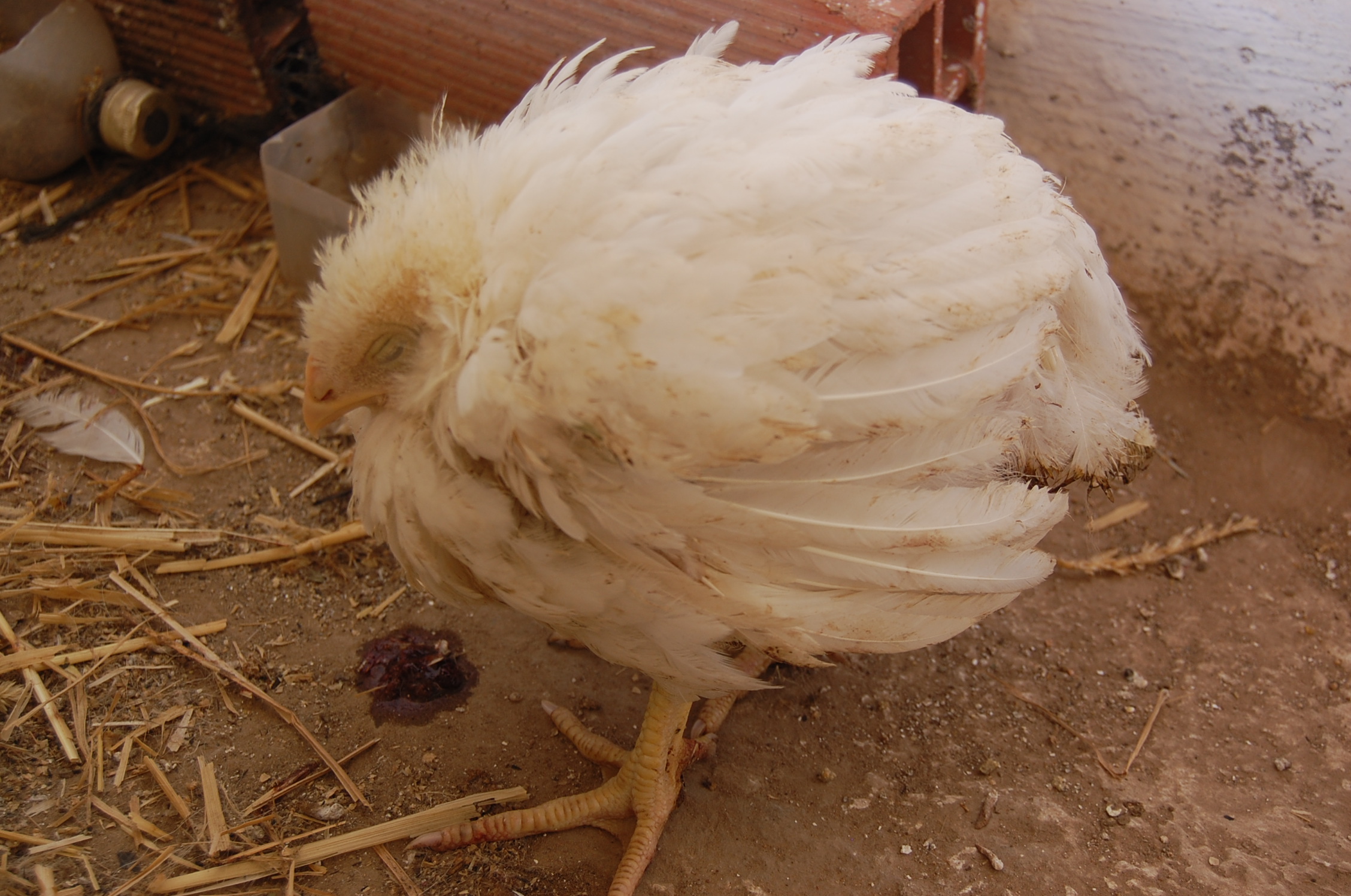
Possible signs include reduced appetite, ruffled feathers, huddling, pallor, diarrhea and reduced activity. Affected birds can lose blood and fluid, become weak and fail to reach feed or water. Some deaths occur before a long period of recognizable illness.
Marked pallor, collapse, inability to stand, rapid deterioration or increasing mortality requires urgent veterinary care. Keep birds calm and comfortable while arranging help. Avoid chasing them to assess activity; an already weak animal gains nothing from that exertion.
A bird unable to swallow normally should not be force-fed liquid or medicine. Flock-level treatment also does not meet every individual's needs if the most ill birds cannot drink. Severe suffering requires immediate individual assessment and humane euthanasia where recovery is unlikely.
A normal cecal dropping is not the same as cecal bleeding
Chickens periodically pass cecal droppings that look different from ordinary feces. Their darker, softer appearance can alarm an inexperienced keeper. Conversely, assuming every abnormal dropping is normal can delay care when a bird is genuinely weak or losing blood.
Assess the whole bird and group: alertness, appetite, hydration, pallor and the presence of fresh blood matter. A photograph of one dropping cannot reliably distinguish normal variation, coccidiosis and other intestinal disease. Veterinary evaluation is warranted when abnormal feces recur with illness or blood.
Do not select an Eimeria species from color alone. E. necatrix also causes hemorrhagic disease but has a different principal lesion site. Other coccidia can occur simultaneously and alter the outward pattern.
Cecal disease also has important infectious look-alikes
Histomoniasis can involve the ceca and liver, particularly in susceptible poultry species. Bacterial enteritis and ulcerative enteritis are further considerations. Worms, dietary problems and other disorders may complicate the assessment.
Finding a cecal core does not safely settle every differential without examining its nature and the remaining tissues. The veterinarian or pathologist interprets lesion distribution, microscopic stages and relevant testing. A gut lesion is more useful when connected to the agent and the bird's course.
This is also why a chicken coccidiosis diagnosis should not simply be transferred to ill turkeys sharing the property. Their coccidia are host-adapted, and turkey coccidiosis requires a turkey-specific assessment.
Fecal testing is useful but cannot grade every case
Oocyst detection establishes shedding. It does not provide a perfect scale of injury because parasite development, timing, immunity and prior medication influence the result. A clinically important outbreak may require professional examination of representative affected birds as well as fecal tests.
The laboratory can identify compatible developmental stages and evaluate other agents where needed. Mixed Eimeria infections are common, so a broad coccidia-positive result may not identify the species responsible for the most severe damage.
Owners should follow the diagnostic service's submission instructions and avoid opening birds or attempting mucosal sampling. Prompt veterinary assessment can guide care while the finer details of species identification are resolved.
Treat clinical disease and support recovery
Veterinary-selected anticoccidial treatment may be indicated urgently. Products must fit chickens, the production class and local residue requirements. An outbreak plan can differ from the medication level in a preventive starter ration, so do not assume that continuing the usual bag of feed is sufficient.
Support hydration and access to a balanced ration in birds able to eat and drink. Protect weak birds from crowding, trampling and pecking. Additional care for anemia or secondary infection depends on the clinical findings, not a universal supplement recipe.
Control of the parasite does not instantly replace lost blood or repair the cecal wall. Continue evaluating activity, appetite and comfort. Ongoing bleeding or deterioration needs reassessment; repeated empirical medication without checking the diagnosis can delay proper care.
Prevention reduces challenge while building appropriate protection
Keep litter in suitable condition, correct water leaks and protect feed and drinking points from fecal contamination. Clean boots and equipment between groups, and avoid moving contaminated material into younger flocks. Many common disinfectants are limited against oocysts, making removal of organic contamination important.
Vaccination or preventive anticoccidial use should follow a coherent poultry-health program. Queensland's guidance and Kentucky Extension emphasize immunity and management together. Protection against one Eimeria species is not protection against all.
The chicken reference and poultry brooding guide provide supporting care for susceptible birds.
Is every dark soft dropping evidence of coccidiosis?
No. Normal cecal droppings differ from ordinary feces. Persistent abnormality, fresh blood or an ill bird needs assessment.
Does a previous coccidiosis episode guarantee protection?
No. Immunity is species-relevant, exposure varies and other Eimeria can also infect the chicken.
Cite this reference
LivestockDefense. “Eimeria tenella in chickens: cecal coccidiosis and blood-loss signs.” Updated 2026-11-02. https://livestockdefense.com/threats/eimeria-tenella-cecal-coccidiosis-in-chickens/
Add the date you accessed the page. This identifies the current reference; keep a permitted saved copy if your work depends on its exact wording. A citation alone does not establish support for a claim.
How to cite a page and its revision ↗Sources & boundaries
Read the evidence in context.
These documents support the statements identified in this reference. Check their scope and dates when deciding whether they answer your question.
- Merck Veterinary Manual: Coccidiosis in poultry
Source update: 2024-09. Most recent check: 2026-10-28.
Eimeria, host/site specificity, variable clinical disease and diagnostic limitations of oocyst counts.
- Cooperative Extension / University of Kentucky: Use of anticoccidial medications and vaccines in poultry production
Source update: Not provided. Most recent check: 2026-10-28.
Environmental oocyst cycling, litter management and species-appropriate prevention tools; no drug list reproduced.
- Penn State Extension: Managing chicken coccidiosis in small flocks during summer
Source update: 2026-01-20. Most recent check: 2026-11-02.
Clinical gut damage, mixed disease and practical litter/flock prevention context.
- Queensland Government: Coccidiosis
Source update: Not provided. Most recent check: 2026-11-02.
Clinical disease, mixed species, species-specific immunity and moisture/management principles; numeric development conditions and historical product rules not reproduced.
- University of Guelph Animal Health Laboratory: Diagnosing enteric disease in backyard chickens
Source update: 2019. Most recent check: 2026-11-02.
Normal fecal and cecal-dropping differences and veterinary differential approach to enteric disease; archive may contain other articles not used for these claims.