
This reference uses the specific documents linked in the article and listed below. Check their scope, publication dates and the statements they support.
Recognize a concern without naming the cause
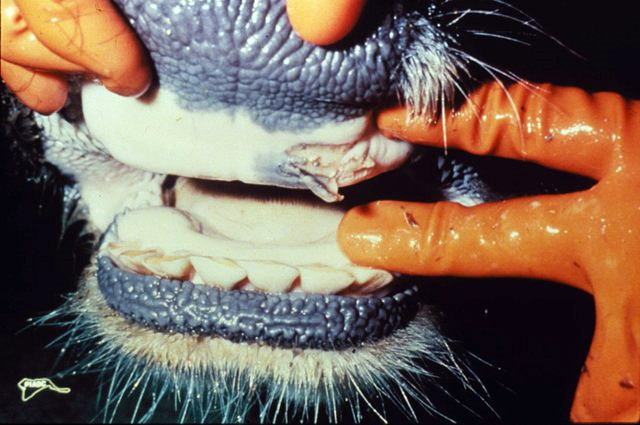
The APHIS foot-and-mouth disease reference describes fever, mouth or foot blisters, excess saliva, lameness and production changes among possible findings. Other conditions can resemble it. Seeing a lesion is an observation; deciding that it is foot-and-mouth disease is a different claim.
This distinction should survive the first phone call. “A cow has a raw area in the mouth and is reluctant to walk” preserves what was observed. “FMD confirmed” should not replace that account without the appropriate official finding. An online image comparison cannot supply the missing evidence.
Which animals does this reference concern?
APHIS identifies cattle, pigs, sheep, goats and other cloven-hoofed animals as relevant hosts. That is a disease-level host description, not a statement about a particular herd’s status. The name is also different from human hand, foot and mouth disease; similar wording does not make the two illnesses equivalent.
On a mixed holding, identify the actual species and group being described. A note about one pen should not be copied as though it applied to every animal on the property.
Make the first report concise
Contact the responsible veterinarian or animal-health official promptly when compatible lesions are observed. APHIS calls for immediate reporting of mouth or foot blisters so the cause can be investigated.
Have the location, a return contact, the animal species and the earliest reliable observation ready. State how many animals have been examined or observed, how many appear affected and whether the time is exact or estimated. Tell the official which movement records are available and follow the instructions given for the situation.
Avoid filling the conversation with conclusions that have not been established. If someone has already used a disease name, attribute it: who said it, when and on what basis? Keep a worker’s observation, a veterinarian’s assessment and a laboratory result as separate entries.
A short example of clearer wording
Suppose the original note reads, “Mouth disease in cattle after the sale.” A more useful account would identify the group, the observed change and the uncertainty: “One animal from group B was seen drooling at the morning check; a mouth lesion was reported by the stockperson. The veterinarian has been contacted. Cause not established.”
The example demonstrates record structure. It is not a real case, proof of a transmission route or permission to move the group. The sale history belongs in the account without being promoted into a causal conclusion.
Questions people commonly ask
Can signs distinguish FMD from every other cause of blisters?
No. APHIS emphasizes laboratory testing because other conditions can look similar. Use signs to recognize a concern and make a prompt report, not to perform an on-farm rule-out.
Should the article’s date be used as an outbreak date?
No. An editing date says when this reference changed. A detection, a reporting date and the effective date of an official restriction are separate facts.
Where should current rules be checked?
Use the responsible animal-health authority and the current official document for the species, jurisdiction and decision. A national reference page does not by itself authorize a movement or describe every state requirement.
Related reading
Start with the cattle reference or the relevant animal hub, then use the handoff guide to organize observations. The reporting reference explains how the official and veterinary contacts differ from an editorial website contact.
Cite this reference
LivestockDefense. “Foot-and-mouth disease.” Updated 2026-10-28. https://livestockdefense.com/threats/foot-and-mouth-disease/
Add the date you accessed the page. This identifies the current reference; keep a permitted saved copy if your work depends on its exact wording. A citation alone does not establish support for a claim.
How to cite a page and its revision ↗Sources & boundaries
Read the evidence in context.
These documents support the statements identified in this reference. Check their scope and dates when deciding whether they answer your question.
- USDA APHIS: Foot-and-mouth disease
Source update: 2025-07-30. Most recent check: 2026-10-28.
Cloven-hoofed hosts, blisters, laboratory confirmation and immediate reporting. Mouth/foot vesicles warrant immediate reporting; appearances overlap and laboratory confirmation is necessary. No claim about current farm presence.