
This reference uses the specific documents linked in the article and listed below. Check their scope, publication dates and the statements they support.
Name the jaw before judging the problem
Brachygnathia inferior describes a shortened lower jaw. Brachygnathia superior describes a shortened upper jaw. Those are different configurations, even though both may be called a bad bite in everyday conversation.
The relationship between the lower incisors and the upper dental pad matters more than a vague label such as parrot mouth. The clinician also checks cheek-tooth alignment and whether teeth contact sensitive tissue.
An original ruminant case series described a Barbari goat with a short lower jaw, slight palatal abrasion and nearly normal feeding. That case illustrates a range of functional severity, not a reason to dismiss all jaw defects. Primary goat malocclusion observation.
A convex nose alone is not a diagnosis
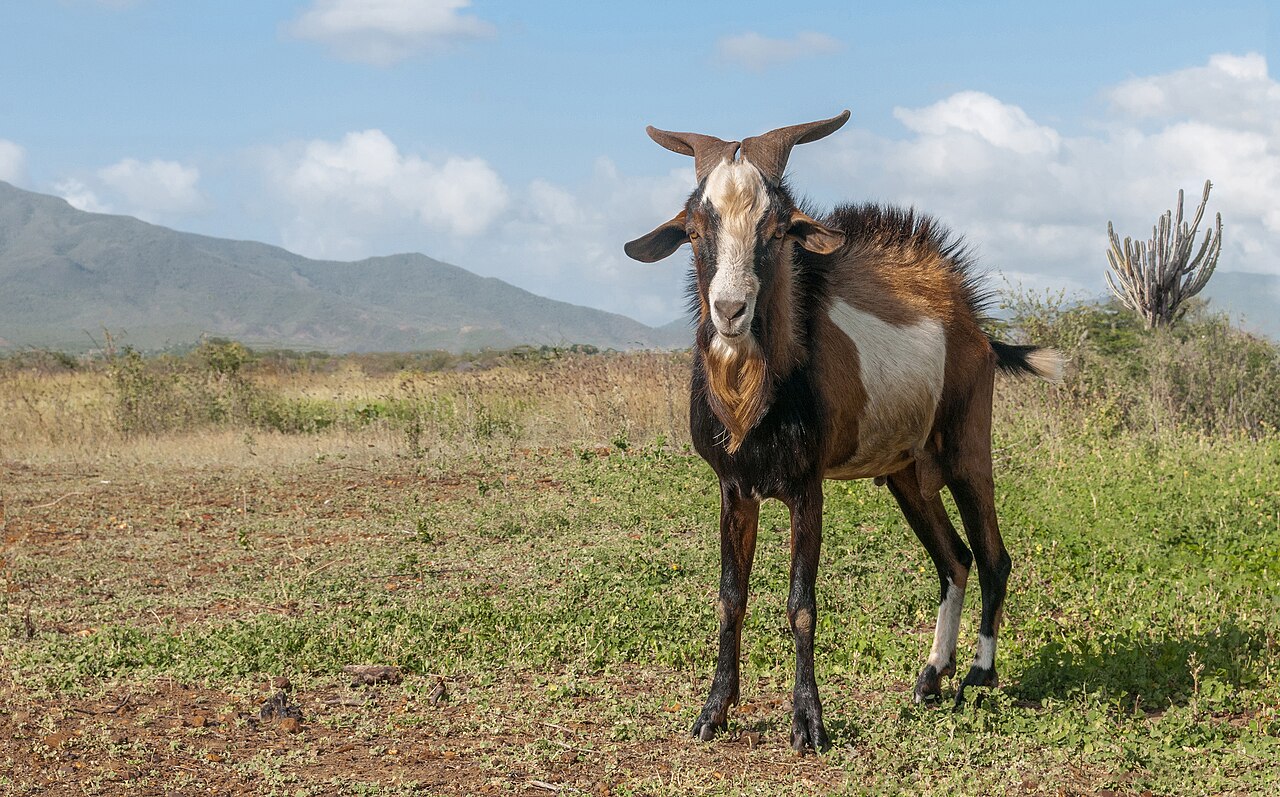
Normal goats vary in facial profile. A Roman nose does not by itself establish that one jaw is abnormally short or that eating is impaired.
Comparative anatomical work distinguishes relatively mild nasal-profile variation from more marked jaw discordance and malocclusion. Its small number of anatomical observations cannot predict the feeding ability of an individual live goat or establish a whole breed’s disease rate. Anatomical distinction between profile and jaw mismatch.
Look at how the mouth closes and functions. A striking profile with an effective bite and a less obvious profile with painful tooth contact pose different clinical questions.
In a newborn, confirm milk transfer
A kid may hold a teat without obtaining enough milk. Watch for sustained effective nursing rather than counting every attempt as a successful feed. Weakness, persistent hunger or failure to thrive warrants an examination rather than simply assuming that a small kid will catch up.
Poor jaw alignment is one possibility among several neonatal problems. The clinician should also assess the palate, tongue, swallowing and general strength. Milk at the nose or coughing during feeds raises a separate concern for cleft palate or another swallowing disorder.
If nursing is ineffective, arrange a safe nutritional plan promptly. A severely weak kid cannot wait for a future decision about cosmetic correction. Veterinary neonatal assessment principles.
Weaning may expose a problem that milk feeding hid
Taking milk does not prove that the same animal will harvest pasture or chew a fibrous diet effectively. As the diet changes, assess actual feed intake and body condition, not just interest in a feeder.
Ask whether the goat can grasp the offered forage, chew comfortably and compete without repeatedly losing access. A softer ration may reduce one mechanical difficulty, but it does not correct the underlying jaw relationship.
Feeding changes must still meet goat nutritional needs. Replacing forage indiscriminately with large amounts of concentrate creates a different digestive risk. A veterinarian or qualified ruminant nutritionist can help assess an appropriate practical diet when a mild defect remains compatible with good welfare. Goat nutritional requirements and ration context.
Pain and tissue injury change the decision
An incisor pressing into the palate, repeated oral abrasion, bleeding, persistent salivation or reluctance to chew makes the problem more than an appearance issue. A small jaw discrepancy can matter if it produces repeated painful contact.
An oral examination can establish whether there is an ulcer, abnormal wear, a separate dental problem or another cause of pain. The goat may also need imaging when the anatomy is unclear or trauma is a competing explanation.
Do not shorten teeth with farm tools or apply a device intended to pull a jaw into place. Tooth fracture, pulp exposure and additional soft-tissue injury can make feeding harder. Any dental intervention should follow a clinical assessment of what it can realistically improve.
Check for a wider developmental syndrome
Some kids have an isolated jaw mismatch; others have several congenital abnormalities. Examine posture and limb movement and ask about trouble standing, a curved spine or a palatal opening.
A primary report of three newborn goats documented jaw abnormalities alongside musculoskeletal defects. Because maternal histories were unavailable, its authors could not determine the cause. This is an important distinction: several abnormalities together deserve investigation, but their presence does not identify a particular infection, toxin or gene. Primary multi-anomaly goat report.
Normal-looking parents do not exclude inherited risk, and one affected offspring does not establish a specific inheritance pattern. Avoid applying a recessive rule from a different breed or species without supporting evidence.
Base treatment and breeding choices on function
The first aim is a comfortable goat that can maintain adequate intake. Some mild cases may be managed with an appropriate diet and clinical follow-up; severe mismatch, persistent injury or inability to eat can make the outlook poor.
A request to improve appearance should not obscure whether intervention will produce lasting function. Ask about likely benefit as the goat grows, ongoing dental needs and the feasibility of lifelong feeding support.
Discuss breeding before using an affected animal as a replacement. Functional survival does not prove that breeding risk is absent. Where the cause remains uncertain, make that uncertainty part of the decision rather than inventing a guaranteed preventive test.
Will a short jaw always cause starvation?
No. Severity varies, and a documented goat case ate nearly normally. Effective feeding and absence of painful contact must be assessed individually.
Is every jaw difference inherited?
No single cause explains every case. The goat hub connects nutrition, neonatal health and other relevant differentials.
Cite this reference
LivestockDefense. “Congenital jaw shortening in goats: bite alignment, feeding and welfare.” Updated 2026-11-02. https://livestockdefense.com/threats/goat-congenital-jaw-shortening/
Add the date you accessed the page. This identifies the current reference; keep a permitted saved copy if your work depends on its exact wording. A citation alone does not establish support for a claim.
How to cite a page and its revision ↗Sources & boundaries
Read the evidence in context.
These documents support the statements identified in this reference. Check their scope and dates when deciding whether they answer your question.
- Merck Veterinary Manual: Nutritional requirements of goats
Source update: 2026-07. Most recent check: 2026-11-02.
Copper, zinc and iodine functions, nutritional antagonists, sheep/goat differences and toxicity risk. No supplemental doses or blanket mineral program prescribed.
- Merck Veterinary Manual: Congenital and inherited anomalies of the mouth in animals
Source update: 2024-09. Most recent check: 2026-11-02.
General palatal-fusion mechanism, milk-from-nares and aspiration risk. Dog/horse timing, feeding techniques, surgery outcomes and numerical prognosis are not transferred to piglets.
- University of Sydney Veterinary Teaching Hospitals: Livestock neonatal care
Source update: Not provided. Most recent check: 2026-11-02.
Direct veterinary-hospital guidance including lambs: weak feeding/standing, colostral protection, possible umbilical systemic spread and supportive clinical assessment. Not used as a detailed pathogen-specific treatment source.
- Advances in Animal and Veterinary Sciences / Narendra Deva University authors: Congenital anomalies and their surgical correction in ruminants
Source update: 2014. Most recent check: 2026-11-02.
Primary case-series full indexed text inspected. Barbari goat with short lower jaw had near-normal intake and slight palatal abrasion. Descriptive one-case observation, not proof of a universal recessive goat genotype or a jaw surgery success rate.
- Iranian Journal of Veterinary Research / Shiraz University authors: Congenital arthrogryposis associated with musculoskeletal defects in three newborn goats
Source update: 2014. Most recent check: 2026-11-02.
Original three-kid pathological report inspected: jaw and other skeletal defects can coexist; inadequate maternal history prevented determination of cause. No prevalence or a single established genetic cause inferred.
- Integrative Organismal Biology / original anatomical authors: Exceptional changes in skeletal anatomy under domestication: the case of brachycephaly
Source update: 2021. Most recent check: 2026-11-02.
Original comparative anatomical observations inspected for distinction between ordinary convex nasal profile and jaw-length discordance with malocclusion. Small museum observations do not establish breed prevalence or predict individual feeding function.