
This reference uses the specific documents linked in the article and listed below. Check their scope, publication dates and the statements they support.
Why this reference includes a research-facility fish
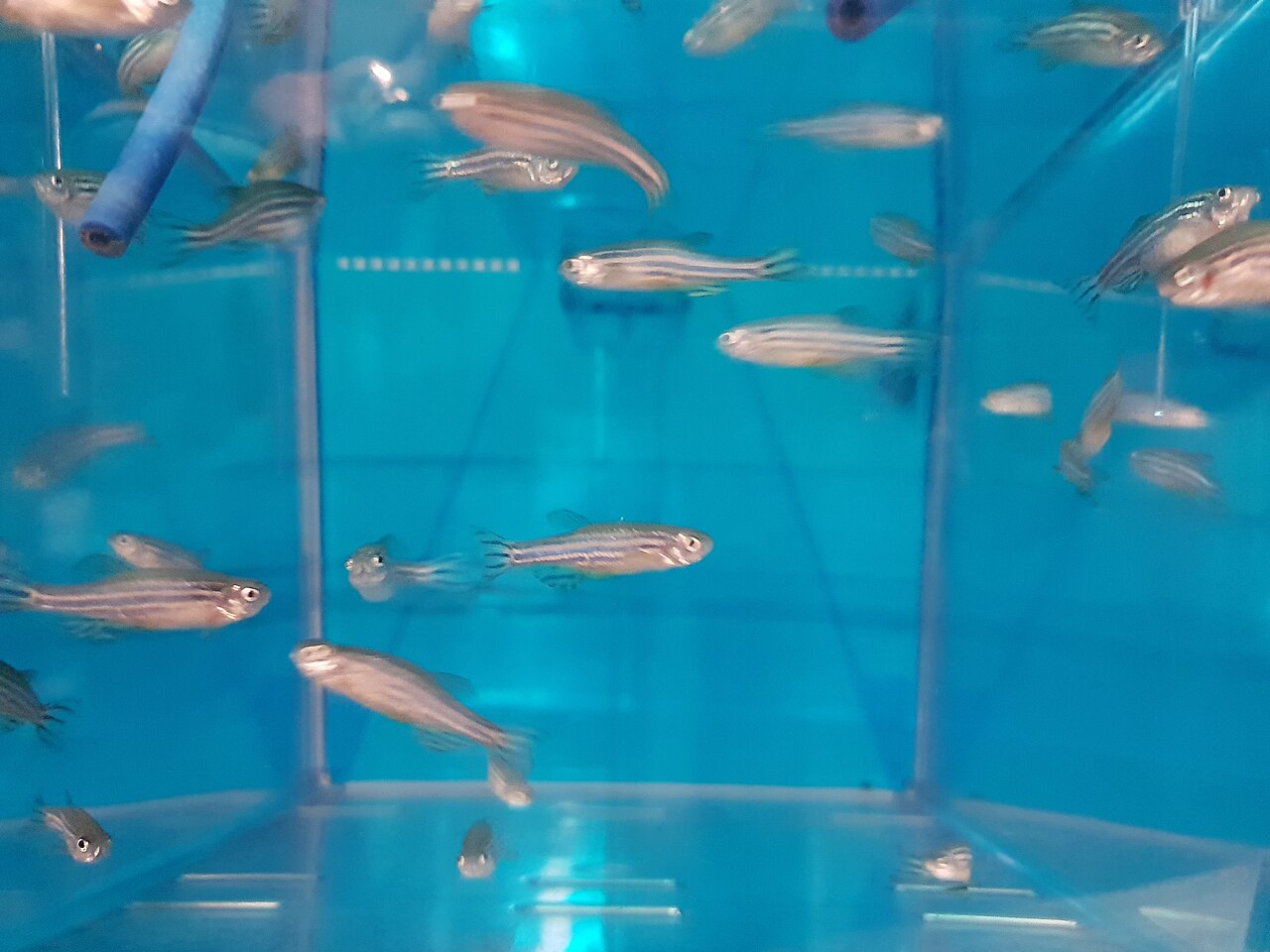
Zebrafish are maintained as laboratory models rather than conventional food livestock. This profile addresses that specific facility-health context. It should not be used to claim that the same organism causes neurologic disease in every farmed fish, or that a laboratory control measure is authorized for a food animal.
The parasite was described from zebrafish nervous tissue, and subsequent work has shown infection in additional tissues including muscle. Its name reflects a strong neural association, not an instruction to attribute every abnormal swimming pattern to it. Health interpretation requires both parasite detection and assessment of other possible causes.
Source: Pseudoloma neurophilia: new microsporidium from zebrafish central nervous system; Pseudoloma neurophilia: retrospective study of nervous-system and muscle infections; Aquaculture and aquaculture drugs basics.
Normal appearance does not exclude clinically relevant infection
Some infected zebrafish lose weight, develop body curvature or swim abnormally. Others remain outwardly normal despite appreciable infection in nervous tissues. A retrospective pathology investigation found many subclinical infections, showing why visual selection alone is a weak way to establish healthy study stock.
The relation between parasite burden and visible illness is not a simple straight line. Muscle inflammation or concurrent disease may help explain why one fish looks ill while another does not. Thinness and curvature also have other causes. A veterinarian should assess whether the findings fit Pseudoloma, another infection or a husbandry or developmental problem.
Source: Pseudoloma neurophilia: retrospective study of nervous-system and muscle infections; Assessment of oral albendazole and fumagillin in adult zebrafish; Introduction to fish health management.
Research quality and animal welfare are linked
Neural infection can matter even when mortality is low. Studies have investigated behavioral and reproductive effects, so an apparently healthy infected group may differ from a screened group in ways relevant to the research question.
This does not mean every behavioral result from an infected colony is automatically invalid. It means health status is part of interpreting the model. Discuss whether affected stock are suitable for the planned work with the facility veterinarian and research team. For individual fish, inability to feed, maintain normal movement or preserve body condition requires an appropriate humane endpoint.
Source: Behavioral and reproductive effects of enrichment and Pseudoloma neurophilia infection; Pseudoloma neurophilia: retrospective study of nervous-system and muscle infections; Assessment of oral albendazole and fumagillin in adult zebrafish.
Detection needs a population question as well as a fish examination
PCR-based testing can detect the parasite, and histopathology can show infection and associated lesions. These methods have different sensitivities and purposes. A negative result from one fish does not establish that a breeding line or connected system is free of infection.
The facility veterinarian and diagnostic service should design an assessment suited to the stock, introductions and existing system connections. Include clinically affected fish when appropriate, but do not rely only on obvious cases to detect an often silent infection. Owners or technicians should follow the laboratory’s submission requirements rather than improvise neural-tissue sampling.
Source: Assessment of oral albendazole and fumagillin in adult zebrafish; Pseudoloma neurophilia: retrospective study of nervous-system and muscle infections; Fish health management considerations in recirculating aquaculture systems: pathogens.
Promising drug research has not established an eradication recipe
A 2023 study evaluated oral albendazole and fumagillin approaches. It did not demonstrate a statistically significant association between treatment group and infection prevalence at the evaluated time points. The authors considered further investigation warranted, not a validated cure for routine colonies.
Do not convert that experiment into an improvised medicated-feed plan. Efficacy, concentration consistency, fish tolerance and research effects all require scrutiny. A treated fish that appears normal may still be infected. Where exclusion or colony replacement is necessary, those decisions should be planned with veterinary and facility expertise.
Source: Assessment of oral albendazole and fumagillin in adult zebrafish; Aquaculture and aquaculture drugs basics.
Prevention must account for persistent and hidden infection
Introductions, shared wet equipment and connected water deserve attention because the parasite can persist without a conspicuous outbreak. Embryo-based introductions and surface sanitation should not be treated as an automatic guarantee of freedom; the overall health strategy must address the relevant transmission possibilities.
Keep suspect populations appropriately separated while the facility team evaluates them. Durable control combines source assessment, suitable testing, removal or replacement decisions where justified and verification over time. The goal is a healthy, interpretable population, with humane care for affected fish, rather than a temporary improvement in appearance after an unproven treatment.
Source: Assessment of oral albendazole and fumagillin in adult zebrafish; Pseudoloma neurophilia: retrospective study of nervous-system and muscle infections; Fish health management considerations in recirculating aquaculture systems: pathogens.
Practical questions
Can a normal-looking zebrafish carry it?
Yes. Subclinical infection is well documented.
Does an abnormal swim prove Pseudoloma?
No. Neurologic, buoyancy, developmental and environmental problems can look similar.
Has a reliable drug cure been established?
No. Published treatment research has not provided a dependable routine eradication method.
Related animal-health reading
Cite this reference
LivestockDefense. “Pseudoloma neurophilia in zebrafish: silent infection, neurologic effects and colony health.” Updated 2026-11-02. https://livestockdefense.com/threats/microsporidian-pseudoloma-neurophilia-infection-in-zebrafish-facilities/
Add the date you accessed the page. This identifies the current reference; keep a permitted saved copy if your work depends on its exact wording. A citation alone does not establish support for a claim.
How to cite a page and its revision ↗Sources & boundaries
Read the evidence in context.
These documents support the statements identified in this reference. Check their scope and dates when deciding whether they answer your question.
- U.S. Food and Drug Administration: Aquaculture and Aquaculture Drugs Basics
Source update: Not provided. Most recent check: 2026-10-29.
FDA approves final drug products and intended uses, not active ingredients alone; no treatment authorization, drug choice or dosage inferred from a laboratory result.
- University of Florida IFAS Extension: Introduction to fish health management
Source update: Not provided. Most recent check: 2026-11-02.
Clinical/environmental differential assessment, skin injury and early professional diagnosis; no laboratory or chemical-treatment procedures.
- University of Florida IFAS Extension: Fish health management considerations in recirculating aquaculture systems: pathogens
Source update: Not provided. Most recent check: 2026-11-02.
Shared-water/equipment pathogen amplification and biofilter-sensitive treatment context; no disinfectant or pathogen-handling procedure.
- Veterinary Pathology / primary diagnostic research: Pseudoloma neurophilia: retrospective study of nervous-system and muscle infections
Source update: 2015. Most recent check: 2026-11-02.
Clinical/subclinical distinction, neural distribution and muscle injury; submission data not prevalence in all facilities.
- Comparative Medicine / primary treatment research: Assessment of oral albendazole and fumagillin in adult zebrafish
Source update: 2023. Most recent check: 2026-11-02.
Abstract/outcome inspected: no statistically significant treatment-group association with prevalence, no established cure; no dosing, feed formulation or experimental infection methods.
- Comparative Medicine / primary research: Behavioral and reproductive effects of enrichment and Pseudoloma neurophilia infection
Source update: 2021. Most recent check: 2026-11-02.
Behavior/reproduction context only, not universal effect size or experimental exposure method.
- ZFIN / original Journal of Eukaryotic Microbiology research: Pseudoloma neurophilia: new microsporidium from zebrafish central nervous system
Source update: 2001. Most recent check: 2026-11-02.
Primary species-description bibliographic/abstract context and host identity, not expanded food-fish host range.