
This reference uses the specific documents linked in the article and listed below. Check their scope, publication dates and the statements they support.
Disease at the skin and hoof interface
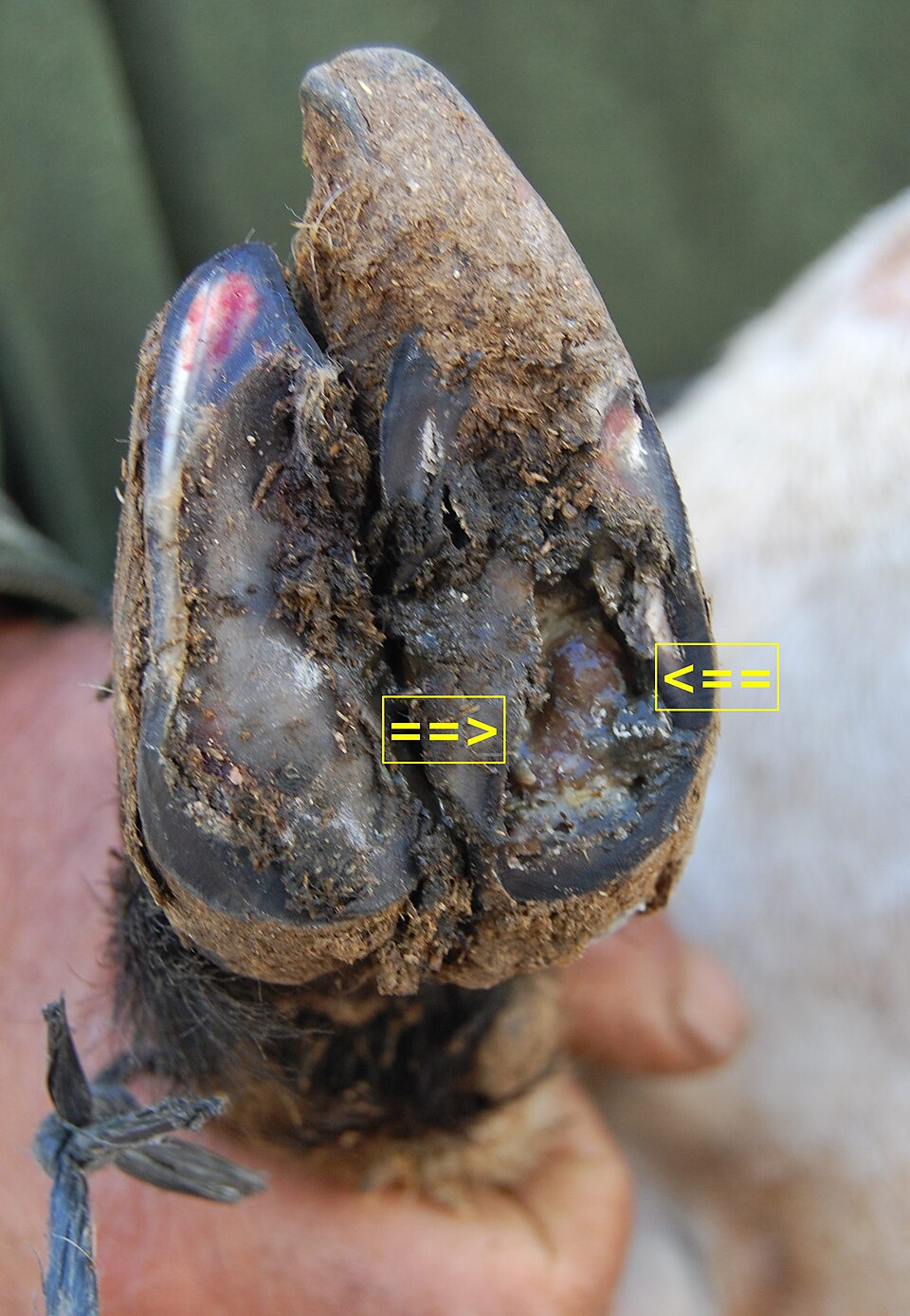
The Merck sheep footrot reference describes D. nodosus invading susceptible interdigital tissues. Enzyme-associated damage permits horn separation as disease extends into the hoof. The problem is therefore more than excessive horn growth or a dirty-looking foot.
The distinction matters for handling. Do not assume that aggressive trimming will remove the underlying infection. Have the veterinarian determine the lesion and treatment plan before undertaking foot work that could add pain or damage.
Lameness is a welfare finding before it is a diagnosis
Affected sheep may move reluctantly, have distorted horn or struggle to compete for feed. The examination needs to identify what is happening in each foot. A count of lame sheep alone cannot distinguish footrot from abscesses, injury or other conditions.
Record animals as well as feet. A ewe affected in several feet is one flock case with a more extensive problem, not several independent animals. Preserve that distinction when reviewing severity and outcome. If the animal cannot move comfortably to feed or water, seek a prompt care plan rather than waiting for the next scheduled flock inspection.
Strain, environment and host all affect expression
NSW's veterinary laboratory reference explains that benign and virulent strains can produce overlapping early lesions. Weather, recent treatment and flock conditions may mask the eventual expression. A mild-looking examination at one moment cannot necessarily establish a flock's final classification.
This is why an isolated photograph or a dry-season walk-through is a limited assessment. Keep the environmental history and any treatment preceding the examination. Do not delete those details when passing the case to a different veterinarian or laboratory.
Carriers can outlast an obvious outbreak
The NSW account describes carrier sheep remaining a source after dry periods, with renewed spread possible when suitable conditions return. A period with little visible lameness is therefore different from documented eradication.
Preserve the source of introduced sheep, strays and shared contact areas. An apparently healthy arrival should not be assigned a disease-free status solely because it walks normally at unloading. The introduction policy should follow the flock's veterinary assessment and the actual source information available.
Laboratory results support a clinical assessment
Merck describes culture or PCR within diagnosis. NSW explicitly warns that laboratory results alone cannot establish the flock diagnosis of virulent footrot; findings need the clinical context. Keep individual versus pooled sampling clear and retain the field examination record alongside the report.
Ask what the test is intended to detect and which conclusion it can support. A pooled result may answer a flock question without assigning every individual animal the same status. Likewise, a negative result should retain the limitations supplied by the laboratory rather than become a certificate broader than the investigation.
Control and eradication have different endpoints
Merck distinguishes temporary reduction of disease from total eradication and cautions against excessive trimming. Treatment, monitoring, environmental management and decisions about persistent cases need to work as a coordinated flock plan.
An illustrative wet-season programme may reduce the number of painful cases without establishing that all infection is gone. That can be a meaningful welfare improvement, but it should be described accurately. A later eradication assessment needs its own evidence and agreed endpoint rather than simply reusing the reduced case count.
NSW's notifiable-disease and classification statements apply to that jurisdiction. A US producer should confirm local requirements through the reportability reference and the flock veterinarian, rather than importing a foreign regulatory timetable.
Questions about sheep footrot
Is every lame sheep a footrot case?
No. Examine the actual foot problem and relevant flock pattern. Different causes can require different responses.
Does dry weather prove the flock is clear?
No. Reduced visible disease may reflect reduced expression rather than elimination. The sheep hub connects the condition with flock observation and introduction planning.
Should I trim deeply to expose infection?
Do not adopt aggressive trimming as a universal treatment. Merck cautions that excessive trimming can be harmful; the veterinary plan should specify appropriate foot care.
Cite this reference
LivestockDefense. “Ovine footrot: contagious hoof disease and flock-level control.” Updated 2026-10-28. https://livestockdefense.com/threats/ovine-footrot/
Add the date you accessed the page. This identifies the current reference; keep a permitted saved copy if your work depends on its exact wording. A citation alone does not establish support for a claim.
How to cite a page and its revision ↗Sources & boundaries
Read the evidence in context.
These documents support the statements identified in this reference. Check their scope and dates when deciding whether they answer your question.
- Merck Veterinary Manual: Contagious Footrot in Sheep
Source update: 2024-09. Most recent check: 2026-10-28.
Dichelobacter nodosus-associated hoof invasion, signs, clinical/laboratory assessment and treatment principles without trimming or footbath recipes.
- New South Wales Department of Primary Industries and Regional Development: Footrot in sheep
Source update: Not provided. Most recent check: 2026-10-28.
Carrier persistence, environmental expression and laboratory interpretation; NSW classification/reporting context is not a US legal rule.