
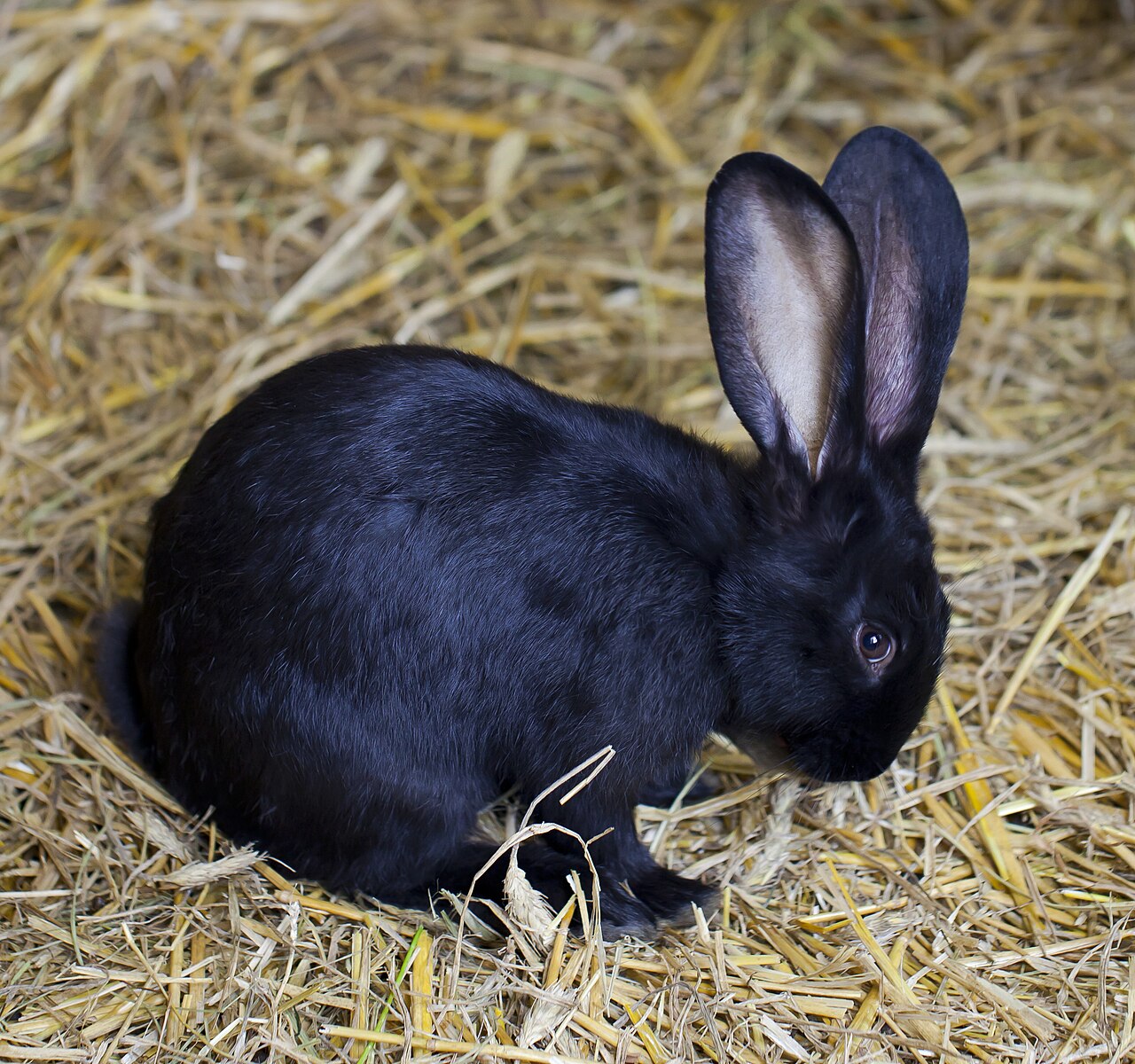
This reference uses the specific documents linked in the article and listed below. Check their scope, publication dates and the statements they support.
A rabbit disease with a wider wild-host connection
RHDV2 is a lagovirus associated with severe disease in domestic rabbits and several wild rabbit and hare relatives. It is distinct from the classical RHDV group, although both are discussed under rabbit hemorrhagic disease. The USDA APHIS disease page explains that distinction and the significance of domestic and wild hosts.
For a farm, this means that protection cannot be considered only at the gate used to buy breeding stock. Contact with contaminated materials and the wider environment also matters. An indoor unit still depends on what is carried into it, while an outdoor system needs a workable plan for its actual contact pathways.
APHIS does not identify RHDV2 as a cause of human disease. People can nevertheless matter to the movement of contaminated material between rabbit areas. Human susceptibility and the ability to carry contamination are different questions.
Liver injury helps explain the rapid deterioration
The Merck viral-disease chapter describes severe liver injury and widespread disruption of clotting. This helps explain why a disease that may first look like quietness or reduced appetite can progress to a life-threatening systemic problem. Bleeding is one possible consequence, rather than the only way to recognize an affected animal.
Breathing difficulty does not necessarily mean the primary problem is a simple airway infection, and a neurologic sign does not by itself localize the cause to one brain disease. The whole-animal process and the speed of change are important reasons to seek professional help promptly.
Signs may be brief or absent before death
Some affected rabbits become quiet, lose appetite, develop breathing difficulty or show neurologic changes. Bleeding may be seen, but it is not present in every case. The UC Davis explanation describes severe systemic disease, while the APHIS wildlife program emphasizes that sudden deaths may be the main observation.
Do not wait for blood at the nose before seeking help. A rabbit found dead without a dramatic external lesion still needs an appropriate investigation, especially when other animals are unwell or deaths are unexpected. Conversely, blood or sudden death alone does not establish RHDV2; other serious conditions can overlap in appearance.
Assess the immediate welfare of surviving rabbits. Animals unable to eat, struggling to breathe or becoming weak need prompt veterinary attention regardless of whether the eventual diagnosis is this virus. Avoid unnecessary catching or transport while advice on the safest assessment route is obtained.
Start with a telephone call, not a visit to another unit
Contact the rabbit veterinarian promptly when RHDV2 is suspected. Explain that the concern involves unexpected deaths or rapid illness before arriving with animals. This lets the practice arrange appropriate assessment without unplanned contact with other rabbit patients or holdings.
Avoid sales, exhibitions, routine transfers and unnecessary visitor access while the concern is being assessed. Do not take a rabbit to another keeper merely to compare its appearance. Ask the veterinarian or responsible authority how dead animals and potentially contaminated materials should be handled; opening a carcass at home is not needed to begin an investigation.
In the United States, APHIS directs reporting of rabbit hemorrhagic disease to federal and state animal-health officials. Follow the responsible authority’s current instructions for the actual location. The reporting reference provides a starting route to official help rather than a substitute for a case-specific decision.
Confirmation is a laboratory and clinical matter
Veterinary investigation considers the pattern of illness, examination findings and suitable diagnostic testing. The official APHIS page describes testing arrangements through animal-health and designated wildlife laboratories. A general information page cannot determine which route should be used for a particular farm.
A local report of wild-rabbit deaths is relevant context, but does not confirm the cause in the farm’s rabbits. Likewise, a previous negative finding should not end a new investigation if the clinical circumstances have changed. Keep attention on what the current evidence establishes.
Care and welfare while the cause is assessed
The UC Davis clinical explanation describes treatment as supportive care. Stabilization and relief of suffering should be planned with the attending veterinarian; a suspected affected rabbit is not made safe by waiting for a confirmatory label. The disease can have a grave outcome, so discuss realistic care and humane welfare decisions early.
Protect the animals from unnecessary disturbance while arranging appropriate help. The veterinarian must balance the needs of the sick rabbit with protection of the rest of the unit and any official requirements. Do not use a preventive vaccine as if it were a treatment for an animal already seriously ill, or assume that a temporary improvement establishes recovery.
How infection can reach a rabbitry
APHIS and UC Davis describe direct contact, contaminated materials and other pathways linking rabbit environments. Review the practical boundary around feed, bedding, tools, footwear and incoming rabbits. A disinfected item can be contaminated again if it is returned to a dirty storage area before use.
Protect feed and water from wildlife and other contamination as far as the system allows. Control access to rabbit housing and arrange cleaning so contaminated materials do not simply move from one group to another. The useful improvement is a routine workers can carry out reliably through ordinary farm conditions.
Cleaning and disinfection are not identical tasks. Obtain a suitable plan and use an authorized product according to its directions, including its intended surfaces and conditions. Do not assume that every household disinfectant is appropriate, or mix chemicals to make an improvised stronger solution. Official instructions may also govern movement, disposal and the return to use of an affected area.
Vaccination supports, rather than replaces, prevention
Discuss vaccination with a veterinarian who understands the local situation and the intended use of the rabbits. Vaccine availability, authorization and the plan for a particular group should be checked through current professional and official channels. Include incoming and young rabbits in that discussion rather than assume that a farm-level plan automatically protects every animal present. The older veterinary references linked for disease biology do not establish current vaccine availability.
Vaccination and practical biosecurity address different parts of risk reduction. An apparently protected group still needs appropriate care, feed and water hygiene and sensible management of introductions. A sick rabbit still needs assessment even when vaccination has been discussed or performed.
The rabbit husbandry overview provides the wider production context. Myxomatosis is another distinct rabbit viral disease; it should not be treated as a different name for RHDV2 or presumed to use the same prevention product.
Does every affected rabbit have a bleeding nose?
No. Sudden death or a short period of nonspecific illness may be the main finding. Do not use absence of visible bleeding to dismiss an unexpected mortality event.
Can indoor rabbits be exposed?
Indoor housing reduces some contacts but does not remove every route involving rabbits, people or contaminated materials. Evaluate the real entry pathways into the unit.
Cite this reference
LivestockDefense. “RHDV2 in rabbits: sudden deaths, veterinary response and prevention.” Updated 2026-11-02. https://livestockdefense.com/threats/rabbit-hemorrhagic-disease-virus-2/
Add the date you accessed the page. This identifies the current reference; keep a permitted saved copy if your work depends on its exact wording. A citation alone does not establish support for a claim.
How to cite a page and its revision ↗Sources & boundaries
Read the evidence in context.
These documents support the statements identified in this reference. Check their scope and dates when deciding whether they answer your question.
- USDA APHIS: Rabbit hemorrhagic disease
Source update: 2025-07-30. Most recent check: 2026-10-28.
RHDV2 host context, contaminated materials as an exposure route and veterinary contact for illness or sudden death. No current state list or current vaccine authorization assertion is reproduced.
- Merck Veterinary Manual: Viral diseases of rabbits
Source update: 2026-07. Most recent check: 2026-11-02.
Condition-specific mechanisms, signs, diagnostic limitations and care principles attributed to this document; no drug dosages or invasive procedures reproduced.
- USDA APHIS: NWDP: rabbit hemorrhagic disease virus type 2
Source update: 2026-01-13. Most recent check: 2026-11-02.
Bounded rabbit clinical statements explicitly mapped in the replacement references; no numerical medication, invasive care or laboratory procedure reproduced.
- University of California, Davis School of Veterinary Medicine: Rabbit hemorrhagic disease
Source update: 2020-11-24. Most recent check: 2026-11-02.
Bounded rabbit clinical statements explicitly mapped in the replacement references; no numerical medication, invasive care or laboratory procedure reproduced.