
This reference uses the specific documents linked in the article and listed below. Check their scope, publication dates and the statements they support.
A frayed fin describes damage without identifying its cause
Fin edges may appear split, shortened, inflamed or progressively lost. A sudden tear after handling differs from tissue that continues to erode over several days. Damage can affect swimming and the protective external surface, even if the fish initially continues to eat.
Do not diagnose bacterial fin rot from the word frayed alone. Likewise, a water-quality problem should be demonstrated rather than assumed because the fish is in a pond. A useful assessment asks which process began the injury and whether another process now prevents healing.
Source: Bacterial diseases of fish; Management of aquarium fish; Routine health care of fish.
Water conditions and management can act together
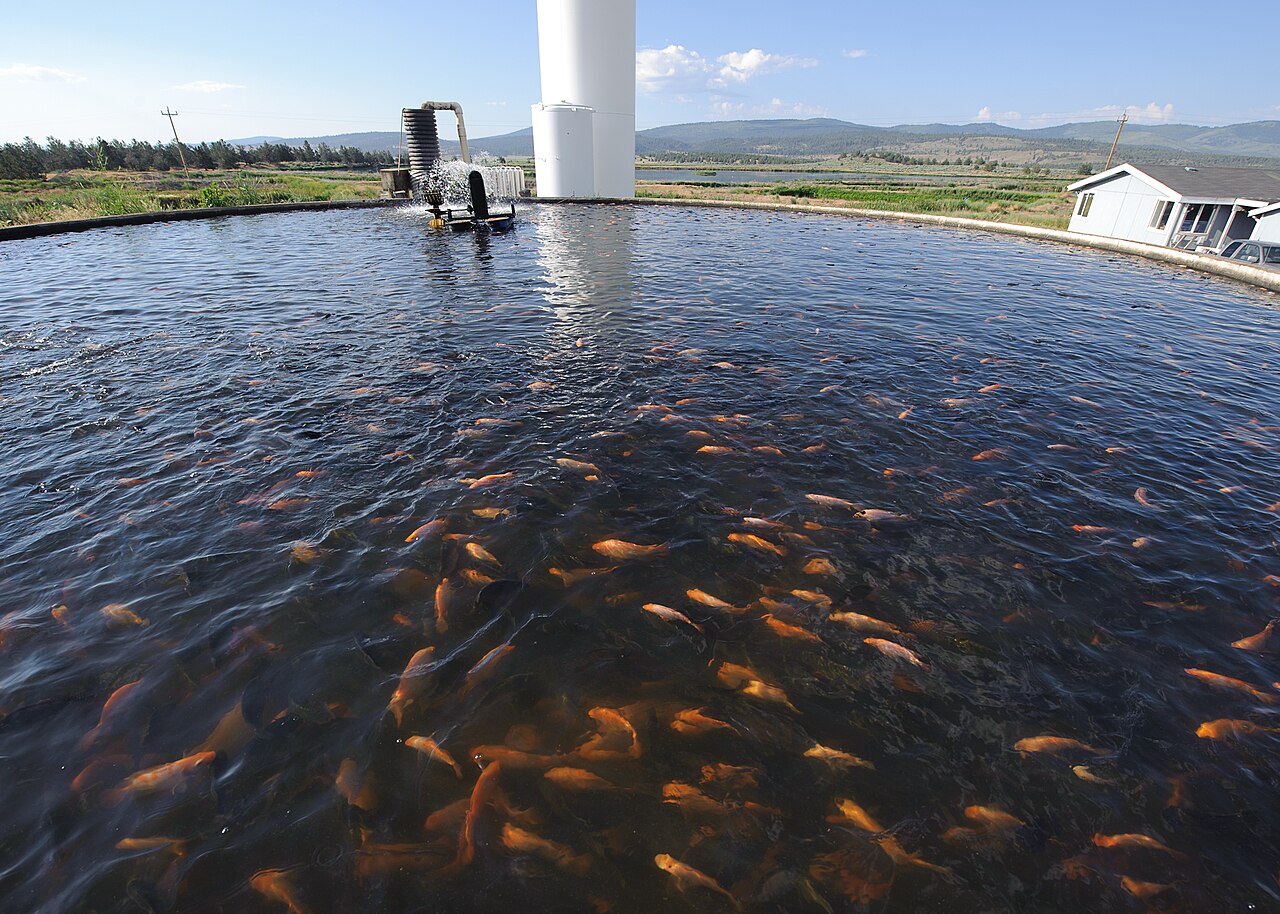
Primary tilapia farm research has linked fin damage with management and environmental variables. Such observational associations are useful for identifying practical risks, but they do not prove that every lesion is caused by one measured chemical.
Assess oxygen, nitrogen compounds, pH and other parameters appropriate to the system, together with solids and feed waste. Consider the conditions experienced by crowded or subordinate fish rather than only a convenient reading at the inlet. Feed distribution and stocking can affect both water loading and competition, so correcting one number may not address the whole problem.
Source: Welfare indicators in tilapia: an epidemiological approach; Introduction to fish health management; Fish health management considerations in recirculating aquaculture systems: pathogens.
Aggression and abrasion may leave the same fish repeatedly injured
Tilapia social interactions can contribute to fin damage. Unequal access to feed or space may leave some fish repeatedly exposed even when the group average growth appears acceptable. Rough nets, tank edges or grading practices can add mechanical injury.
Observe where and when damage occurs. New lesions after an operation support a different explanation from progressive erosion in undisturbed stock. Do not automatically increase or decrease stocking based on a universal rule: the actual species, size distribution, environment and behavior should guide the change.
Source: Welfare indicators in tilapia: an epidemiological approach; Management of aquarium fish; Introduction to fish health management.
Progression raises concern for infection or continuing exposure
Inflamed margins, spreading tissue loss, skin ulcers or rising mortality deserve professional investigation. Columnaris and other bacterial diseases can involve fins, but a pathogen needs appropriate confirmation. Secondary infection can complicate a wound initially caused by aggression or handling.
Ask the fish-health service whether fish examination and targeted tests are needed. Water improvement does not rule out a concurrent infection, and a positive bacterial finding does not excuse an ongoing environmental problem. Both sides of the case may need attention for the fins to recover.
Source: Bacterial diseases in aquaculture; Bacterial diseases of fish; Welfare indicators in tilapia: an epidemiological approach.
Care should reduce new injury and fit the confirmed diagnosis
Maintain suitable life-support and address demonstrated abrasion, waste accumulation or competition. Avoid repeated netting simply to inspect the fin edges. Do not cut away tissue or apply livestock wound preparations to fish.
A veterinarian may recommend an authorized treatment for a supported infection. Antibiotics are not an automatic response to every torn fin, and ornamental products are not interchangeable with food-fish medicines. Chemical tolerance, water chemistry and effects on filtration also matter. A product cannot compensate for continued biting or a rough surface that reopens the wound.
Source: Management of aquarium fish; Aquaculture and aquaculture drugs basics; Fish health management considerations in recirculating aquaculture systems: pathogens; Introduction to fish health management.
Judge recovery by the fish, not just a tidy-looking edge
Look for cessation of progressive loss, improving tissue condition, normal swimming and feeding, and stable body condition. Regrowth and final fin shape can vary with the depth of damage. Persistent impairment warrants reassessment even when the edge is less red.
If the same problem returns, revisit the mechanism: a recurring grading injury, competition pattern or water-loading issue may be more important than another medication course. Protect recovered fish through the next operation and check that the correction works for the vulnerable individuals as well as the strongest fish in the group.
Source: Welfare indicators in tilapia: an epidemiological approach; Routine health care of fish; Introduction to fish health management.
Practical questions
Does fin erosion prove ammonia toxicity?
No. Measure water conditions and investigate aggression, trauma and infection as appropriate.
Will antibiotics repair every damaged fin?
No. They may address a supported bacterial infection but cannot stop biting or physical abrasion.
Can a fish with severe fin loss still need urgent help if it eats?
Yes. Progression, swimming difficulty, other lesions and overall condition also matter.
Related animal-health reading
Cite this reference
LivestockDefense. “Fin erosion in tilapia: water conditions, aggression and secondary infection.” Updated 2026-11-02. https://livestockdefense.com/threats/tilapia-fin-erosion-linked-to-water-quality/
Add the date you accessed the page. This identifies the current reference; keep a permitted saved copy if your work depends on its exact wording. A citation alone does not establish support for a claim.
How to cite a page and its revision ↗Sources & boundaries
Read the evidence in context.
These documents support the statements identified in this reference. Check their scope and dates when deciding whether they answer your question.
- Merck Veterinary Manual: Bacterial Diseases of Fish
Source update: 2024-09. Most recent check: 2026-10-29.
Water-quality/handling predisposition, overlapping bacterial syndromes, lesion-based identification and susceptibility-guided care.
- U.S. Food and Drug Administration: Aquaculture and Aquaculture Drugs Basics
Source update: Not provided. Most recent check: 2026-10-29.
FDA approves final drug products and intended uses, not active ingredients alone; no treatment authorization, drug choice or dosage inferred from a laboratory result.
- Merck Veterinary Manual: Bacterial diseases in aquaculture
Source update: 2026-06. Most recent check: 2026-11-02.
Bounded clinical distinctions among major fish bacterial diseases; no culture media, incubation, pathogen handling, drug doses or blanket extra-label-feed advice.
- University of Florida IFAS Extension: Introduction to fish health management
Source update: Not provided. Most recent check: 2026-11-02.
Clinical/environmental differential assessment, skin injury and early professional diagnosis; no laboratory or chemical-treatment procedures.
- University of Florida IFAS Extension: Fish health management considerations in recirculating aquaculture systems: pathogens
Source update: Not provided. Most recent check: 2026-11-02.
Shared-water/equipment pathogen amplification and biofilter-sensitive treatment context; no disinfectant or pathogen-handling procedure.
- Merck Veterinary Manual: Management of aquarium fish
Source update: Not provided. Most recent check: 2026-11-02.
General clinical injury/environment/targeted-therapy principles, explicitly not species-specific farm trials or food-fish drug authorization. No surgical, injection or aquarium-cycling protocols.
- Merck Veterinary Manual: Routine health care of fish
Source update: 2026-04. Most recent check: 2026-11-02.
General disease signs and water/nutrition/health assessment, not a specific diagnosis of catfish barbel erosion.
- Frontiers in Veterinary Science / primary farm welfare research: Welfare indicators in tilapia: an epidemiological approach
Source update: 2022. Most recent check: 2026-11-02.
Field associations between management/water variables and fin damage; observational association not proof every fin lesion is ammonia injury, and no universal density rule.