
This reference uses the specific documents linked in the article and listed below. Check their scope, publication dates and the statements they support.
A bacterial disease across a managed boundary
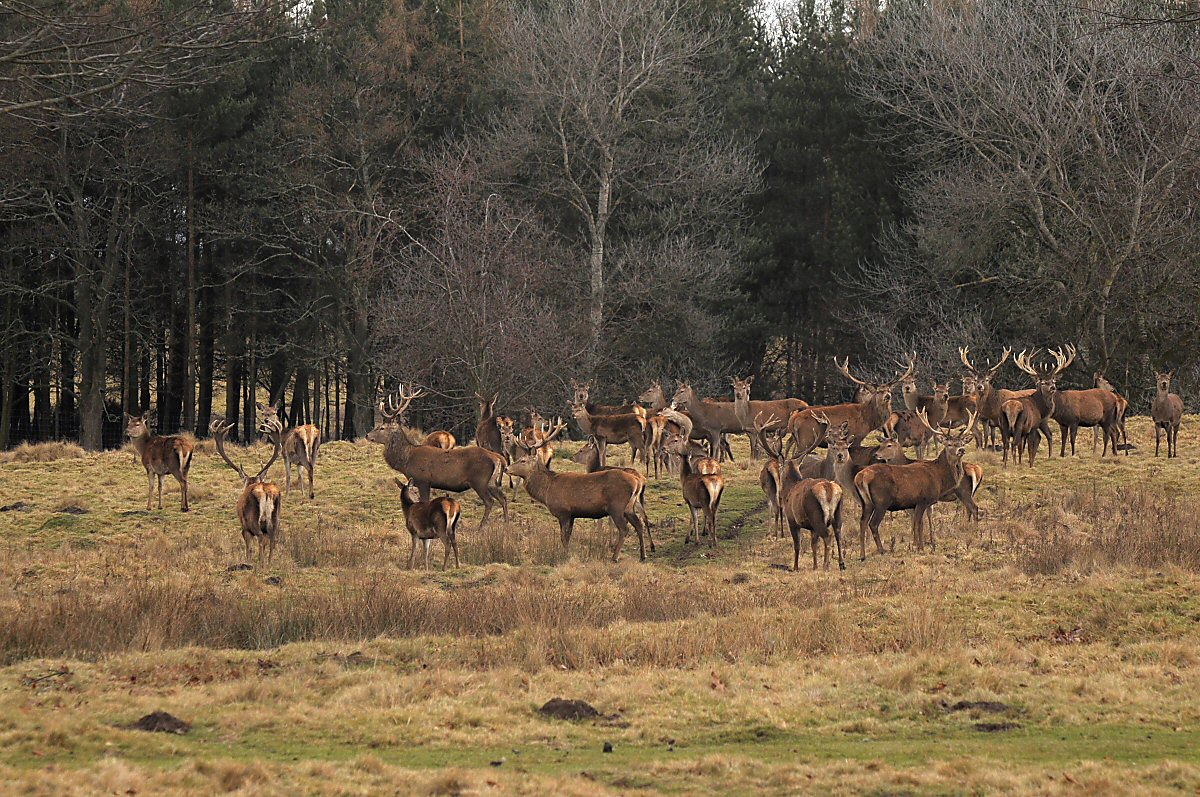
APHIS's cervid reference identifies M. bovis as the cause and describes susceptibility among several deer species and elk. The veterinary accreditation guide describes respiratory and oral exposure routes. A fence defines the managed herd, but the investigation must still consider animals, feed and contacts crossing its boundary.
Do not assume that any nearby wild deer is infected, or that the absence of wildlife seen during one inspection excludes contact. Describe actual opportunities: shared access points, feed storage and introductions. Those details let officials assess the interface without replacing local evidence with a nationwide generalization.
Chronic signs are a reason to investigate
APHIS describes swollen lymph nodes, respiratory difficulty, fluctuating fever, reduced appetite and progressive weakness among possible findings. Their appearance depends on disease involvement. A cervid losing condition may have a different cause, while an animal that appears normal cannot be cleared merely by looking at it from the fence line.
The uploaded profile names chronic wasting disease among alternatives. CWD and tuberculosis are distinct problems with different causal agents and testing programmes. Keep their records separate. A negative result or accredited status for one should never be relabeled as evidence that the other disease has been excluded.
Cervid testing is species and programme specific
APHIS's revised April 2026 DPP FAQ explains the antibody-based test and the role of designated accredited veterinarians. It distinguishes approved species from species included under a pilot arrangement. Owners should confirm the current pathway for the actual species rather than treat every member of Cervidae as diagnostically interchangeable.
The FAQ also separates skin-test and serologic follow-up pathways. Those tests are not substitutes that an owner can switch between after an inconvenient result. Ask the responsible veterinarian which official pathway applies and who will explain any non-negative result; the answer affects follow-up and herd management.
Screening is not the final organism identification
The DPP FAQ distinguishes a suspect classification from a reactor after required follow-up, and notes that exposure to some related mycobacteria can affect specificity. A non-negative screen is therefore important evidence requiring action, while remaining different from final identification of M. bovis in tissues.
Maintain that distinction in sale discussions and herd records. Do not announce a confirmed organism based only on a screening label, and do not dismiss a suspect classification because confirmation is unfinished. Follow the official restrictions while the investigation resolves the uncertainty.
Movement planning must happen before loading
APHIS requires confirmation that a destination accepts the chosen official test for its purpose. Testing for herd accreditation, import or a particular movement may involve different conditions. Arrange this with the designated veterinarian before handling, scheduling transport or committing to a sale.
Make the animal's official identity consistent across the test report, inventory and movement documents. A valid laboratory result that cannot be matched confidently to the animal does not answer the buyer's question. The animal-movement collection explains the wider planning issues, but current officials decide which documents are required for the specific journey.
Prevention and an affected-herd response
APHIS advises testing introductions, following accredited-herd requirements and reducing farmed-cervid contact with wildlife. There is no practical treatment for tuberculosis in cervids. A suspect case therefore calls for an official herd response rather than a private course of medicines intended to restore sale eligibility.
Review welfare at the same time. An animal with breathing difficulty or marked wasting still needs prompt veterinary attention while regulatory questions are being resolved. Ask how essential care, feed delivery and necessary staff access can continue under the movement and contact controls established for the premises.
Questions about cervid tuberculosis
Is bovine TB only a cattle disease?
No. The name reflects an important host association, not a species barrier. Deer and elk can be affected.
Can a producer arrange an unofficial DPP test?
APHIS describes testing under the eradication programme as official testing, with designated veterinary oversight and reporting. Discuss the purpose with that veterinarian.
Does this article provide a current free-herd certificate?
No. A disease reference cannot establish the status of a particular herd or authorize movement. Use its actual current programme documents.
Cite this reference
LivestockDefense. “Tuberculosis in farmed cervids: M. bovis and official herd testing.” Updated 2026-10-29. https://livestockdefense.com/threats/tuberculosis-in-farmed-cervids/
Add the date you accessed the page. This identifies the current reference; keep a permitted saved copy if your work depends on its exact wording. A citation alone does not establish support for a claim.
How to cite a page and its revision ↗Sources & boundaries
Read the evidence in context.
These documents support the statements identified in this reference. Check their scope and dates when deciding whether they answer your question.
- USDA Animal and Plant Health Inspection Service: Bovine Tuberculosis in Cervids
Source update: 2026-05-08. Most recent check: 2026-10-29.
Susceptible cervids, chronic signs, wildlife contact prevention and official surveillance overview.
- USDA Animal and Plant Health Inspection Service: FAQs for Cervid Dual Path Platform (DPP) VetTB Assay for Bovine Tuberculosis
Source update: 2026-04. Most recent check: 2026-10-29.
Species-specific use, designated veterinarian role, official classification and noninterchangeable follow-up pathways. No collection, shipping or test-performance procedure reproduced.
- USDA Animal and Plant Health Inspection Service: NVAP Reference Guide: Tuberculosis (Control and Eradication)
Source update: 2026-01-13. Most recent check: 2026-10-29.
Contagious Mycobacterium bovis disease, respiratory/oral exposure and regulatory veterinarian responsibilities; no test-administration technique.