
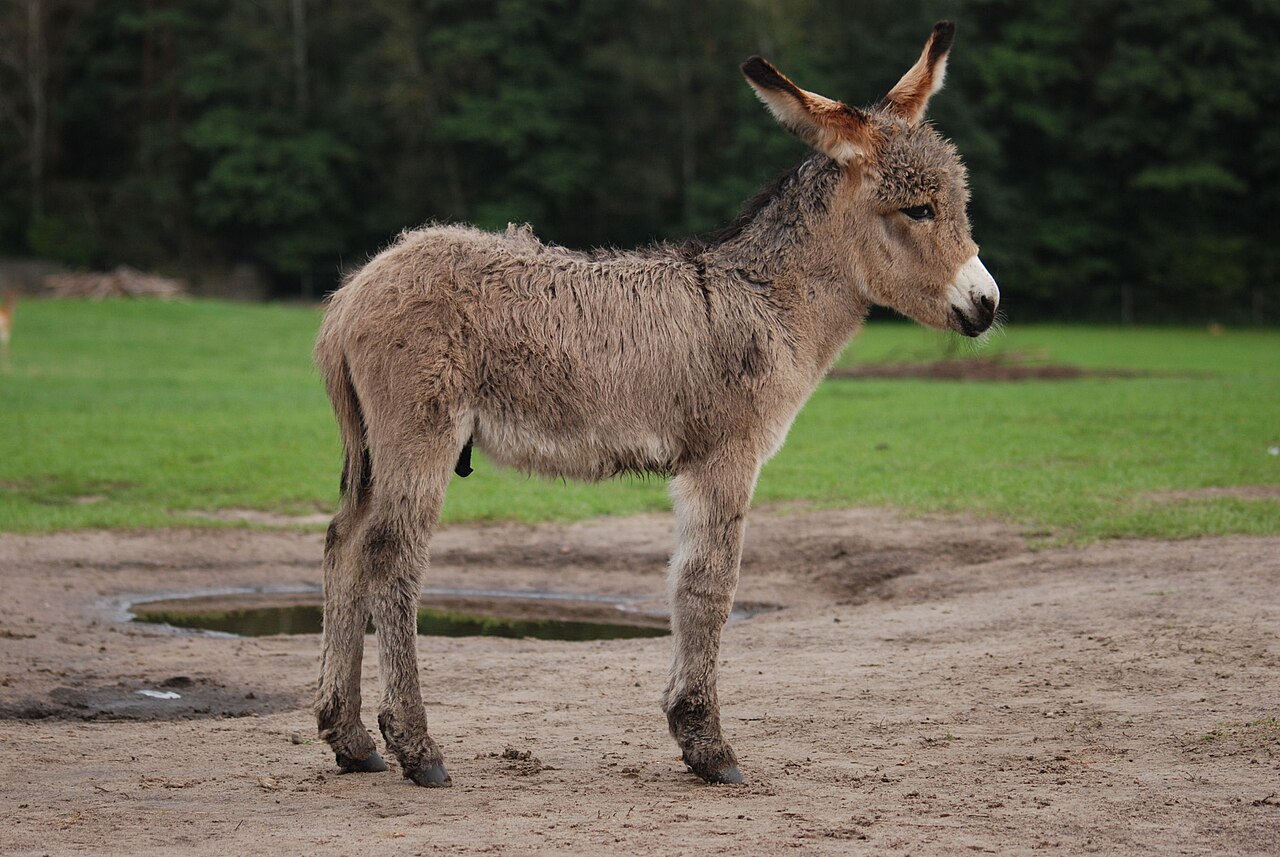
This reference uses the specific documents linked in the article and listed below. Check their scope, publication dates and the statements they support.
Animal at a glance
| Topic | Overview |
|---|---|
| Animal group | Equine mammals with their own husbandry and feeding context |
| Production roles | Work, transport, breeding and other production roles |
| Life stages | Foal, growing donkey, working adult and breeding animal |
Understand the donkey’s starting point
Donkeys are kept for draught work, pack transport, breeding, milk and other livestock roles. Those uses create different demands, but basic comfort, social contact and reliable care remain essential. Select an animal suited to the work and facilities available, and arrange access to a professional familiar with donkeys.
Do not interpret a donkey’s caution as simple stubbornness. Give time to examine an unfamiliar surface or object, train gradually and check pain or fear when behaviour changes. Force can make handling more difficult while leaving the original concern unresolved.
Avoid feeding by a horse-based assumption
Donkeys can gain excessive condition on rich pasture intended for horses. Management recommendations for donkeys and mules and Nutritional requirements of horses and other equids explain why their diet needs individual assessment. Plan forage and supplementary feed around actual condition, age, work and reproductive status rather than assuming more concentrated feed is always kinder.
Use a donkey-appropriate condition assessment. Fat distribution differs from the horse, and a horse weight tape may give a misleading estimate. Ask an experienced adviser to show the important sites to feel. A neck or other fat deposit should not be the only information used to decide whether the whole animal is adequately nourished.
Avoid crash dieting an overweight donkey. An animal that goes off feed requires prompt advice, not congratulations for eating less. Review pasture access, forage quality and the complete ration with a veterinarian or nutrition adviser, particularly when metabolic disease, obesity or pregnancy complicates feeding.
Water must remain clean, accessible and unfrozen when needed. Snow is not a dependable drinking-water plan. Inspect bowls and troughs from the donkey’s position and check that companions do not prevent access. A timid animal may need a separate feeding opportunity even in an otherwise peaceful group.
Dry shelter is especially important
A donkey’s coat should not be assumed to give the same wet-weather protection as a horse’s winter coat. Provide a dry refuge from prolonged rain and severe weather, with enough usable space for all companions. A shed controlled by one dominant animal is not adequate shelter for the group.
Good drainage, clean bedding and comfortable footing help protect feet and skin. Mud around the entrance may prevent the shelter from functioning even when its interior is dry. Examine fences, gates and feeders for entrapment hazards, particularly when horns of other livestock or small equid hooves may interact with the same equipment.
Donkeys need movement and compatible company. Long-term isolation or standing tethered without the ability to choose a comfortable resting position does not become suitable management simply because the animal remains quiet. Introductions should be planned so that the new donkey can settle without persistent harassment.
Hoof, dental and working care
Arrange a farrier or hoof-care professional experienced with donkeys. Their feet should not automatically be shaped as if they were horse feet. Lameness, changed stance, reluctance to turn or shifting weight deserves assessment; reducing workload without investigating pain leaves care incomplete.
Dental health affects the ability to use fibrous feed. Dropping feed, slow chewing, unexplained condition loss or facial swelling should prompt examination. An older donkey may need an adapted feeding plan rather than being expected to maintain itself on increasingly difficult forage.
For working animals, inspect harness and pack fit before loading. Check for rubs, pressure and interference with breathing or movement. Build work gradually, provide rest and drinking opportunities and adjust for heat, terrain and fitness. Do not use a donkey’s ability to endure as a measure of what it should be asked to carry.
Breeding and young-stock care
Breeding needs a plan for the mare, foaling and the foal’s future. Protect a mare and newborn from chilling and wet conditions, and arrange experienced support before the expected birth. A weak foal, failure to nurse or an abnormal birth is a prompt veterinary matter.
Growing animals require balanced nutrition and safe exercise. Avoid both neglecting growth needs and feeding for extreme gain. Handle young donkeys calmly so that routine care, transport and examination can be performed safely later. Training is a continuing welfare investment, not merely preparation for work.
Recognize a change in the quiet animal
Monitor appetite, movement and interaction with companions. Donkeys may show illness subtly, so a normally sociable animal that withdraws, eats poorly or stands unusually still deserves attention. Call promptly for abdominal pain, breathing difficulty, collapse, inability to bear weight or serious injury.
Can donkeys graze with horses?
Companionship may work, but the same pasture access and ration may not suit both. Manage nutritional needs separately rather than assuming a harmonious group has identical requirements.
Is a long coat proof the donkey is warm enough?
No. Consider rain, wind, shelter access, body condition and the individual. A visibly hairy animal can still be cold or wet.
Field guides for this animal
Browse all Donkey field guides for husbandry advice, health explanations and practical farm routines.
Cite this reference
LivestockDefense. “Donkeys: feeding, work, companionship and daily care.” Updated 2026-11-02. https://livestockdefense.com/animals/donkeys/
Add the date you accessed the page. This identifies the current reference; keep a permitted saved copy if your work depends on its exact wording. A citation alone does not establish support for a claim.
How to cite a page and its revision ↗Sources & boundaries
Read the evidence in context.
These documents support the statements identified in this reference. Check their scope and dates when deciding whether they answer your question.
- Ontario Ministry of Agriculture, Food and Agribusiness: Management recommendations for donkeys and mules
Source update: Not provided. Most recent check: 2026-11-02.
Mule parentage, nutritional management, shelter and water.
- University of Minnesota Extension: Caring for your horse in the winter
Source update: Not provided. Most recent check: 2026-11-02.
Cold-weather shelter, water, hoof care and footing.
- Merck Veterinary Manual: Nutritional requirements of horses and other equids
Source update: Not provided. Most recent check: 2026-11-02.
Individual condition, activity and equid-specific nutritional needs; no universal percentage ration adopted.