
This reference uses the specific documents linked in the article and listed below. Check their scope, publication dates and the statements they support.
Compare the donkey with its own baseline
Record what the keeper ordinarily sees and the specific change that prompted concern. Keep time, frequency as actually observed and the setting. A short visit does not establish how the donkey behaved during the preceding night.
The Donkey Sanctuary’s clinical chapter, hosted by IVIS, explains that subtle behavioral changes can accompany significant pain or illness and warrant veterinary examination. That supports prompt assessment rather than assuming a quiet donkey is merely resting. It does not diagnose a particular limb or disease from weight shifting alone.
Describe the actual standing observation
Keep limb position, repeated changes and other visible behavior in plain language. Distinguish a direct view from someone else’s summary. If a video already exists without additional handling, retain the date and what occurred before and during it.
Do not make the donkey walk, turn repeatedly or lift a painful limb to demonstrate the concern for a record. Follow the veterinarian’s handling advice. This guide provides no hoof-testing, restraint, medication or diagnostic-examination procedure.
| Handoff component | Information to retain |
|---|---|
| Baseline | Familiar behavior and source of that knowledge |
| New finding | Specific change, time and coverage |
| Earlier history | Known foot, mobility or health concerns |
| Recent events | Actual farrier, surface, work or management changes |
| Assessment | Veterinary findings and follow-up plan |
Keep recent events without choosing one cause
Record farrier visits, travel, work, surface changes and other relevant events with actual dates. A concern noticed after a routine visit did not necessarily begin at that visit. Preserve earlier observations and known intervals rather than compressing the history around the newest event.
Include appetite and interaction observations as the veterinarian requests. A donkey’s willingness to take one treat is a limited observation, not a complete assessment of eating or general health. Keep the evidence as specific as the claim it supports.
Work through a familiar quiet donkey
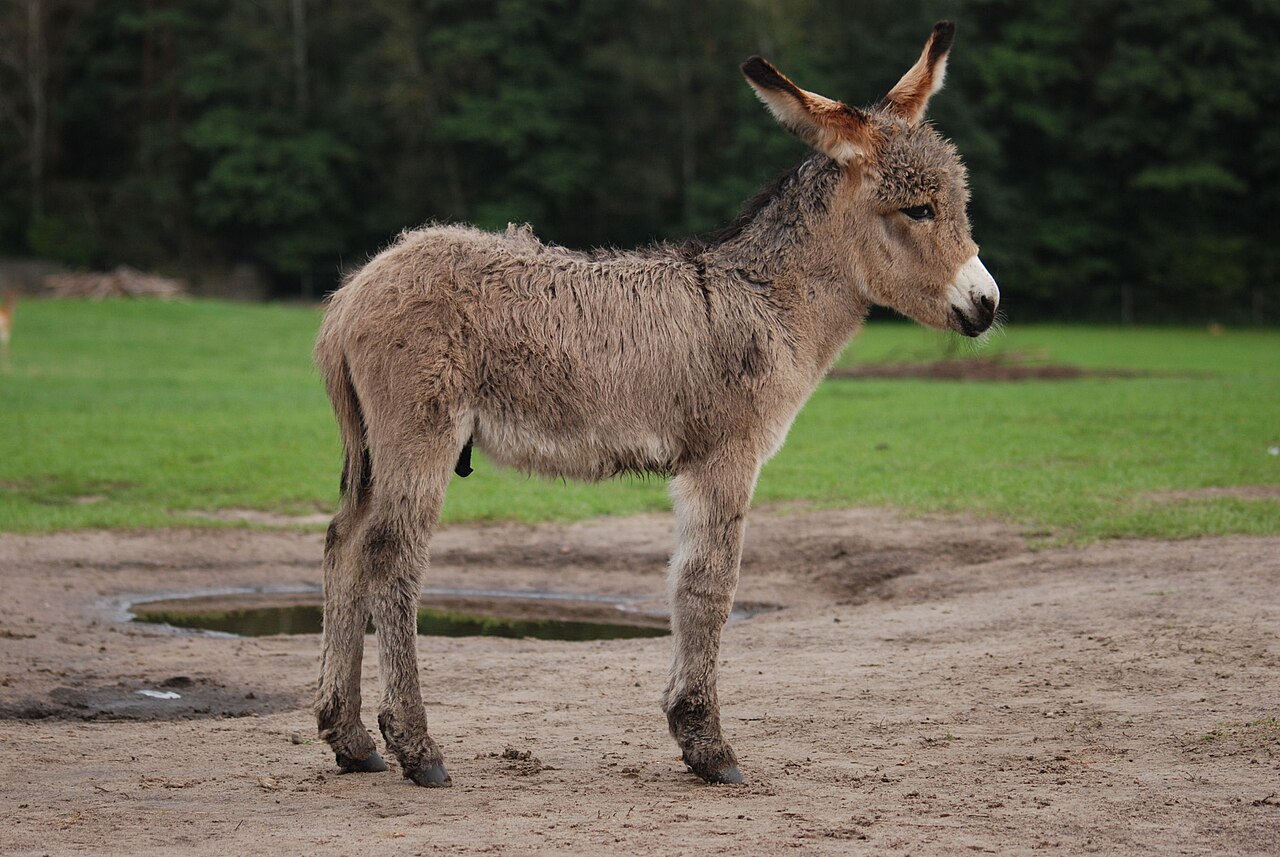
In this fictional example, a keeper initially dismisses increased stillness because the donkey is usually calm. A regular caretaker notices reduced interaction and repeated changes in standing position compared with the animal’s own routine. Those observations prompt veterinary contact.
The case account does not claim the caretaker diagnosed a condition. It preserves the baseline difference and lets the clinician assess the animal. A later clinical finding is attached to that history rather than replacing it with a hindsight claim that the diagnosis was obvious.
Keep follow-up attributable
Record actual professional advice and care actions under the donkey’s stable identity. A plan recorded in a notebook is not evidence that every step occurred. Keep completion, responsible person and subsequent observations distinct.
Confirm who contacts the veterinarian if the concern persists under the agreed plan. Do not treat the absence of a dramatic reaction as proof of improvement. Comparable observations and the clinician’s assessment should support the outcome statement.
Read donkey references and the horse hoof-history guide for related timeline principles. Donkey-specific assessment remains essential; a useful history documents subtle change without forcing the animal to demonstrate a more dramatic sign.
Make a subtle change easy to recognize
The person who knows a donkey well may notice a meaningful change before an occasional visitor does. Explain the difference using familiar activities: where the donkey normally stands, how it usually greets a companion or caretaker, and how willingly it moves during its own routine. Those comparisons give the veterinarian context without pretending that familiarity supplies a diagnosis.
Keep the description specific. “Repeatedly changed the position of the front feet during the morning check” is more informative than “looked odd.” If the donkey stayed in one place, state the observation period and what the animal ordinarily does at that time. Do not fill the rest of the day with an assumption based on one short check.
If care is shared, agree on a clear message rather than a series of different shorthand labels. One keeper's “resting” may be another keeper's “unusually still.” Preserve the actual behavior behind both descriptions. Tell the veterinarian about the change and ask what further observations are appropriate without putting the donkey through a demonstration.
Common questions from donkey keepers
Does standing mean the donkey is comfortable?
Standing describes posture, not a complete assessment of comfort. The repeated change, its relationship to that donkey's baseline and any other unusual behavior matter. A quiet animal still deserves attention when the pattern changes.
Is taking a treat enough evidence of normal appetite?
It is useful to report, but it only describes that event. Keep it separate from ordinary forage intake and the longer feeding history. Avoid using a small positive observation to dismiss the concern that prompted the call.
Can the horse's care plan be copied for the donkey?
The donkey needs its own professional assessment and instructions. A nearby horse's history may suggest questions to ask, but it does not establish the cause, handling requirements or appropriate care for this animal. Record the donkey's identity on the advice and follow-up notes so plans cannot be mixed up.
What if the behavior stops before the visit?
Report when it stopped and retain the original account. A change in the visible behavior is useful information, but the veterinarian should decide whether it alters the need for assessment or follow-up.
Cite this reference
LivestockDefense. “Take a donkey’s changed standing behavior seriously.” Updated 2026-11-03. https://livestockdefense.com/guides/donkey-weight-shifting-when-standing/
Add the date you accessed the page. This identifies the current reference; keep a permitted saved copy if your work depends on its exact wording. A citation alone does not establish support for a claim.
How to cite a page and its revision ↗Sources & boundaries
Read the evidence in context.
These documents support the statements identified in this reference. Check their scope and dates when deciding whether they answer your question.
- The Donkey Sanctuary; Clinical Companion of the Donkey, hosted by IVIS: Approach to the Dull Donkey
Source update: 2022-05-07. Most recent check: 2026-10-29.
Subtle behavioral changes can indicate significant pain or illness and warrant veterinary examination; no examination or treatment procedure reproduced.