
This reference uses the specific documents linked in the article and listed below. Check their scope, publication dates and the statements they support.
Animal at a glance
| Topic | Overview |
|---|---|
| Animal group | One-humped domestic camels |
| Production roles | Milk, meat, fibre, breeding, transport and work |
| Life stages | Calf, growing camel, breeding adult, milking or working animal |
Start with the purpose of the herd
A dairy dromedary, a growing meat animal and a working camel place different demands on a farm. FAO's camel overview describes the importance of camels in dryland milk production. It does not imply that every camel will produce well on sparse vegetation or that an intensive dairy can operate like a mobile pastoral herd.
Assess the land, the hottest weather, available feed and the handling facilities before choosing animals. A camel adapted to one routine may need careful introduction to a milking area, trailer or new group. Design the system so routine care does not depend on overpowering an anxious adult.
Forage and water remain everyday requirements
Camels browse and use plant resources that differ from those of many cattle systems. Identify safe, available forage rather than feeding unknown shrubs because camels are assumed to eat anything. Supplementation should meet the needs of the actual production stage and be introduced gradually with suitable advice.
Desert survival is not a good watering policy for managed livestock. Provide dependable drinking water and check its quality and access. Lactation, growth, heat and work change demand. A trough large enough for one camel may still create competition in a group, particularly if it refills slowly or sits in a narrow corner.
Keep purchased feed dry and protected from pests. Sand mixed into feed, spoiled material and abrupt ration changes are avoidable management problems. A falling hump and general loss of condition should prompt a review of feed, workload and health rather than an assumption that all camels naturally look thin.
Shade, resting areas and feet
Provide space to lie down on suitable ground and shelter appropriate to the climate. Pads and broad feet do not make every hard, slippery or abrasive surface harmless. Inspect areas where animals kneel, enter buildings and queue for water. Remove loose wire, sharp edges and obstacles that catch long legs.
In working animals, fit saddles and other equipment to the individual. Examine pressure points and allow recovery. A skin sore under a load is a reason to stop and correct the fit, not to add another layer that hides the problem. Avoid demanding work from an animal that is lame, exhausted or losing condition.
Calf care and milking must fit together
Prepare for birth with a clean, quiet area and access to veterinary help. Confirm that a calf stands and obtains colostrum promptly. A newborn remaining beside its dam does not prove that it has fed. Weakness, inability to suck or breathing difficulty need prompt attention.
When milk is taken for people, preserve adequate nutrition for the calf. In systems where calf contact supports let-down, the practical milking arrangement must protect both calf access and udder hygiene. Gradually develop the calf's forage and supplementary feeding before relying on a post-weaning ration.
Reproduction, health and food safety
Breeding males can present a substantial handling hazard, especially when behavior changes during the breeding season. Use trained staff, sound barriers and a planned separation system. Do not enter a tight pen with an aggressive animal because it was previously tame.
Arrange local veterinary guidance for reproduction, vaccination and parasites. Swelling or pain in the udder, abnormal milk, substantial weight loss, diarrhea or unusual respiratory signs need assessment. Use an approved food-safety process for milk; selling it does not make raw milk microbiologically safe. Medicine choices and withdrawal times must be appropriate to the animal and product, rather than borrowed from cattle labels without professional direction.
Do camel humps store drinking water?
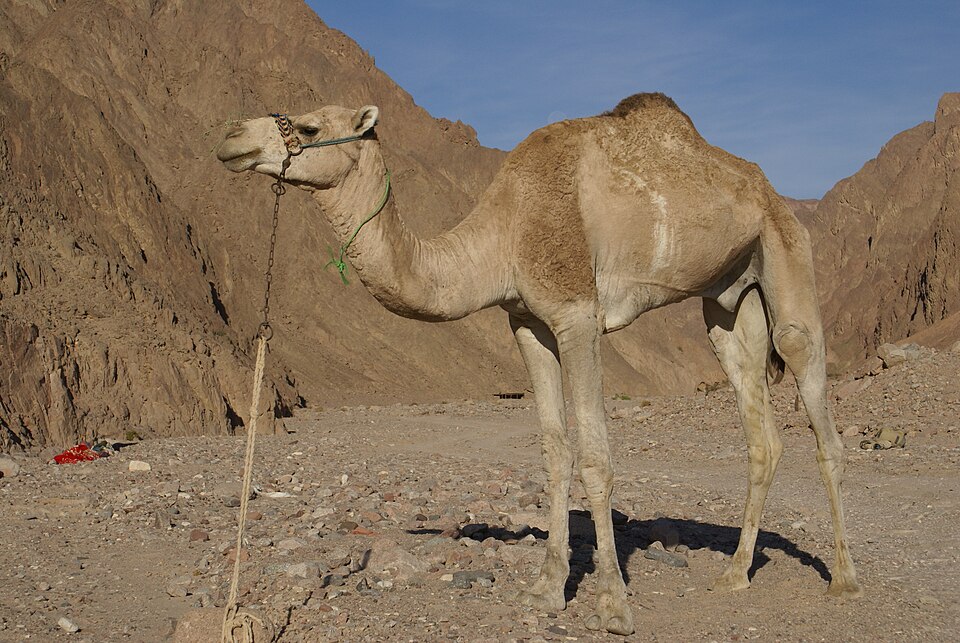
No. Humps are fat stores. Managed camels still require an appropriate drinking-water supply.
Can a dairy herd keep all the milk for sale?
The calf's needs must be met. Milk removal, calf feeding and the development of other feed sources should be designed as one system.
Continue reading
Cite this reference
LivestockDefense. “Dromedary camels: feeding, water, calf care and dairy management.” Updated 2026-11-02. https://livestockdefense.com/animals/dromedary-camels/
Add the date you accessed the page. This identifies the current reference; keep a permitted saved copy if your work depends on its exact wording. A citation alone does not establish support for a claim.
How to cite a page and its revision ↗Sources & boundaries
Read the evidence in context.
These documents support the statements identified in this reference. Check their scope and dates when deciding whether they answer your question.
- FAO: Camels: dairy production
Source update: Not provided. Most recent check: 2026-11-02.
Bounded production identity and species context cited in the global livestock hubs. Practical examples are editorial suggestions. Historical sources do not establish current local market permissions or clinical protocols.