
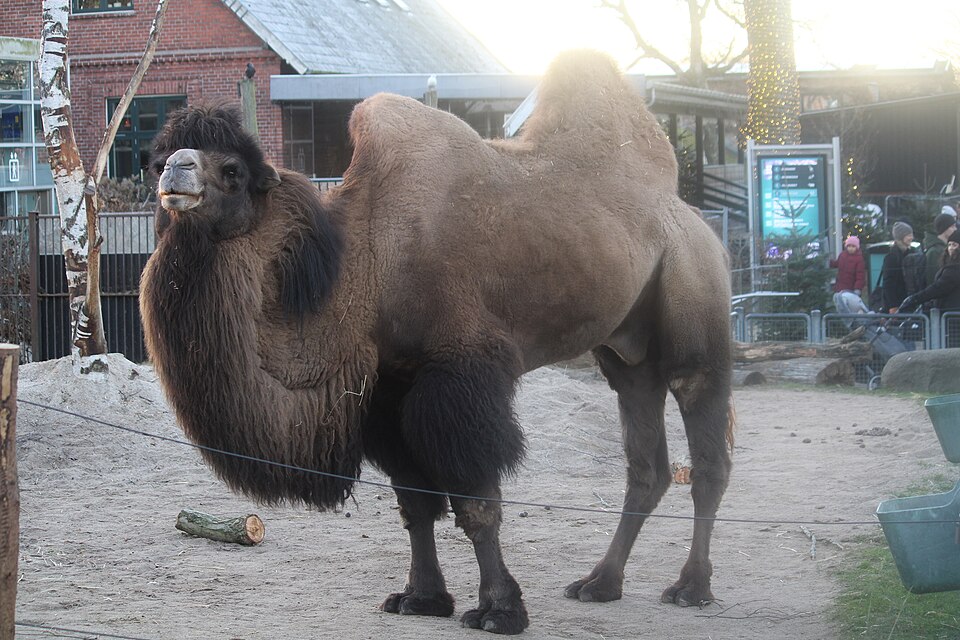
This reference uses the specific documents linked in the article and listed below. Check their scope, publication dates and the statements they support.
Animal at a glance
| Topic | Overview |
|---|---|
| Animal group | Two-humped domestic camels, distinct from wild-camel records |
| Production roles | Fibre, milk, meat, breeding and work |
| Life stages | Young stock, breeding adult and animals contributing particular products |
Keep domestic Bactrian camels distinct from other camels
Domestic Bactrian camels, commonly named Camelus bactrianus, are not interchangeable with dromedaries or with the threatened wild camel. Hump count is a useful introductory distinction, but animal identity, ancestry and source matter when planning breeding and care.
FAO's historical account of two-humped camel production describes multipurpose systems in Central Asia. It is useful for understanding seasonal grazing, milk, fibre and work, but its population estimates and local stocking figures should not be treated as current global targets.
Prepare for the difficult feeding season
Cold adaptation does not eliminate the nutritional cost of winter. Feed must be accessible through snow, ice or prolonged poor weather, and water must remain usable. Review the forage reserve before winter rather than waiting until animals have exhausted body reserves.
A camel may use browse and coarse plants, but that does not make spoiled hay or an unbalanced ration acceptable. Choose suitable forage and any supplements for the animal's stage and condition. Growing stock, pregnant females, lactating animals and working adults may need different feeding arrangements. Changes to concentrate or other rich feed should be gradual and guided by competent nutritional advice.
Place feed where a lower-ranking animal can approach without being trapped. A long feeder is useful only if its surrounding space permits access and escape. Check the ground around watering points for ice or mud; a functioning trough does not provide dependable water if an animal cannot safely reach it.
Coat, shelter and summer comfort
The heavy seasonal coat is important to comfort in cold conditions. Provide dry resting ground and shelter from the weather experienced at the site. During seasonal coat change, inspect the skin rather than assuming every irregular patch is disease or, conversely, that every skin lesion is normal shedding.
Fibre collection should suit the coat stage and climate. Avoid removing protective fibre just before severe weather, and use methods that do not tear skin or require prolonged struggling. In warmer periods, ensure shade, drinking water and the ability to rest without unnecessary exertion. A cold-adapted appearance should not distract from signs of heat distress.
Protect calves and breeding females
Before the calving season, prepare a quiet area where a female can give birth without repeated disturbance and where a weak calf can be reached safely. Check that newborns stand and nurse. Do not delay veterinary assistance for a calf unable to suck or a female straining without progress.
Milk production and calf nutrition must be balanced. An animal kept for milk still has a growing calf whose needs must be met. Observe nursing and calf development, then introduce suitable feed and water as the calf matures. Avoid combining abrupt weaning, transport, mixing and a completely new ration when the transitions can be staged.
Work and handling require trained people
A large camel needs robust pens and properly planned gates, not a cattle pen assumed to be adequate because it has held heavy animals before. Neck reach, kneeling, turning room and handler escape routes all affect safety. Adult males with breeding-related aggression require specialist management.
Match loads to the animal's condition and training. Examine equipment contact points and stop work when rubbing, swelling or lameness appears. Do not use a thick coat as evidence that the underlying skin is uninjured. Arrange professional care for illness, parasites, reproductive problems and food-chain medicine decisions.
Are two humps a reason to feed twice as much?
No. Feed requirements depend on size, condition, production and environment. Hump count is not a ration calculation.
Can a Bactrian camel live in a warm climate?
Climate suitability requires an assessment of summer comfort, housing and management, not simply permission to keep the species. Obtain experienced advice before moving animals between very different environments.
Continue reading
Cite this reference
LivestockDefense. “Bactrian camels: seasonal feeding, shelter, fibre and calf care.” Updated 2026-11-02. https://livestockdefense.com/animals/bactrian-camels/
Add the date you accessed the page. This identifies the current reference; keep a permitted saved copy if your work depends on its exact wording. A citation alone does not establish support for a claim.
How to cite a page and its revision ↗Sources & boundaries
Read the evidence in context.
These documents support the statements identified in this reference. Check their scope and dates when deciding whether they answer your question.
- FAO: Camels: dairy production
Source update: Not provided. Most recent check: 2026-11-02.
Bounded production identity and species context cited in the global livestock hubs. Practical examples are editorial suggestions. Historical sources do not establish current local market permissions or clinical protocols.
- FAO / World Animal Review: The two-humped camel (Camelus bactrianus)
Source update: Not provided. Most recent check: 2026-11-02.
Historical Mongolian Bactrian production, seasonal grazing, milk and fibre; contemporary population claims are not adopted.