
This reference uses the specific documents linked in the article and listed below. Check their scope, publication dates and the statements they support.
Animal at a glance
| Topic | Overview |
|---|---|
| Animal group | Nocturnal herbivorous rodents associated with forest environments |
| Production roles | Specialist regional food-animal production |
| Life stages | Identified breeding animals, births and young successfully raised |
Identify the species and the limits of the enterprise
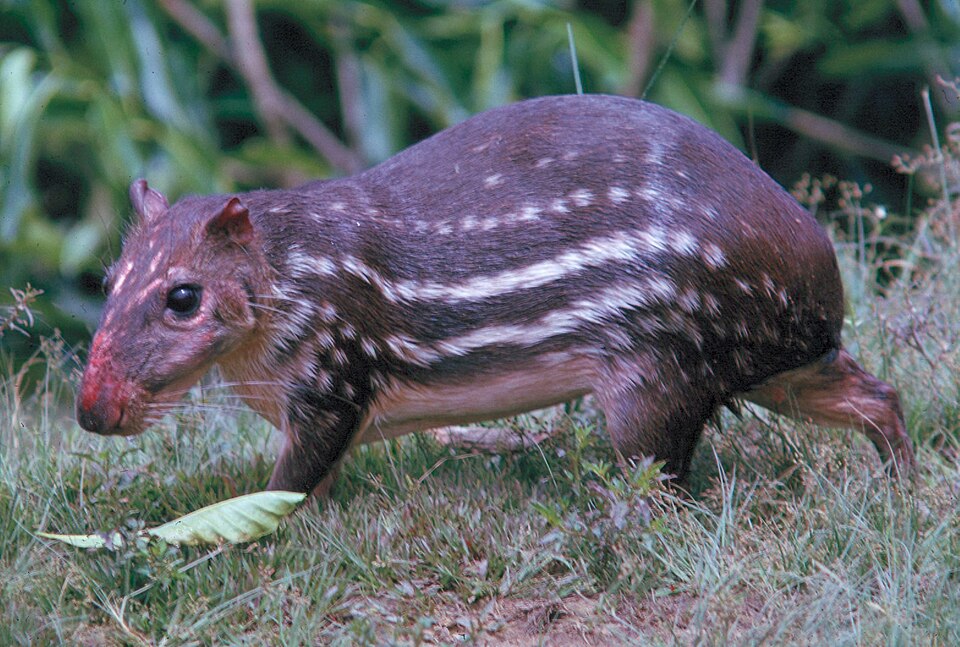
The lowland paca is commonly called Cuniculus paca; older literature may use Agouti paca. Keep these names connected when seeking technical information. A captive-production example does not authorize wild capture, trade or commercial breeding. Resolve those permissions and the source of breeding stock before constructing a unit.
Paca biology also limits what can reasonably be promised. A specialist native animal is not automatically a fast-reproducing substitute for a domestic rabbit. Embrapa's species account and research on captive females are starting points for understanding the animal, rather than universal commercial output guarantees.
Shelter is part of daily welfare
Provide a quiet, shaded enclosure with protected retreat areas, a dry resting surface and secure boundaries. Pacas are associated with sheltered, largely nocturnal behavior. An animal that remains in a retreat during daylight may be behaving normally; forcing it into the open repeatedly for viewing is a poor inspection method.
Arrange the pen so food, water and retreats can be serviced with little disturbance. Inspect gaps under doors and the base of fences as carefully as their height. Use construction suited to strong rodents and protect drainage openings. A calm transfer through a prepared passage is preferable to chasing an animal around the enclosure.
Avoid creating a single blind-ended shelter that two incompatible adults must share. Prepare a separate enclosure for introductions or recovery, and seek experienced advice on pair or group management. An apparently quiet pen can conceal exclusion if one animal uses the shelter while another remains exposed.
Feed for condition and digestive stability
Pacas consume plant material, with fruit an important part of their natural diet. Captive feeding still needs a balanced plan rather than an unrestricted pile of whichever fruit is cheapest. Local produce varies in dry matter, nutrient content and spoilage rate, so appearance alone does not show whether the diet is adequate.
Offer clean feed in a way that avoids prolonged contact with wet bedding and feces. Remove uneaten spoiled material and keep rodents, insects and other pests out of stored ingredients. Provide clean water at an accessible point; do not assume juicy produce meets every water requirement.
When changing ingredients, preserve familiar food while introducing the replacement gradually with technical guidance. If an animal selects only the sweet or soft component, increasing the same mixture may worsen imbalance rather than correct it. Review body condition, feeding access and dental health before assuming that a thin animal simply needs more fruit.
Reproduction needs protected space and realistic expectations
Plan for the needs of breeding females and their young before mating. Reproductive success involves more than producing a litter: the female must maintain condition, the young must develop normally and there must be suitable space after they leave the maternal enclosure.
Research from captive populations can help describe reproductive biology, but its outcomes depend on the animals, husbandry and study conditions. Do not turn a study average into a promised number of sale animals per pen. Establish compatible breeding arrangements with a species specialist and avoid repeatedly introducing unfamiliar adults to force a production schedule.
Health and handling
A sustained fall in appetite, abnormal feces, breathing effort, visible injury or an animal unable to move normally calls for veterinary assessment. Nocturnal habits make quiet observation valuable: compare activity around normal feeding times instead of relying on a daytime glance.
Keep hands away from the mouth of an unrestrained paca. Strong incisors make improvised capture dangerous. Plan veterinary access and transport crates before an emergency, and use experienced handlers. Medicines used in another rodent are not automatically appropriate for pacas intended for food.
Can pacas share a pen with capybaras?
Do not assume so. The species differ in size, behavior and environmental needs. A mixed enclosure introduces competition and handling problems that a specialist should assess before any introduction.
Is fruit alone a complete captive diet?
No such assumption is justified. Use species-informed nutritional advice and assess the whole ration, animal condition and feeding behavior.
Continue reading
Cite this reference
LivestockDefense. “Farmed pacas: feeding, sheltered housing and breeding care.” Updated 2026-11-02. https://livestockdefense.com/animals/pacas/
Add the date you accessed the page. This identifies the current reference; keep a permitted saved copy if your work depends on its exact wording. A citation alone does not establish support for a claim.
How to cite a page and its revision ↗Sources & boundaries
Read the evidence in context.
These documents support the statements identified in this reference. Check their scope and dates when deciding whether they answer your question.
- Embrapa: Paca: fauna e flora do Cerrado
Source update: Not provided. Most recent check: 2026-11-02.
Bounded production identity and species context cited in the global livestock hubs. Practical examples are editorial suggestions. Historical sources do not establish current local market permissions or clinical protocols.
- Acta Amazonica / Instituto Nacional de Pesquisas da Amazônia: Reproductive characteristics of female paca raised in captivity
Source update: Not provided. Most recent check: 2026-11-02.
Captive paca reproduction research and limits on extrapolating intensive production claims.