
This reference uses the specific documents linked in the article and listed below. Check their scope, publication dates and the statements they support.
Animal at a glance
| Topic | Overview |
|---|---|
| Animal group | Herbivorous rodents also called cane rats |
| Production roles | Regional food-animal production from managed stock |
| Life stages | Breeding group, young animals and growing food animals |
Understand the animal behind the enterprise
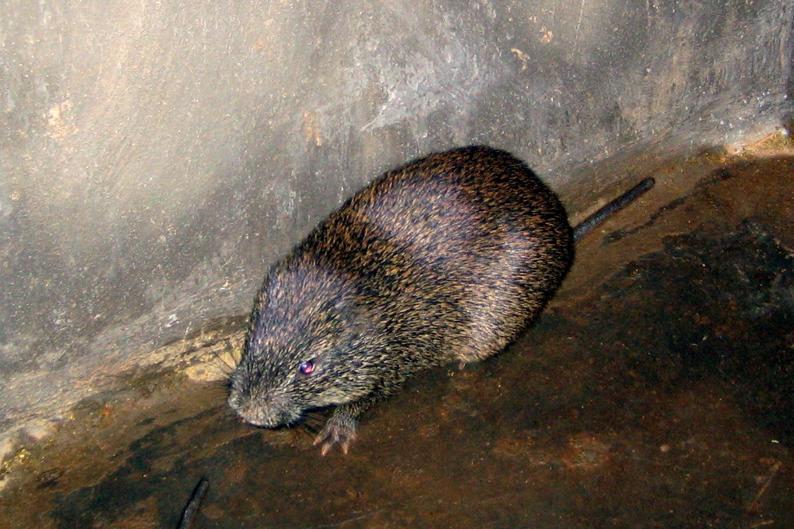
Grasscutter farming concerns managed breeding stock, commonly the greater cane rat, rather than trapping wild animals for a pen. The name describes an animal that cuts plant material with powerful incisors; much of the feed offered may be left as discarded stems. FAO's account of grasscutter domestication describes both the opportunity and the constraints: housing, breeding stock, technical skill and time to returns matter.
Start small enough to learn what the animals actually eat. A large heap of forage disappearing from a rack may include stems pulled out and trampled. Feed access, accepted leaves and discarded material should therefore guide adjustments before increasing purchases or stocking density.
Build the feeding system around suitable forage
Use known, uncontaminated forage and a locally formulated supplement where needed. Grasscutters should not be treated as a disposal route for uncertain kitchen waste, moldy residues or roadside plants exposed to chemicals. Harvest quality, plant identity and safe preparation matter as much as the name of the crop. Keep forage out of feces and remove spoiled remains.
Clean drinking water should be available even when fresh plants contain considerable moisture. Protect bowls or drinkers from bedding and inspect them at the animal's level. A low vessel can be tipped or fouled; a bottle can look full while its outlet is blocked. The Agrodok husbandry manual gives a practical framework for feed, water and daily care without implying that one local ration fits every farm.
Strong housing and predictable care reduce avoidable stress
Pens need gnaw-resistant construction, secure doors, ventilation and a dry resting surface. Check corners, drainage outlets and the junction between wire and frames: small defects become escape routes. A pen should allow cleaning and inspection without driving animals repeatedly into a panic.
Use a quiet approach and a consistent care sequence. Keep dogs, unnecessary visitors and sudden noise away from breeding stock. Before handling, prepare the destination and use a method taught by someone experienced with grasscutters. Grabbing, chasing or improvising restraint can injure the animal and the keeper. Provide an isolation space before purchasing stock, rather than discovering after arrival that the only spare enclosure adjoins the breeders.
Form breeding groups deliberately
Compatibility is a management requirement, not something a cage creates. Introducing an unfamiliar animal can cause aggression, and mating groups need adequate room and escape opportunities. Observe introductions closely with a practical way to separate animals without putting hands between fighting adults.
Feed females for their stage and ensure young animals can reach suitable food and water. Expanding the colony before there is grow-out space often produces crowding just when a litter is weaned. Arrange where surplus males, replacement females and animals needing recovery will go before breeding more females.
Health priorities in a small unit
Watch for an animal that stops feeding, leaves its usual shelter at an unusual time, develops loose feces, breathes with effort or has wounds around the mouth or feet. Poor growth can reflect ration quality, competition, parasites or disease; it is not a diagnosis of worms. Ask a veterinarian familiar with food animals to investigate before using livestock medicines off-label.
Dry housing, sound feed storage, exclusion of pests and separation of new stock are more useful than a routine mixture of unprescribed medicines. When a pen develops illness, do not redistribute apparently healthy animals to every other enclosure while the cause remains uncertain.
Are grasscutters an easy replacement for rabbits?
No. They differ in feeding behavior, social management and handling. Learn the particular species and production system rather than transferring rabbit cage design and breeding assumptions unchanged.
Is more feed always the solution to slow growth?
No. First examine what is eaten, what is wasted, whether each animal can reach it and whether disease or unsuitable housing is limiting performance.
Continue reading
Cite this reference
LivestockDefense. “Grasscutters / cane rats: forage, housing and breeding care.” Updated 2026-11-02. https://livestockdefense.com/animals/grasscutters/
Add the date you accessed the page. This identifies the current reference; keep a permitted saved copy if your work depends on its exact wording. A citation alone does not establish support for a claim.
How to cite a page and its revision ↗Sources & boundaries
Read the evidence in context.
These documents support the statements identified in this reference. Check their scope and dates when deciding whether they answer your question.
- FAO: Wildlife farming and domestication
Source update: Not provided. Most recent check: 2026-11-02.
Bounded species biology, feeding context and production or husbandry statements attributed to this document in the animal overview sections. No numerical feeding, medication, restraint or breeding protocol reproduced.
- Agromisa Foundation / CTA: Backyard grasscutter keeping: Agrodok 52
Source update: Not provided. Most recent check: 2026-11-02.
Grasscutter housing, forage, compatible breeding groups, water, handling and husbandry; treatment formulas are not reproduced.