
This reference uses the specific documents linked in the article and listed below. Check their scope, publication dates and the statements they support.
Animal at a glance
| Topic | Overview |
|---|---|
| Animal group | Small gallinaceous birds; Japanese quail and bobwhite are different stock |
| Production roles | Food eggs, meat, breeders and hatchery stock |
| Life stages | Chick, growing bird, layer and breeder |
Identify the quail and the production goal
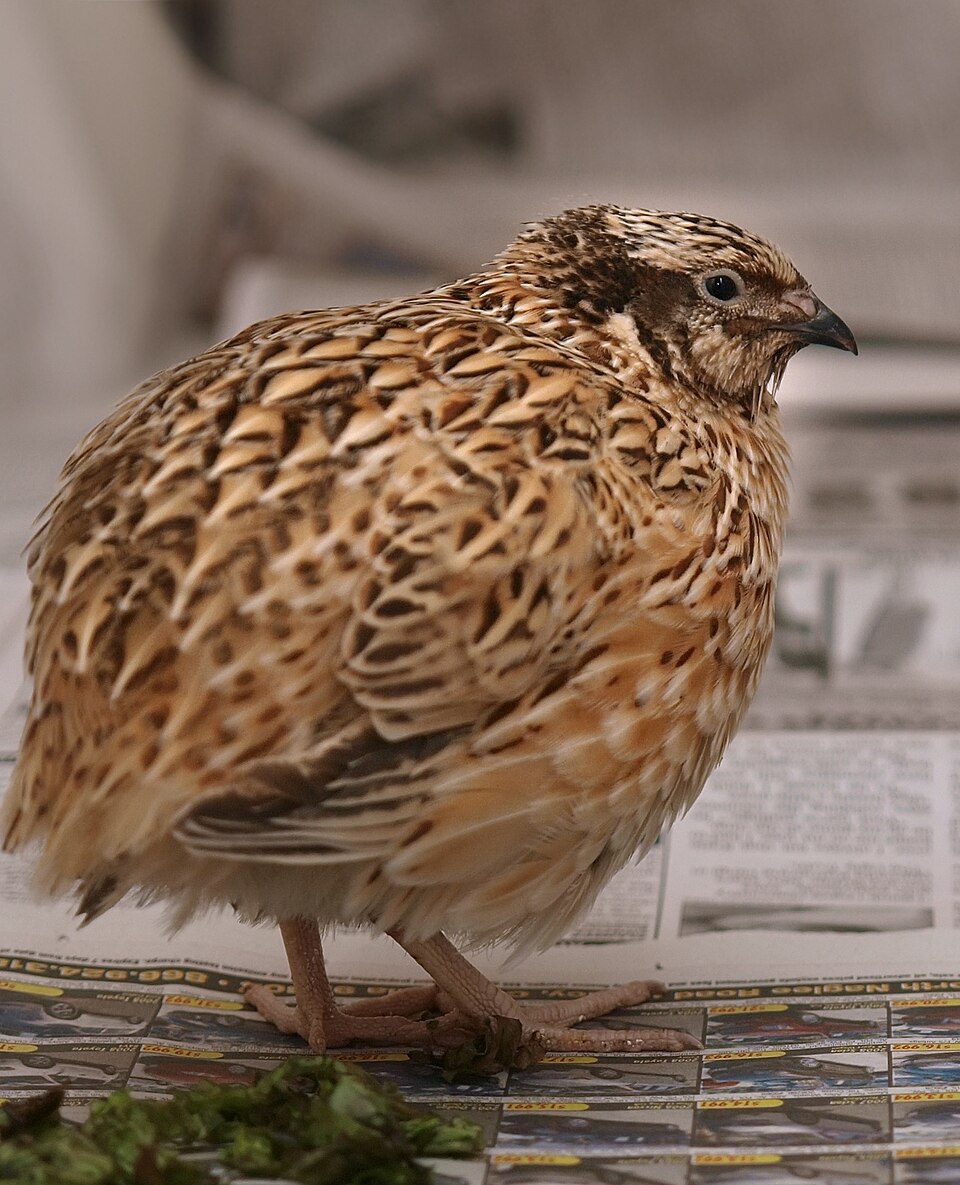
Japanese quail are widely associated with egg and meat production, while other quail have different growth and management histories. A common name on a sale listing is not enough to choose a feeding program. Alabama Extension's gamebird guide distinguishes species and the starter, growing and breeding stages.
Decide whether the flock will produce table eggs, fertile eggs, meat or replacement breeders. Table-egg production does not require males, while a breeding flock must balance fertility with the welfare of females. Too many or incompatible males can turn a productive-looking group into one with repeated injuries.
Brooding succeeds when chicks find food, water and comfort
Prepare and stabilize the brooder before chicks arrive. Provide a warm area and a cooler area they can move into, with dry footing that allows secure movement. Observe distribution: chicks crowding tightly in one place, avoiding the heat or gathering along a draft suggest that the setup needs adjustment.
Tiny chicks must be able to reach and recognize their feed and water. Use suitable shallow, protected drinkers that reduce drowning risk, and position them where chicks can use them without wetting the resting area. A bucket of water nearby is not access for a quail chick. Check the smallest chicks directly rather than assuming the active birds represent the whole group.
Use starter feed formulated for the species and stage. A fine enough feed particle and accessible presentation matter as much as the label. Avoid replacing complete starter with grain or greens during this vulnerable growth period. The brooding guide explains how to assess the brooder rather than relying on one temperature reading.
Match the ration to growing or laying birds
Growing quail and actively laying females do not have identical nutritional needs. Use a complete suitable feed and change stages deliberately; don't dilute a formulated ration with large amounts of grain because the birds eat it eagerly. The MSD nutrition chapter explains the importance of species-appropriate feeding.
Protect feed from moisture and pests, and keep drinkers functioning throughout the day. If birds lose condition or egg output declines, assess feed intake, water, environment and health before adding supplements. A normal-looking bag of feed cannot show whether a timid female reaches the feeder.
Housing must account for sudden upward flight
Quail can jump or fly abruptly when startled. Enclosure design should prevent escapes and reduce injury from striking hard overhead surfaces. Use appropriate species-specific housing advice when deciding height and overhead protection rather than assuming a low cage is automatically safer.
Provide dry litter or another suitable comfortable surface, ventilation and protection from predators. Wire size, door gaps and drains must suit very small birds. Plan for cleaning and collecting eggs without repeatedly scattering the flock. Hiding and visual barriers can help, but should not create cramped dead ends where a bird is trapped by another.
Breeders, eggs and health
Use sound, compatible breeders and watch females for missing feathers or wounds associated with mating. Separate an injured bird into a safe recovery arrangement, while assessing the cause in the breeding group. Fertile egg handling and incubation should use a program appropriate to the species; chicken incubation settings are not a universal quail standard.
Breathing difficulty, persistent diarrhea, neurological signs, inability to stand or unusual mortality require veterinary advice. Do not move birds to another flock or market while investigating an unexplained problem. Choose any medicines with a veterinarian who knows the birds are used for meat or eggs.
Can quail eat chicken layer pellets?
A product suitable for mature laying chickens is not automatically suitable for quail, especially chicks or growing birds. Check the species, stage, nutrient specification and any medication in the feed.
Why are some chicks piling while others appear comfortable?
Investigate uneven heat, drafts, lighting, access and crowding at the chick level. The average room temperature may conceal a cold or wet corner.
Continue reading
Field guides for this animal
Browse all Quail field guides for husbandry advice, health explanations and practical farm routines.
Cite this reference
LivestockDefense. “Quail: brooding, feeding, laying and practical flock care.” Updated 2026-11-02. https://livestockdefense.com/animals/quail/
Add the date you accessed the page. This identifies the current reference; keep a permitted saved copy if your work depends on its exact wording. A citation alone does not establish support for a claim.
How to cite a page and its revision ↗Sources & boundaries
Read the evidence in context.
These documents support the statements identified in this reference. Check their scope and dates when deciding whether they answer your question.
- MSD Veterinary Manual: Nutrition in quail, pheasants, turkeys and other gallinaceous birds
Source update: Not provided. Most recent check: 2026-11-02.
Bounded species biology, feeding context and production or husbandry statements attributed to this document in the animal overview sections. No numerical feeding, medication, restraint or breeding protocol reproduced.
- Alabama Cooperative Extension System: Feeding game birds: pheasant, quail and partridge
Source update: Not provided. Most recent check: 2026-11-02.
Species and production-stage feeding; gamebird starter versus growing and breeder diets.