
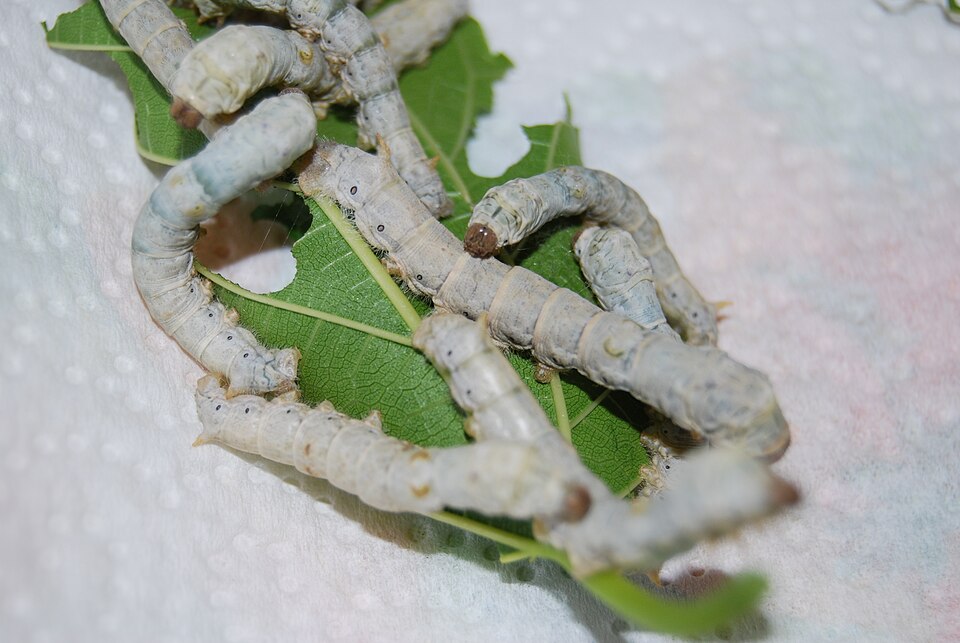
Mulberry silkworm production stages
- Eggs
Reliable seed source and suitable incubation
- Young larvae
Tender appropriate leaf and protected rearing
- Late larvae
Greater leaf supply, bed space and ventilation
- Cocoons and pupae
Suitable mounting and intended silk or seed route
- Moths
Breeding stage for the next generation
This reference uses the specific documents linked in the article and listed below. Check their scope, publication dates and the statements they support.
Animal at a glance
| Topic | Overview |
|---|---|
| Animal group | Insect larvae; Bombyx mori is the mulberry silkworm |
| Production roles | Silk and specified pupa or other food/feed outputs |
| Life stages | Egg, feeding larva, cocoon, pupa and moth |
Connect the insect crop to the mulberry crop
A silkworm enterprise needs a dependable supply of appropriate leaves before eggs hatch. The quality of mulberry, its harvest timing and its protection from chemical contamination affect the larvae that consume it. A rearing room cannot compensate for leaves that are spoiled, unsuitable for the stage or exposed to an unsafe pesticide application.
The Central Silk Board rearing guide distinguishes young-age and later rearing. Tender leaf suitable for small larvae and the requirements of a large late-stage crop are not the same. Plan the garden and the insect batch together so the most demanding feeding period is not met with emergency purchases of uncertain leaf.
Match the rearing bed to the larval stage
Provide suitable space as larvae grow and maintain air movement through the room and rearing arrangement. A crowded bed can retain moisture and waste beneath the visible leaf layer. Inspect the bed itself rather than assuming that a clean aisle means the crop is clean.
Use appliances and surfaces that can be cleaned effectively. Keep leaf storage, clean equipment and waste-handling areas separate enough to avoid repeatedly contaminating the material entering the room. Control pests at the site without exposing the insects or their food to unapproved chemicals.
Temperature and humidity should suit the particular stock, stage and local technical program. Avoid copying one setting from an early-larval table and leaving it unchanged through cocooning. Check actual conditions at the beds and use a competent sericulture adviser when the room cannot maintain suitable conditions.
Moulting is a transition, not a feeding failure
Larvae pass through molts as they grow. Their behavior and care needs change during these periods. Follow a stage-appropriate rearing program and avoid unnecessary disturbance when a cohort is settling for a molt. A normal pause and a crop with widespread abnormal development are different situations.
When larvae resume activity, ensure suitable feed and adequate space are ready. Uneven development can leave smaller individuals competing with much larger larvae. Seek technical advice if hatching, moulting or growth becomes markedly irregular rather than forcing every tray through the same timetable.
Provide a suitable place to spin
Mature larvae need appropriate mounting structures for cocoon formation. Mounting capacity should be ready before the crop reaches that stage. Crowding the available structures because the farm expanded its hatch can compromise the entire batch.
Keep the spinning environment ventilated and suitable for the crop. Remove spoiled material using the approved production hygiene procedure. Cocoon handling and harvest timing depend on the intended silk process and breeding plan; not every cocoon is destined for the same end use.
Disease prevention begins with eggs, leaves and equipment
Use a reliable seed source and the appropriate disease-screening program. Central Silk Board disease guidance describes pathways involving eggs, contaminated leaves and rearing appliances. Hygiene is therefore more than cleaning the room at the start: it includes what enters each bed throughout the crop.
Watch for a rise in deaths, unusual body swelling, repeated failure to molt, marked loss of appetite or inconsistent growth. Isolate the affected crop according to professional guidance and avoid moving its material to healthy beds. Do not apply a household disinfectant or agricultural pesticide directly to larvae because a chemical is effective on a building surface.
Silk by-products are not automatically food-grade
Pupae may have food or feed uses in certain systems, but suitability depends on the production inputs, processing and destination. A silk-processing by-product should not be sold as edible solely because the insect species is eaten elsewhere. Verify the lawful product route, safety controls and labeling with the relevant authorities and buyer.
Can mulberry leaves from any source be used?
No. Leaf quality, stage suitability, freshness and chemical exposure must be considered. A leaf's appearance alone cannot establish its pesticide status.
Are all silkworms managed like Bombyx mori?
No. Other silk-producing insects can use different host plants and systems. This page concerns mulberry silkworm husbandry.
Continue reading
Field guides for this animal
Browse all Silkworms field guides for husbandry advice, health explanations and practical farm routines.
Cite this reference
LivestockDefense. “Silkworms: mulberry feeding, moulting, cocooning and hygiene.” Updated 2026-11-02. https://livestockdefense.com/animals/silkworms/
Add the date you accessed the page. This identifies the current reference; keep a permitted saved copy if your work depends on its exact wording. A citation alone does not establish support for a claim.
How to cite a page and its revision ↗Sources & boundaries
Read the evidence in context.
These documents support the statements identified in this reference. Check their scope and dates when deciding whether they answer your question.
- FAO: Supporting sericulture rehabilitation
Source update: Not provided. Most recent check: 2026-11-02.
Bounded species biology, feeding context and production or husbandry statements attributed to this document in the animal overview sections. No numerical feeding, medication, restraint or breeding protocol reproduced.
- Central Silk Board, Government of India: Rearing of mulberry silkworm
Source update: Not provided. Most recent check: 2026-11-02.
Stage-appropriate mulberry leaf, ventilation, moulting and mounting; chemical recipes and breed-specific numerical settings not reproduced.
- Central Silk Board, Government of India: Diseases and pests of mulberry silkworms
Source update: Not provided. Most recent check: 2026-11-02.
Disease entry through leaves, eggs and appliances; hygiene, crowding and early investigation. Treatment formulas not reproduced.