
This reference uses the specific documents linked in the article and listed below. Check their scope, publication dates and the statements they support.
Animal at a glance
| Topic | Overview |
|---|---|
| Animal group | Domestic bovines; river and swamp buffalo have different production histories |
| Production roles | Milk, meat, breeding stock and draught work |
| Life stages | Calf, growing animal, breeding adult, milking or working buffalo |
River and swamp buffalo are different production subjects
Domestic water buffalo are commonly discussed as river and swamp types, with different regional histories and production roles. River buffalo are especially important in dairying; swamp buffalo have strong associations with draught and mixed farming. The FAO buffalo overview is a useful starting point, but the label water buffalo alone does not define expected milk yield, mature size or workload.
Select breeding stock for the intended system rather than an attractive photograph or a promise of exceptional yield. Ask whether the animals' feed, climate and level of care resemble the farm that will receive them. A high-producing dairy animal needs a dependable ration, milking routine and veterinary support, not only pasture access.
Make forage supply dependable before increasing concentrate
Buffalo are ruminants. Plan the forage base through the least productive season, then balance other ingredients for growth, pregnancy, lactation or work. Low-quality crop residues may provide bulk while failing to support the nutrients required by a lactating animal. Conversely, abrupt increases in grain are not a safe shortcut to correcting a poor forage plan.
Provide clean drinking water in a separate, accessible system. Check the trough refill rate during peak demand and inspect whether subordinate animals can approach. Move feeders or improve drainage where animals must stand in deep mud to eat. Evaluate ration quality with a competent nutrition adviser rather than assuming buffalo can thrive indefinitely on whatever cattle reject.
Cooling is a daily husbandry task
Buffalo need a practical way to lose heat. Shade, appropriate water-based cooling and air movement should be considered together. Wallowing may be part of a system, but a stagnant, crowded mud hole is not equivalent to clean water provision or adequate space. Where showers or sprinklers are used, the runoff needs somewhere to go without turning the resting and milking areas into wet sludge.
Watch the animals during the hottest part of the day. Crowding around the sole shaded corner, reluctance to move, sustained panting or a fall in feeding are reasons to review comfort promptly. Do not wait for production to decline before repairing a failed water supply. The companion buffalo cooling guide looks more closely at these choices.
Calves and milk need a shared plan
Protect newborn calves from exposure, dirty ground and delayed feeding. Colostrum management and timely assessment of a calf that does not suck are important parts of the calving plan. In systems where calf presence helps milk let-down, decide how the calf will receive adequate milk as the milking routine develops. Milk removed for sale and milk available to the calf are connected decisions.
Provide suitable starter feed, forage and water as calves grow, with a gradual transition to the post-weaning diet. Separate calves by their needs and size where competition prevents smaller animals from feeding. A calf that looks full after drinking but fails to grow needs an assessment of the entire feeding and health situation.
Milking, feet and safe handling
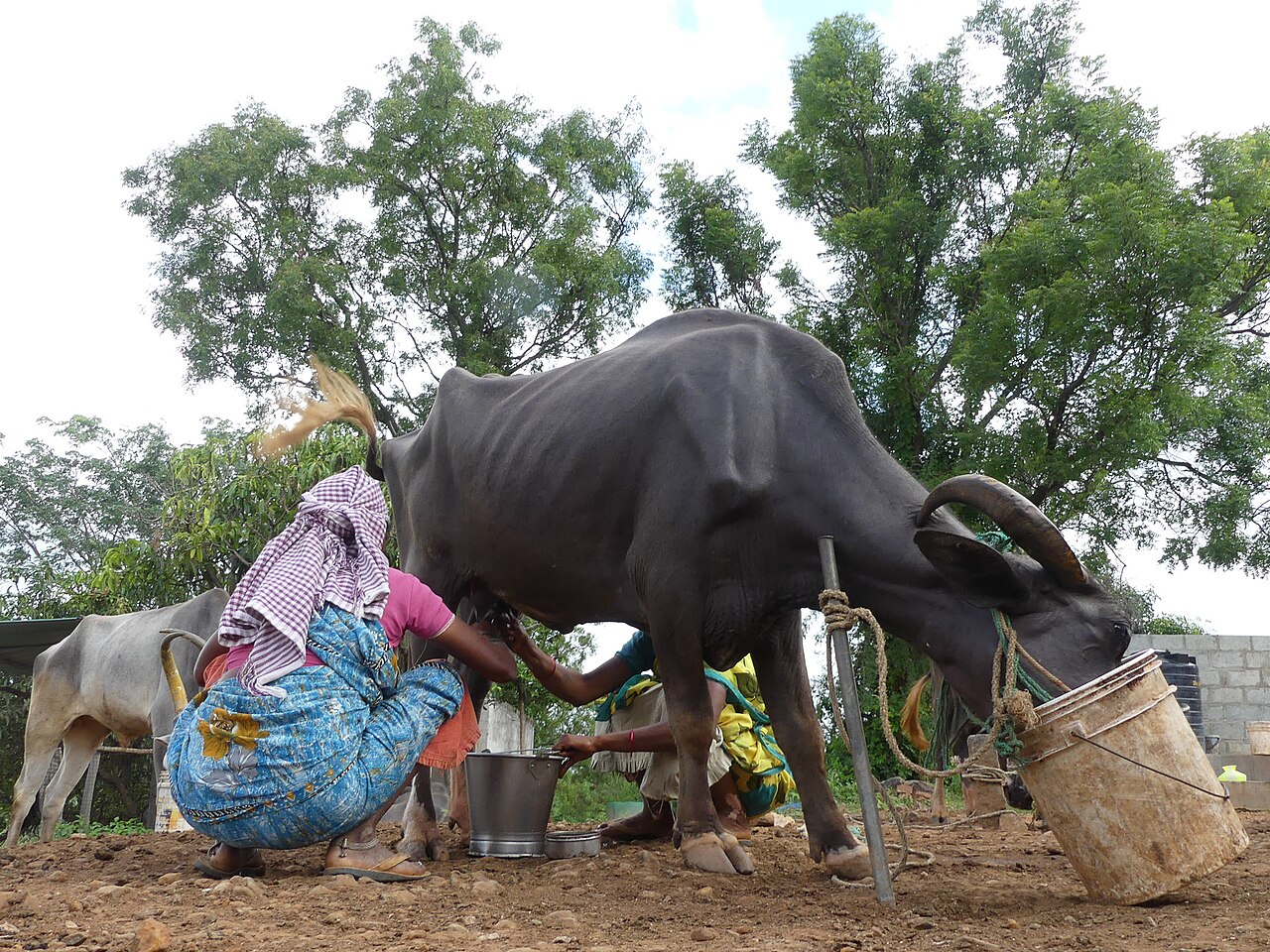
Use a clean, calm milking routine and equipment appropriate to the animals. A swollen or painful udder, abnormal milk, fever or a marked appetite change needs veterinary evaluation. Handle food-chain medicines through the responsible veterinarian and comply with the required withdrawal period.
Adult buffalo require facilities designed for their strength and horn shape. Teach animals to move quietly through suitable lanes; do not improvise restraint by crowding them against a weak gate. Maintain a dry resting area and inspect feet when animals become reluctant to walk, especially around muddy feeding or cooling points.
Does access to a wallow replace drinking water?
No. Cooling water and clean drinking water serve different purposes. Animals should not have to drink heavily contaminated water to meet their daily needs.
Can a buffalo dairy use a cattle ration unchanged?
A cattle formulation is not automatically suitable. Use the actual buffalo's stage, body condition, feed analysis and production rather than the species label alone.
Continue reading
Further husbandry sources
Field guides for this animal
Browse all Water buffalo field guides for husbandry advice, health explanations and practical farm routines.
Cite this reference
LivestockDefense. “Water buffalo: feeding, cooling, calf care and milk production.” Updated 2026-11-02. https://livestockdefense.com/animals/water-buffalo/
Add the date you accessed the page. This identifies the current reference; keep a permitted saved copy if your work depends on its exact wording. A citation alone does not establish support for a claim.
How to cite a page and its revision ↗Sources & boundaries
Read the evidence in context.
These documents support the statements identified in this reference. Check their scope and dates when deciding whether they answer your question.
- FAO: Buffaloes: dairy production
Source update: Not provided. Most recent check: 2026-11-02.
Bounded production identity and species context cited in the global livestock hubs. Practical examples are editorial suggestions. Historical sources do not establish current local market permissions or clinical protocols.
- ICAR–Central Coastal Agricultural Research Institute: Buffalo farming: guidelines for good management
Source update: Not provided. Most recent check: 2026-11-02.
Bounded husbandry statements mapped in the buffalo-comfort or ratite-chick guide; planning explanations are editorial synthesis. No dosing, invasive procedures or universal construction dimensions reproduced.
- ICAR–Central Institute for Research on Buffaloes: Shelter management in buffaloes
Source update: Not provided. Most recent check: 2026-11-02.
Bounded husbandry statements mapped in the buffalo-comfort or ratite-chick guide; planning explanations are editorial synthesis. No dosing, invasive procedures or universal construction dimensions reproduced.