
This reference uses the specific documents linked in the article and listed below. Check their scope, publication dates and the statements they support.
Why buffalo cooling deserves its own plan
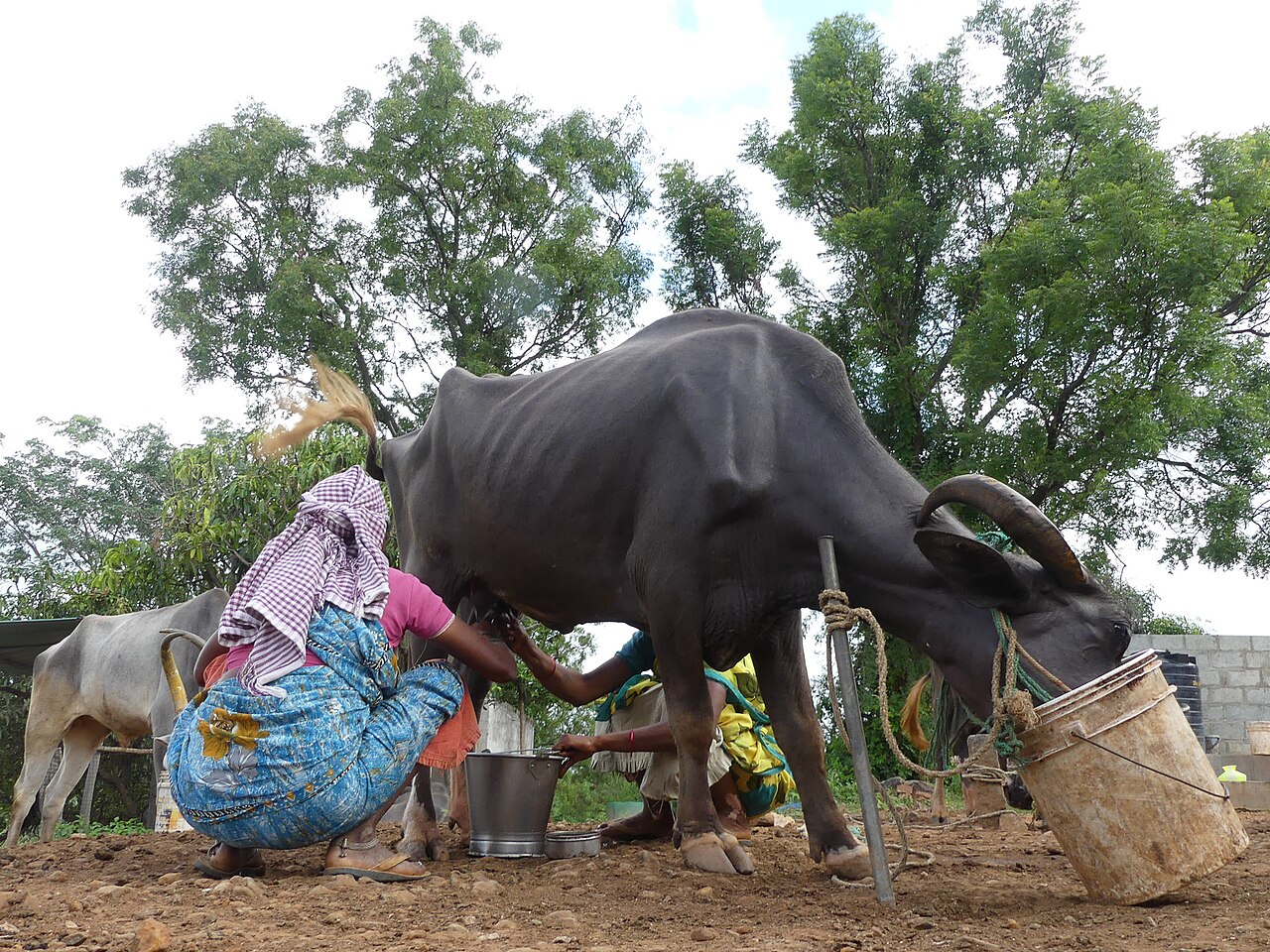
Buffalo may be associated with hot regions, yet direct sun and humid, still air can challenge their ability to shed heat. The ICAR buffalo shelter reference links prolonged heat exposure with reduced eating, growth and milk production. A black coat and relatively limited sweating make shade and other cooling measures important. Climate adaptation should never be read as immunity to heat stress.
Think about the entire day: the resting area, the route to feed, the collecting yard and the wait for milking. A shaded shed helps little during a long wait in an exposed yard. Review where animals actually spend the hottest hours and whether every buffalo can use the comfortable areas at once. This is a facility-design question rather than an instruction to build the same shed in every climate.
Keep drinking and cooling functions separate
The ICAR-CCARI farming guide calls for clean, fresh drinking water and discusses showers, fans and wallowing as cooling options. A wallow is not a substitute for a dependable drinking supply. Check that troughs refill adequately and remain accessible when the herd gathers around them; a smaller animal should not have to pass a dominant adult to reach the only water point.
Before installing sprinklers or a pool, work out the water supply, drainage, cleaning access and electrical safety. Decide how the system will function when water pressure falls or power fails. Running water without a drainage plan can turn the feeding approach into an obstacle. A cooling system should improve the usable environment, rather than move the problem from hot animals to persistently wet footing.
Provide somewhere dry to rest
The HFAC dairy-water-buffalo standard addresses shade, cooling and dry resting areas. It is a voluntary production standard, not a universal statement of local law. Its useful distinction is that wallowing and resting facilities have different jobs. Animals need somewhere comfortable to lie down outside the wet cooling area.
Design the resting area and approaches so buffalo can get up, turn and leave without slipping or being trapped by another animal. Inspect high-traffic spots beside troughs and the milking entrance. The best place to examine a wet-weather problem is the actual route through the facility, including low areas that hold water after the main yard appears dry. Adapt repairs to local ground, rainfall and manure handling.
Connect comfort with eating and milking
The University of Florida buffalo collection illustrates several production settings: sprinklers, shallow cooling pools, pasture, silage feeding and machine milking. These photographs show that there is more than one workable system; they do not establish one preferred design for every farm. Use them to understand the components of a system rather than copy an isolated photograph.
Choose a ration for the animals' production stage and provide enough feeding access for the group. Milk production depends on more than the milk collected: calf suckling, lactation stage and the actual feeding and cooling arrangements also matter. When a buffalo eats less or milk falls, assess the animal and the environment together rather than automatically adding concentrate or assuming the weather explains everything.
When comfort becomes an urgent health concern
Marked panting, an exposed tongue or obvious distress in hot conditions warrants immediate attention to cooling and veterinary advice; the HFAC standard lists these among heat-distress observations. An animal that cannot get up, has breathing difficulty or does not recover normally needs prompt professional assessment. Arrange access to help before a hot-weather emergency occurs. Avoid forcing a distressed animal through an unnecessary journey to a distant cooling point.
Does a buffalo always need a natural pond?
No. The sources describe several cooling approaches. The practical requirement is an effective, safe system suited to the climate, animals and water available, with separate drinking access and comfortable rest.
Can I use a dairy-cattle shed unchanged?
Use the water-buffalo overview to identify the herd's needs, then assess the existing building with an experienced adviser. Air movement, shade, cooling, traffic and resting comfort deserve attention before the building is assumed suitable.
Cite this reference
LivestockDefense. “Buffalo cooling, drinking water and comfortable housing.” Updated 2026-11-02. https://livestockdefense.com/guides/buffalo-cooling-water-and-comfort/
Add the date you accessed the page. This identifies the current reference; keep a permitted saved copy if your work depends on its exact wording. A citation alone does not establish support for a claim.
How to cite a page and its revision ↗Sources & boundaries
Read the evidence in context.
These documents support the statements identified in this reference. Check their scope and dates when deciding whether they answer your question.
- ICAR–Central Coastal Agricultural Research Institute: Buffalo farming: guidelines for good management
Source update: Not provided. Most recent check: 2026-11-02.
Bounded husbandry statements mapped in the buffalo-comfort or ratite-chick guide; planning explanations are editorial synthesis. No dosing, invasive procedures or universal construction dimensions reproduced.
- ICAR–Central Institute for Research on Buffaloes: Shelter management in buffaloes
Source update: Not provided. Most recent check: 2026-11-02.
Bounded husbandry statements mapped in the buffalo-comfort or ratite-chick guide; planning explanations are editorial synthesis. No dosing, invasive procedures or universal construction dimensions reproduced.
- Humane Farm Animal Care: Standards for production of dairy water buffaloes
Source update: 2022-03-21. Most recent check: 2026-11-02.
Bounded husbandry statements mapped in the buffalo-comfort or ratite-chick guide; planning explanations are editorial synthesis. No dosing, invasive procedures or universal construction dimensions reproduced.
- University of Florida College of Veterinary Medicine: Visual guide to bubaline reproduction: miscellaneous images
Source update: Not provided. Most recent check: 2026-11-02.
Bounded husbandry statements mapped in the buffalo-comfort or ratite-chick guide; planning explanations are editorial synthesis. No dosing, invasive procedures or universal construction dimensions reproduced.