
This reference uses the specific documents linked in the article and listed below. Check their scope, publication dates and the statements they support.
Animal at a glance
| Topic | Overview |
|---|---|
| Animal group | Highland bovine ruminants; distinguish yak from yak–cattle hybrids |
| Production roles | Milk, meat, fibre, breeding and work in regional systems |
| Life stages | Calf, growing animal and seasonal breeding, milking or working groups |
Cold adaptation does not mean care-free husbandry
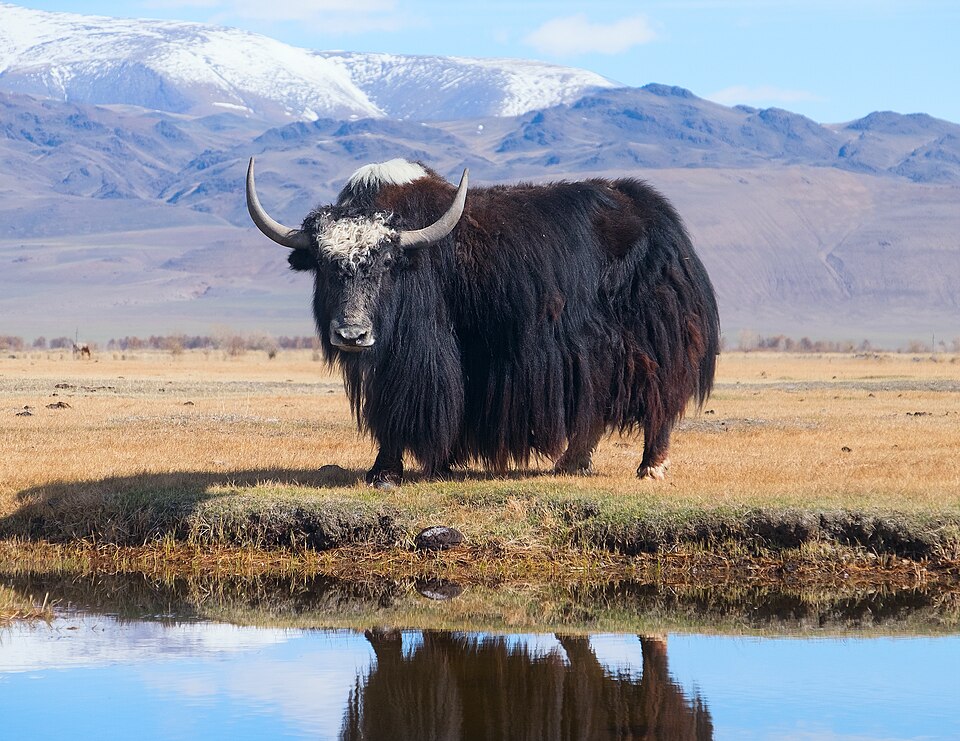
Yaks are closely associated with cold highland environments. FAO's environmental review shows why temperature, vegetation and terrain must be considered together. Moving yak to a warmer lowland farm changes their comfort requirements; their ability to tolerate cold does not demonstrate an ability to cope with sustained heat.
Before keeping yak, assess the hottest period as carefully as the coldest. Reliable shade, water and access to cooler resting areas matter. Handling or transport should not add avoidable exertion during difficult heat conditions. An animal standing apart, breathing with effort or unwilling to graze needs attention, rather than being dismissed as naturally slow or quiet.
Plan around the seasonal forage gap
In traditional systems, much growth and condition gain occur during the favorable grazing season. Winter and spring shortages can reverse those gains. A productive summer pasture therefore needs a winter counterpart: conserved forage, an appropriate supplementary plan and access when snow or ice limits grazing.
Do not judge availability only by the area inside the fence. Assess what is edible and accessible, whether animals must spend excessive effort reaching it and whether the smaller animals are displaced. Test conserved feed where possible and ask a nutrition adviser to balance it for the herd's stages. Poor-quality hay offered in unlimited quantity is still poor-quality hay.
Introduce supplementary feeds gradually. A sudden concentrate increase can disturb a ruminant's digestive system and should not be the first response to visible winter weight loss. Begin preparations before body reserves are exhausted, especially for pregnant females and growing calves.
Milk production and calf growth are linked
FAO's production review describes seasonal growth and the relationship between calf milk access and milk taken for people. The practical implication is straightforward: a milking plan must also be a calf-feeding plan. Early growth helps a calf face its first winter; milk sales are not the sole measure of a successful season.
Observe nursing and ensure weak calves are not overlooked. A calf can remain near its dam without taking enough milk. Newborns need prompt colostrum, shelter suitable to local conditions and veterinary assistance if they cannot stand or suck normally. As calves begin using forage, provide a feeding area they can reach without competing with the entire adult herd.
Fibre and work should not compromise condition
Yak produce different fibre types, including valuable down. Harvest methods should protect the skin and leave the animal suited to the weather. Do not copy a shearing date from another climate or remove protective coat just before cold exposure.
For working animals, match the task to body condition, soundness, terrain and conditioning. A heavily loaded animal cannot compensate for inadequate feeding simply because the species is known for endurance. Inspect packs and contact points for rubbing and allow recovery. Difficulty walking, a new asymmetry in gait or repeated reluctance to rise should prompt an examination rather than more pressure to work.
Breeding and herd health
Choose breeding arrangements that fit the forage calendar and available care at calving. Maintain a species-appropriate veterinary plan for regional infections, parasites and movement requirements. Do not assume a yak-cattle cross has the same fertility or production characteristics as a pure yak.
Watch appetite, breathing, locomotion and calf development. A down animal, difficult birth, substantial injury or persistent refusal to eat warrants urgent help. Strong gates and calm handling lanes make routine care safer; chasing animals across rough ground creates new injury risks without resolving the original problem.
Are yaks suitable wherever winters are cold?
Not necessarily. Summer heat, forage quality, water access and the availability of experienced care may be more limiting than the winter minimum temperature.
Is winter weight loss always unavoidable?
Seasonal change is described in traditional production studies, but severe loss should not be accepted as a husbandry goal. Use feed planning and timely professional advice to protect condition and welfare.
Continue reading
Cite this reference
LivestockDefense. “Yaks: seasonal grazing, winter feed, calf growth and comfort.” Updated 2026-11-02. https://livestockdefense.com/animals/yaks/
Add the date you accessed the page. This identifies the current reference; keep a permitted saved copy if your work depends on its exact wording. A citation alone does not establish support for a claim.
How to cite a page and its revision ↗Sources & boundaries
Read the evidence in context.
These documents support the statements identified in this reference. Check their scope and dates when deciding whether they answer your question.
- FAO: The yak in relation to its environment
Source update: Not provided. Most recent check: 2026-11-02.
Bounded species biology, feeding context and production or husbandry statements attributed to this document in the animal overview sections. No numerical feeding, medication, restraint or breeding protocol reproduced.
- FAO: The yak: production characteristics
Source update: Not provided. Most recent check: 2026-11-02.
Seasonal calf growth, milk sharing, fibre and production context; historical regional figures are not universal targets.