
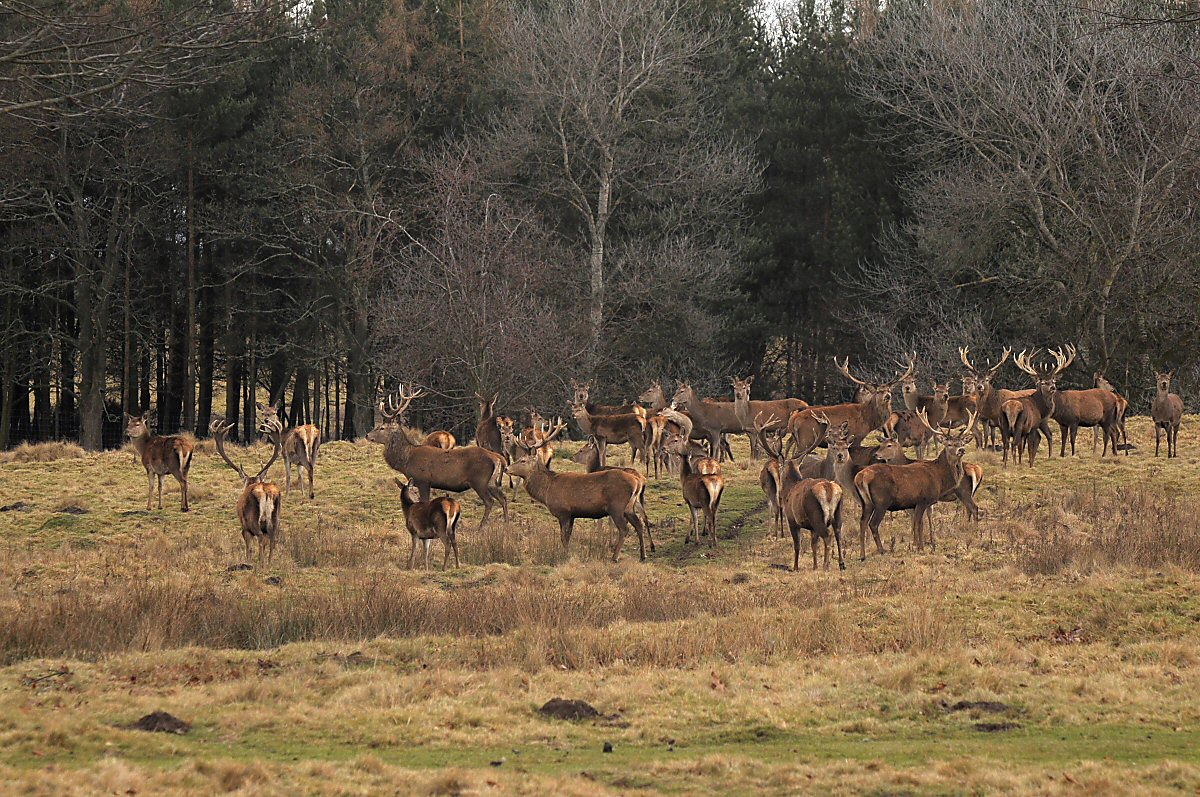
Describe what can actually be seen
Record the animal’s identity, location and the visible finding in plain language. Note the observation distance and whether the animal was moving normally in the course of ordinary activity. A distant view may establish that something changed without defining the wound or underlying injury.
Avoid adding a confident anatomical or disease label that the observation cannot support. If an image is available, keep its original file and date. A cropped image without scale or orientation may be less useful than the original scene and a concise description.
Preserve the event sequence
Record when the deer was last observed without the concern, when the change was found and any witnessed event. Distinguish a direct account from a proposed explanation such as contact with a fence or another animal. Timing can narrow a question without proving the mechanism.
| Record component | Useful distinction |
|---|---|
| Animal identity | Confirmed ID versus uncertain identification |
| Visible finding | Direct observation versus inferred extent |
| Event history | Witnessed action versus suspected cause |
| Behavior | Ordinary observation rather than forced movement |
| Advice | Veterinary instructions and their actual completion |
Ask what the veterinarian needs next
Give the professional the safe observations, group context and relevant handling history. Ask who should conduct further assessment and what precautions apply. This guide gives no sedation, restraint, wound manipulation or antler-treatment instructions.
Keep any movement or access instructions with the care record. If official requirements are relevant to the animal or premises, obtain advice from the appropriate authority. General deer-husbandry reading does not establish permission for a particular handling or transport action.
Work through an uncertain-identity example
In a hypothetical group, one worker reports a visible antler concern in “the large male near the east gate.” Another worker later associates the note with a specific ID, but the link is uncertain. Preserve the original description and the later attribution as separate statements.
Ask the experienced team to resolve identity through safe, appropriate means. Do not copy the concern into a confirmed individual history without a basis. Equally, do not discard it because the first observation lacked a tag number; the location and time may still help.
Keep follow-up tied to the same finding
Record what the veterinarian concluded, the instructions received and subsequent observations. If the injury appears different later, add the new description with its time. A later improvement does not establish what caused the initial injury, and a photograph alone may not show every clinically important change.
Use the farmed-deer reference and repeat-injury record guide to connect individual care with facility review. Preserve private premises information when sharing images, and keep the clinical record separate from any public educational example.
Keep the image and animal linked
If several similar deer are photographed, preserve the basis for identifying each image. Do not rely on a later filename alone when the original observer was uncertain. A useful image set records date, location, known identity and uncertainty, allowing the professional to use it without inheriting a guessed assignment.
Make the first message useful without a close view
Start with the current concern, the deer’s location and how confidently it is identified. Add the ordinary behavior actually seen and any witnessed event. Explicitly state what could not be assessed from the available view. A distant observation can be sufficient to raise a concern without providing the detailed wound description a professional examination may later supply.
If several workers report the same apparent injury, connect their accounts by time and location while preserving identity uncertainty. Do not automatically create several injured deer, or automatically merge every report, because the descriptions sound similar. The experienced team can decide how to resolve the record appropriately.
Separate facility review from injury assessment
A fence or fixture concern can be documented through the competent site team’s findings. Retain its location, inspection date and any completed correction. A physical feature near the deer is context, not a witnessed injury mechanism unless the event was actually observed.
For a fictional review, a worker notices both an antler concern and damage to a nearby barrier. The two findings belong in the same event history, but neither proves that the barrier caused the injury or that the deer caused the damage. Keep the veterinary assessment and technical findings distinct so each can support only its own conclusion.
Common questions
Is a clearer image worth disturbing the group?
Follow the cervid-experienced team’s advice and obtain only observations appropriate to the circumstances. The record’s quality should not depend on creating an unsafe encounter.
Can an educational photograph be used as this deer’s comparison?
A reference image can be labeled as general context. It is not this animal’s baseline and should never enter the individual record as an earlier finding.
Cite this reference
LivestockDefense. “Farmed deer antler injuries: safe observations and veterinary handoff.” Updated 2026-11-03. https://livestockdefense.com/guides/farmed-deer-antler-injury-observation-limits/
Add the date you accessed the page. This identifies the current reference; keep a permitted saved copy if your work depends on its exact wording. A citation alone does not establish support for a claim.
How to cite a page and its revision ↗