
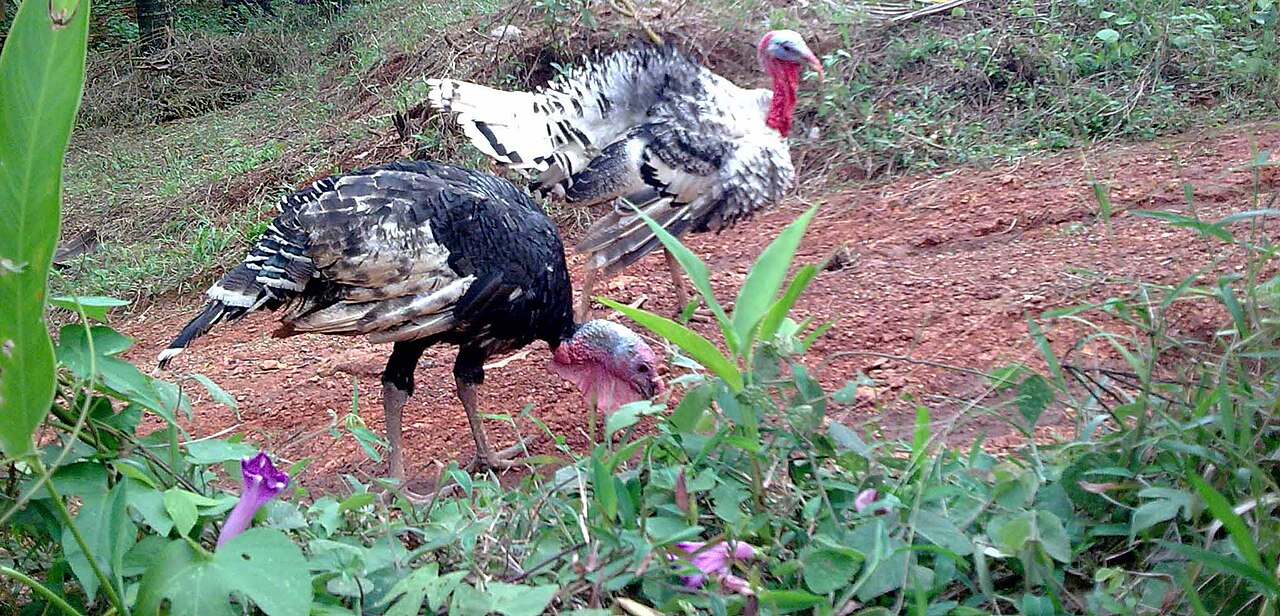
A tidier floor is only part of the outcome
Begin with the birds’ current comfort and ordinary movement. A maintenance hypothesis should not delay veterinary assessment of an injured or unwell turkey. Keep the worker’s description separate from the clinician’s findings, and avoid assigning severity from an unclear image.
Describe the contact area rather than simply whether litter was added. A pile changes the usable surface and may differ from surrounding bedding in more than appearance. Ask the housing adviser which features need assessment and what staff can safely observe. This guide does not provide a litter-product recipe or a lesion-treatment method.
Observation opportunity can produce a misleading map. If most close checks occur near a service door, more concerns may be recorded there while the rest of the flock received less attention. Preserve that coverage and discuss an appropriate comparison rather than treating the map as proof of a local cause.
Keep work in sequence. Removing a pile before clinical review changes what a later visitor sees, but does not invalidate the earlier finding. Retain the earlier observation, actual work and later floor condition so the difference is understandable.
After advice, ask separately whether the intended floor condition changed and whether affected birds received and responded to care. A tidier surface cannot answer both. Fewer affected birds after transfers also needs the changed population beside the count. Follow the original animals and location, with any observation-method change stated.
Define the bird finding and the floor finding separately
Describe what staff observed on the birds and which animals or groups were assessed. Avoid assigning a lesion grade or diagnosis without the relevant training and criteria. Keep the clinician’s eventual assessment distinct from the initial worker description.
Map litter depth or accumulation as actually observed, using stable house locations. Record whether the review covered the whole house or only an area of concern. A photograph of one pile cannot show the distribution of conditions across the entire flock.
Connect the timeline
Add bedding work, equipment changes, cleaning and flock movements with their actual dates. If a pile was removed before the bird findings were reviewed, preserve the earlier observation and the removal event. Otherwise, the later floor inspection may appear inconsistent with the first report.
| Record | Information to preserve |
|---|---|
| Bird concern | Group, number examined, description and time |
| Floor map | Location, observed condition and coverage |
| Work history | Actual tasks, not just the scheduled maintenance |
| Clinical review | Professional findings and advice |
| Follow-up | Same area or group and method of comparison |
Use the appropriate expertise
Obtain veterinary assessment for affected birds and relevant housing advice for the floor pattern. This guide does not provide a lesion-treatment plan, litter-product application or a numerical operating target. Do not let a maintenance hypothesis delay care.
Keep any handling limitations in the observation plan. Staff should not repeatedly disturb birds or attempt an invasive examination to increase the dataset. A smaller, well-described observation under professional guidance is more useful than an unsafe inspection with uncertain criteria.
Work through a misleading group comparison
In a fictional house, more concerns are recorded near one service door. That area is also where staff perform most close observations. The apparent concentration may reflect where birds are checked as well as where a problem occurs.
Record the observation opportunity and discuss an appropriate comparison with the veterinarian. Do not erase the original pattern, but do not interpret it as a proven causal map either. If the observation method changes, retain that change beside the follow-up findings.
Verify the intended improvement
After the relevant work, record what changed in the floor condition and whether the planned clinical follow-up occurred. A tidier surface alone does not establish recovery in affected birds. Similarly, improvement in birds does not identify every environmental cause.
Use the turkey hub for species context and litter-moisture management for mapping and maintenance records. Keep the bird-level history, floor history and professional interpretation connected but distinct, so later reviews can assess a recurring location problem without treating each note as an independent confirmed disease case.
Keep discarded observations recoverable
If an early lesion description is later revised by the veterinarian, retain the original note and the correction. The early description explains what prompted the investigation, while the professional finding guides later classification. Erasing one in favor of the other can make the event look more certain at onset than it really was.
Common questions
Does a pile prove the cause?
No. It is location context for housing and clinical assessment.
Can observation coverage affect the pattern?
Yes. More checks near one door can produce more recorded findings there.
Does cleaning prove lesion recovery?
No. Follow birds and floor as separate outcomes under the professional plan.
Cite this reference
LivestockDefense. “Turkey hock irritation near litter piles: assess birds and floor.” Updated 2026-11-03. https://livestockdefense.com/guides/turkey-hock-irritation-where-litter-piles-up/
Add the date you accessed the page. This identifies the current reference; keep a permitted saved copy if your work depends on its exact wording. A citation alone does not establish support for a claim.
How to cite a page and its revision ↗