
This reference uses the specific documents linked in the article and listed below. Check their scope, publication dates and the statements they support.
The foot is a working organ, not a protective shell surface
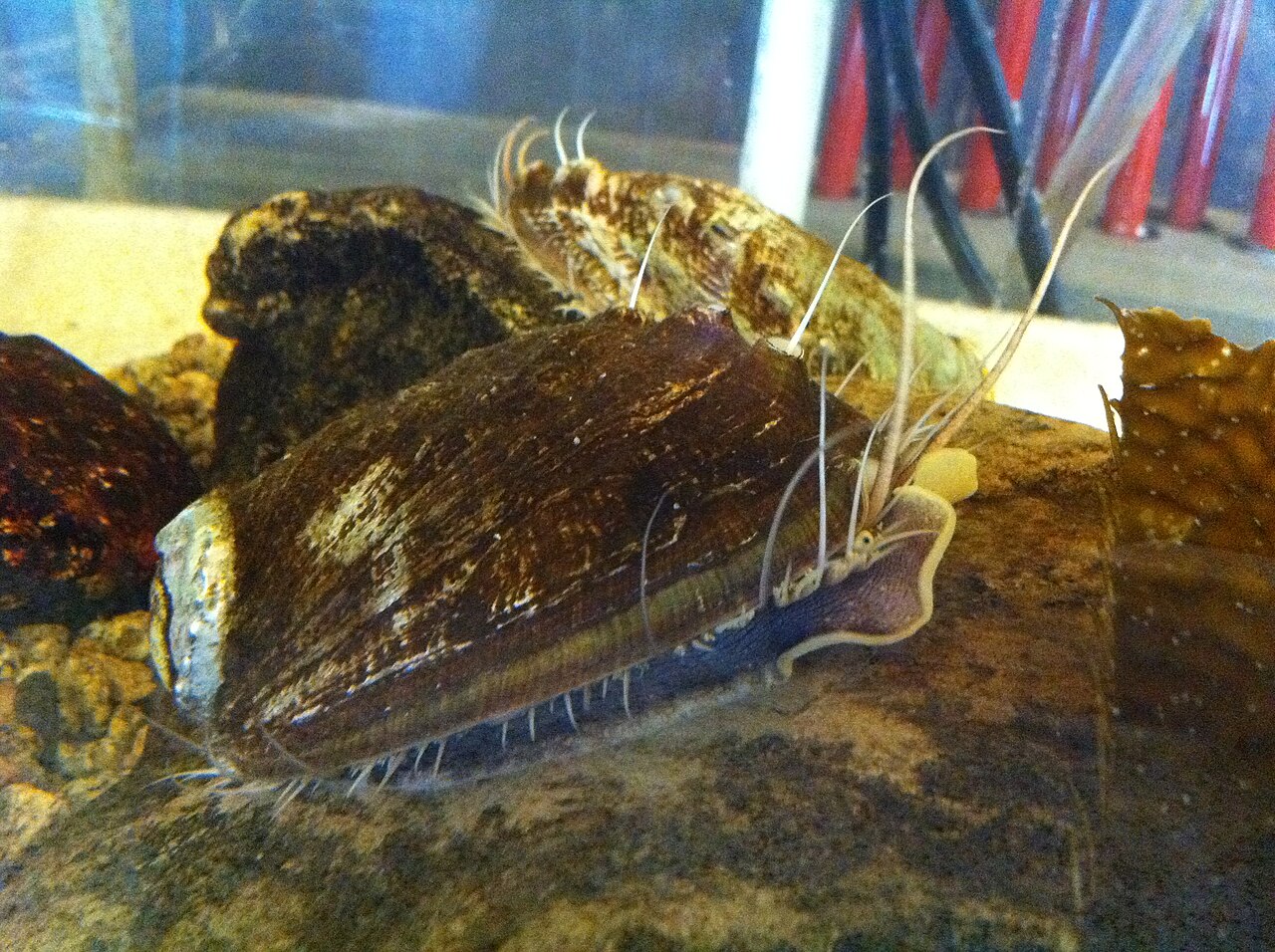
Abalone use the foot to attach, move and interact with the feeding surface. Damage to that tissue can affect normal function even when the shell remains intact. Pulling or prying against a firmly attached animal can create injury that is not obvious from above.
An abrasion removes part of the protective surface; a deeper laceration can involve more substantial tissue and fluid loss. Describe what can be seen without repeatedly detaching the animal. The title of this profile identifies a possible mechanism, not proof that every foot lesion in a handled batch is traumatic.
Source: Training manual on artificial breeding of abalone: broodstock care; Australian wild abalone quality-assurance code of practice; Foot injury survival in red abalone.
Superficial injury is not automatically fatal
A primary red-abalone study documented survival and epithelial repair after substantial superficial foot damage under captive conditions, while deep injury had much poorer outcomes. That is a useful correction to blanket claims that any foot injury inevitably kills an abalone.
The study does not guarantee recovery in another species, production setting or wound type. Severity, subsequent infection, environmental conditions and the animal’s ability to function still matter. A producer should not dismiss a deep wound because some superficially injured animals in research recovered, or destroy every mildly abraded animal because of an oversimplified rule.
Source: Foot injury survival in red abalone; Australian wild abalone quality-assurance code of practice.
Watch attachment, feeding and the pattern across the batch
An injured animal may attach weakly or move abnormally. The practical concern is whether it can maintain a normal position and access suitable food without repeated disturbance. Worsening tissue appearance, progressive weakness or deaths warrant prompt assessment.
Multiple weak animals need a broader investigation. Abalone viral ganglioneuritis can produce foot curling and attachment failure, while unsuitable water can affect the group. Do not assume that handling explains every loss simply because a transfer occurred recently. That transfer may also have changed water conditions or exposed a pre-existing problem.
Source: Abalone viral ganglioneuritis; Abalone viral ganglioneuritis: laboratory services; Training manual on artificial breeding of abalone: broodstock care; Introduction to fish health management.
Protect the wound from another round of damage
Minimize avoidable detachment and contact with rough surfaces. Assess baskets, containers and routine handling for points that scrape or pinch the foot. Staff should use species-appropriate methods taught by experienced operators rather than repeatedly force a reluctant animal loose.
Keep the holding system suitable for the species, with adequate oxygen, water movement and temperature control. Avoid decaying feed or organic accumulation that adds environmental stress. A change intended to help one injured animal should not create a sudden temperature or salinity shock. Do not apply livestock antiseptics, adhesives or aquarium medicines without professional direction.
Source: Australian wild abalone quality-assurance code of practice; Training manual on artificial breeding of abalone: broodstock care; Introduction to fish health management; Aquaculture and aquaculture drugs basics.
Professional assessment distinguishes tissue loss from wider disease
The aquatic-health service can assess wound depth, tissue condition and whether secondary infection or a different disease is contributing. Contact the receiving laboratory before moving animals for diagnostic submission, particularly where AVG or another regulated disease is a possibility.
Treatment, if indicated, must fit the diagnosis and food-animal context. An antibiotic is not a repair material for a torn foot and should not be used automatically after every handling event. A severely compromised animal may need a humane welfare decision, while a limited abrasion may be managed with protection and reassessment.
Source: Foot injury survival in red abalone; Abalone viral ganglioneuritis: laboratory services; Aquaculture and aquaculture drugs basics; Introduction to fish health management.
Return to routine handling only when function supports it
Improvement should include secure attachment, normal movement and feeding appropriate to the species, together with a stable or healing surface. A wound that looks smaller but leaves the animal unable to function is not a complete recovery.
Before the next grading or transfer, correct the handling mechanism that plausibly caused injury. If new lesions continue despite those changes, revisit the diagnosis rather than repeatedly label them abrasion. Protecting a recovered foot from renewed damage is more useful than a fixed waiting period copied from another species or a research experiment.
Source: Training manual on artificial breeding of abalone: broodstock care; Australian wild abalone quality-assurance code of practice; Foot injury survival in red abalone.
Practical questions
Does any foot cut inevitably kill an abalone?
No. Depth and context matter; superficial injury can heal, while deep damage can be very serious.
Should I detach it repeatedly to inspect healing?
Avoid unnecessary detachment, which can add injury.
Can weak attachment indicate AVG instead?
Yes. It is not specific for handling trauma, especially when several animals are affected.
Related animal-health reading
Cite this reference
LivestockDefense. “Abalone foot injuries after handling: abrasion, deep wounds and attachment recovery.” Updated 2026-11-02. https://livestockdefense.com/threats/abalone-foot-lesions-from-handling-abrasion/
Add the date you accessed the page. This identifies the current reference; keep a permitted saved copy if your work depends on its exact wording. A citation alone does not establish support for a claim.
How to cite a page and its revision ↗Sources & boundaries
Read the evidence in context.
These documents support the statements identified in this reference. Check their scope and dates when deciding whether they answer your question.
- U.S. Food and Drug Administration: Aquaculture and Aquaculture Drugs Basics
Source update: Not provided. Most recent check: 2026-10-29.
FDA approves final drug products and intended uses, not active ingredients alone; no treatment authorization, drug choice or dosage inferred from a laboratory result.
- University of Florida IFAS Extension: Introduction to fish health management
Source update: Not provided. Most recent check: 2026-11-02.
Clinical/environmental differential assessment, skin injury and early professional diagnosis; no laboratory or chemical-treatment procedures.
- Primary Industries and Regions South Australia: Abalone viral ganglioneuritis
Source update: Not provided. Most recent check: 2026-11-02.
Primary nervous-system signs, susceptible Australian abalone and response context; no static closure map or universal mortality percentage.
- NSW Department of Primary Industries and Regional Development: Abalone viral ganglioneuritis: laboratory services
Source update: Not provided. Most recent check: 2026-11-02.
Diagnostic service, signs and host context, no owner sampling or tissue-handling procedure.
- Aquaculture / primary research archived by NOAA: Foot injury survival in red abalone
Source update: 2020. Most recent check: 2026-11-02.
Abstract inspected for superficial versus deep injury outcomes and captive-context limits; no injury-induction or tissue procedures and no extrapolated universal survival percentage.
- Food and Agriculture Organization of the United Nations: Training manual on artificial breeding of abalone: broodstock care
Source update: Not provided. Most recent check: 2026-11-02.
Historical handling/transport injury prevention, food and life-support context only; no spawning protocols, temperature recipe or universal water thresholds.
- Abalone Council Australia: Australian wild abalone quality-assurance code of practice
Source update: 2013. Most recent check: 2026-11-02.
Primary industry handling/foot-injury prevention guidance, not experimental survival or a universal all-cuts-fatal claim; no harvest technique instructions.