
This reference uses the specific documents linked in the article and listed below. Check their scope, publication dates and the statements they support.
The nervous system explains the loss of normal attachment
Haliotid herpesvirus 1, also called abalone herpesvirus in older sources, is associated with inflammation and injury of neural tissues. An abalone may therefore become weak or lose normal control of its foot. A shell that appears undamaged does not mean the animal underneath is functioning normally.
Australian blacklip and greenlip abalone and their hybrids are important susceptible groups. Susceptibility and disease expression should still be considered in the context of the actual species and location. Do not extend a finding in one species into a claim that every mollusc or all shellfish in the same facility develop AVG.
Source: Abalone viral ganglioneuritis; Abalone viral ganglioneuritis.
Recognize a pattern rather than repeatedly testing the foot
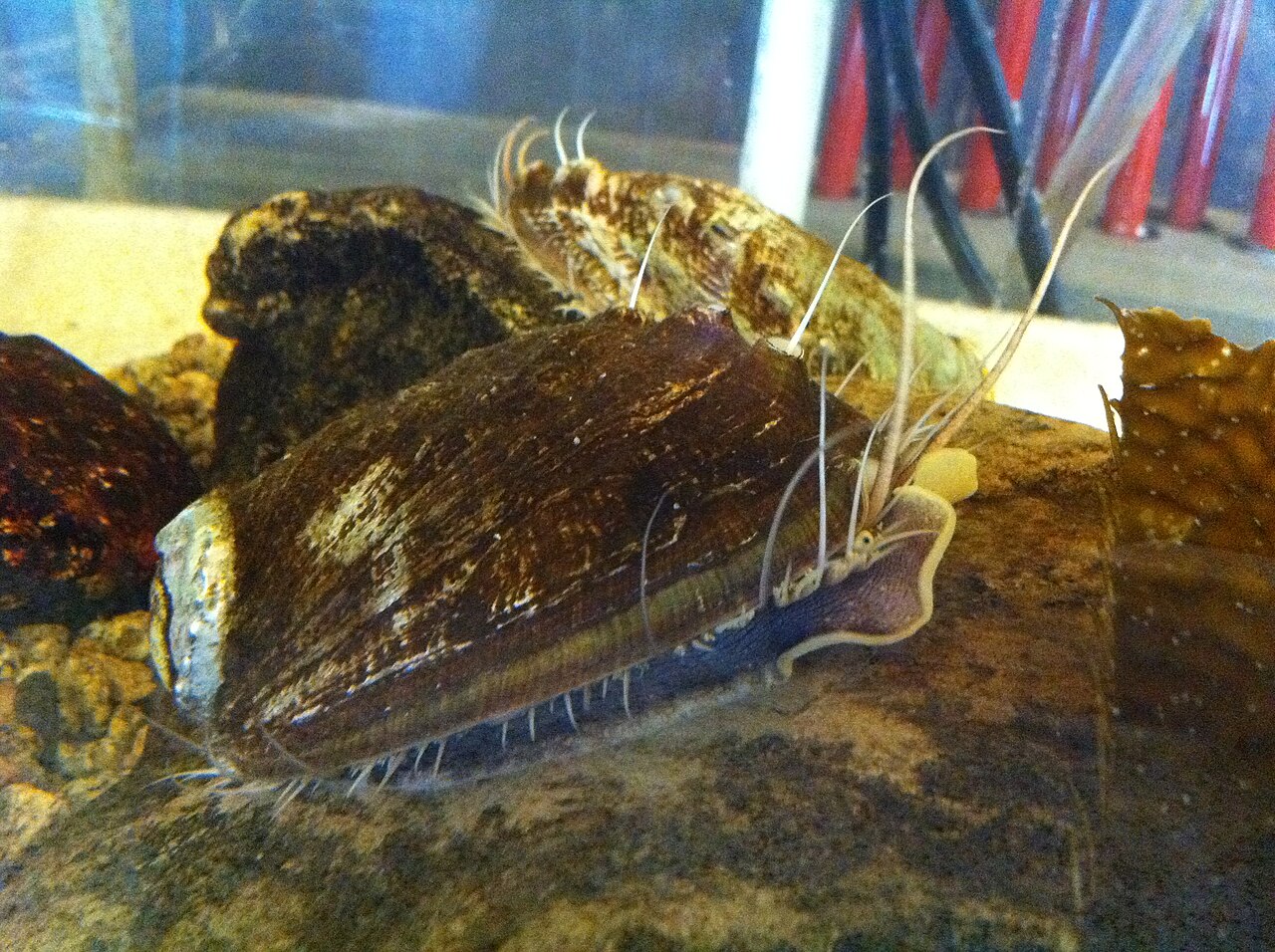
Affected animals may attach weakly, show curling at foot margins, produce excess mucus or have swollen mouthparts. Clusters of fresh empty shells or a sudden increase in deaths are important observations. Not every infected abalone displays every feature.
Do not repeatedly pull animals from a surface to see whether they are weak. Handling can cause abrasion and makes interpretation more difficult. Observe attachment and behavior with as little disturbance as practical, and arrange professional assessment. A handling wound, water-quality problem or another disease can also reduce attachment, so a single weak animal does not confirm AVG.
Source: Abalone disease; Abalone viral ganglioneuritis; Abalone viral ganglioneuritis: laboratory services.
Laboratory confirmation distinguishes suspicion from a diagnosis
A diagnostic service can examine tissues for characteristic neural lesions and use appropriate molecular testing to detect the virus. Those findings should be interpreted together with the clinical pattern and host identity. A photograph of a curled foot cannot provide the same evidence.
Contact the receiving laboratory or authority before arranging a submission. Requirements for useful material and transport depend on the investigation. Do not move suspect live abalone to another facility simply to obtain an informal opinion. A negative result from one unsuitable animal does not establish that a connected holding system is free of infection.
Source: Abalone viral ganglioneuritis; Abalone viral ganglioneuritis: laboratory services.
Water, equipment and waste connect farm and wild populations
Live abalone, associated water and contaminated wet equipment can create pathways between holding areas and the sea. Infectious material and waste from affected stock are therefore part of the risk assessment, not merely a disposal inconvenience.
Pause avoidable movement and ask the authority how affected stock and waste should be managed. Do not release suspect animals, discharge holding water elsewhere or use abalone material as bait in an attempt to salvage value. Local restrictions can apply to fishing, transport, processing or other activities and should be checked directly with the relevant authority.
Source: Abalone viral ganglioneuritis; Abalone viral ganglioneuritis; Abalone disease.
Farm eradication is different from curing an infected abalone
Historical farms have eliminated infection through comprehensive facility responses and subsequently restocked successfully. That does not demonstrate an antiviral cure for a sick individual or guarantee that every exposed open-water site can be cleared the same way.
There is no effective established treatment for AVG. Support suitable water and minimize additional stress while the health team determines the response and welfare needs. Severe functional impairment or continuing deaths require prompt action; waiting for an unproven supplement to restore attachment can prolong suffering and increase exposure.
Source: Abalone viral ganglioneuritis; Abalone viral ganglioneuritis; Introduction to fish health management.
Current local controls matter more than an old range map
Known detections and restrictions have changed, including South Australian findings from 2024 onward. A historic statement about an unaffected coast is not a permanent movement clearance. Use current state or national aquatic-health information before sourcing or transporting stock.
AVG has no known effect on human health, but that does not override fishery closures, food-safety requirements or animal-health controls. A business producing live abalone needs a plan that protects the stock, receiving facilities and neighboring wild populations. Health assurance should cover the source and route of movement, not merely the absence of visible signs on the day.
Source: Abalone viral ganglioneuritis; Abalone disease; Abalone viral ganglioneuritis: laboratory services.
Practical questions
Does a weak foot always mean AVG?
No. Injury and water or other disease problems can also impair attachment.
Can the animal be cured with an aquarium antiviral?
No established treatment supports that approach.
Does no human-health effect mean movements are unrestricted?
No. Animal-health and fishery controls still apply.
Related animal-health reading
Cite this reference
LivestockDefense. “Abalone viral ganglioneuritis: weak attachment, neurologic disease and urgent reporting.” Updated 2026-11-02. https://livestockdefense.com/threats/abalone-viral-ganglioneuritis/
Add the date you accessed the page. This identifies the current reference; keep a permitted saved copy if your work depends on its exact wording. A citation alone does not establish support for a claim.
How to cite a page and its revision ↗Sources & boundaries
Read the evidence in context.
These documents support the statements identified in this reference. Check their scope and dates when deciding whether they answer your question.
- University of Florida IFAS Extension: Introduction to fish health management
Source update: Not provided. Most recent check: 2026-11-02.
Clinical/environmental differential assessment, skin injury and early professional diagnosis; no laboratory or chemical-treatment procedures.
- Agriculture Victoria: Abalone disease
Source update: Not provided. Most recent check: 2026-11-02.
Signs, notification and human-health distinction; live restrictions delegated to current state authority information.
- Primary Industries and Regions South Australia: Abalone viral ganglioneuritis
Source update: Not provided. Most recent check: 2026-11-02.
Primary nervous-system signs, susceptible Australian abalone and response context; no static closure map or universal mortality percentage.
- NSW Department of Primary Industries and Regional Development: Abalone viral ganglioneuritis: laboratory services
Source update: Not provided. Most recent check: 2026-11-02.
Diagnostic service, signs and host context, no owner sampling or tissue-handling procedure.
- Fisheries and Oceans Canada: Abalone viral ganglioneuritis
Source update: Not provided. Most recent check: 2026-11-02.
HaHV-1 identity, neural lesions, confirmation and no effective cure; no virus processing, exposure or decontamination recipes.
- Fisheries Research and Development Corporation: Abalone viral ganglioneuritis
Source update: 2021. Most recent check: 2026-11-02.
Historical farm eradication versus individual cure, infectious waste and prevention; historical production recovery not current population status.