
This reference uses the specific documents linked in the article and listed below. Check their scope, publication dates and the statements they support.
Skin nodules are part of a systemic illness
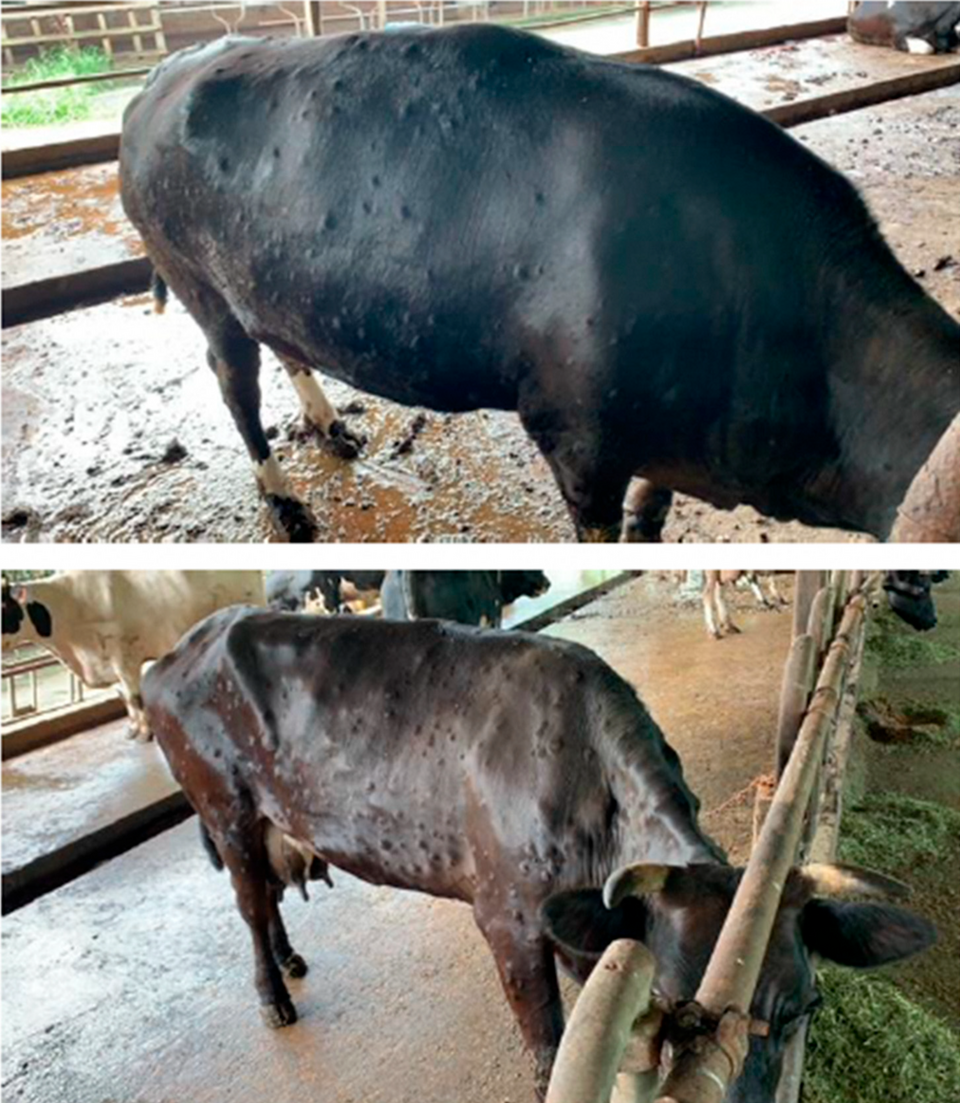
Affected cattle may develop fever, reduced appetite, eye and nasal discharge or excess saliva before or alongside obvious nodules. Swollen lymph nodes and edema of the legs, brisket or udder can accompany the skin disease. Some animals are much more severely affected than others. Clinical presentation of lumpy skin disease.
The nodules can be firm and painful and involve deeper skin layers. Some regress; others lose damaged tissue and leave ulcers and scars. Pain, reduced intake and secondary wound complications can continue after the initial fever. Treating the disease as a superficial blemish misses its welfare consequences.
Examine the animal’s function as well as its hide. Can it walk to feed, drink, lie down and rise comfortably? Is it maintaining milk for a calf? A cow with many lesions but adequate intake and one with respiratory distress need different immediate levels of care.
Reproductive and production consequences need individual assessment
Milk loss, poor condition, udder complications and reproductive problems can occur. Bulls may have genital involvement and impaired fertility; pregnancy loss is also reported. Those consequences are possible outcomes, not a guarantee that every infected animal will be infertile or permanently unproductive. Production and reproductive effects.
Recovery should therefore be assessed in context. A skin lesion healing does not establish that a bull is fit for breeding or that a lactating cow has regained normal udder function. Veterinary re-evaluation may be needed before those animals return to their usual roles.
Severe respiratory signs, marked weakness, inability to eat or drink or extensive infected wounds justify urgent care. A badly compromised animal may need a humane prognosis decision rather than prolonged treatment without improvement.
Vectors and animal movement both matter
Blood-feeding arthropods are important in transmission. Moving infected cattle can spread disease over longer distances, including before a movement’s consequences are obvious. Direct and equipment-associated transmission should not be dismissed with an absolute claim that only insects can matter. Transmission and long-distance spread.
This is why suspect animals should not be taken to a market, another farm or a shared handling event while awaiting advice. Keep the animal in suitable accommodation with minimal unnecessary contacts and arrange veterinary assessment. An ordinary fence or a single insecticide treatment cannot be promised to stop exposure completely.
Do not infer a wildlife reservoir simply because viral evidence has been reported in a wild species. Host susceptibility and a demonstrated role in sustaining transmission are different questions.
Look-alike lumps require laboratory differentiation
Other cattle skin conditions can resemble nodular disease. Bovine herpes mammillitis and related pseudo-lumpy skin presentations involve a different virus, while besnoitiosis, bacterial skin disease and other lesions require their own assessment. A photograph alone cannot safely distinguish them. Differential diagnosis.
The veterinarian and diagnostic service can use appropriate agent-specific tests and pathology. The useful result connects the clinical lesions with the actual cause. A generic “pox-like” appearance does not establish lumpy skin disease, and an uncertain result needs interpretation rather than a confident label.
Do not cut into nodules or attempt farm laboratory testing. Arrange the diagnostic material through the veterinarian, especially where the disease triggers an official investigation.
Early official advice protects the wider herd
Reporting and movement requirements depend on the jurisdiction and current disease situation. Official guidance in countries such as Great Britain and Canada provides a specific route for suspected cases. Use the equivalent local animal-health authority rather than assuming an international listing is the complete farm instruction. Defra suspect-disease guidance; Canadian official disease guidance.
Current restrictions, vaccine authorizations and affected areas can change rapidly. Check the live official guidance before any movement or preventive product decision. This reference explains the disease; it is not a current movement permit.
Supportive care must not be confused with a cure
There is no routine specific medicine that eliminates the virus. Veterinary treatment can address pain, hydration, inadequate intake, secondary bacterial infection and wound complications. Antibiotics do not directly cure the viral disease and should be used for an appropriate clinical indication.
Protect damaged tissue from further trauma and fly injury using a plan appropriate to the animal and lesion location. Avoid cutting off firmly attached damaged skin or applying caustic household preparations. Deep or extensive lesions need professional wound judgment. Complications and supportive treatment context.
Monitor appetite, mobility, respiratory effort and recovery of production. Repeated fever, worsening swelling or deteriorating wounds warrants reassessment. The animal’s clinical progress is more useful than counting nodules alone.
Vaccination belongs in a coordinated prevention program
High-quality appropriate vaccines can be important for control. Product selection, timing, coverage and local authorization matter, as do the animal population and the official response strategy. A vaccine intended for sheep or goats should not automatically be treated as interchangeable with an appropriate cattle program. Vaccination and coordinated control.
Vaccination complements early detection, movement management and feasible vector mitigation. It does not immediately treat the sick cow or justify moving a suspect animal before advice is obtained. Observe product-specific restrictions and any postvaccination assessment instructions.
Can people catch lumpy skin disease?
It is not a human infection. That does not remove ordinary wound-handling precautions or official food-chain and movement requirements for affected cattle.
Are sheep pox and goat pox the same disease?
No. They are related capripoxvirus infections with different host disease contexts. The cattle hub and water buffalo hub provide related husbandry and health references.
Cite this reference
LivestockDefense. “Lumpy skin disease in cattle: nodules, systemic illness and early response.” Updated 2026-11-02. https://livestockdefense.com/threats/bovine-lumpy-skin-disease/
Add the date you accessed the page. This identifies the current reference; keep a permitted saved copy if your work depends on its exact wording. A citation alone does not establish support for a claim.
How to cite a page and its revision ↗Sources & boundaries
Read the evidence in context.
These documents support the statements identified in this reference. Check their scope and dates when deciding whether they answer your question.
- Merck Veterinary Manual: Lumpy skin disease in cattle
Source update: 2026-06. Most recent check: 2026-11-02.
Painful systemic nodular illness, secondary complications, diagnosis versus pseudo-LSD and supportive care. No virus handling, molecular assay or vaccine production detail reproduced; variable mortality not generalized.
- World Organisation for Animal Health: Lumpy skin disease
Source update: 2026-07-09. Most recent check: 2026-11-02.
Cattle/buffalo clinical effects, vector and movement significance, quality vaccination and lack of zoonotic infection. Uncertain wildlife reservoir not stated as established; no infectious persistence parameters reproduced.
- Iowa State University Center for Food Security and Public Health: Lumpy skin disease
Source update: 2025-03. Most recent check: 2026-11-02.
Variable clinical severity, painful lesions and reproductive/production consequences; no agent manipulation, tissue handling or chemical recipes reproduced.
- Defra / Animal and Plant Health Agency: Lumpy skin disease: how to spot and report it
Source update: Not provided. Most recent check: 2026-11-02.
Early suspect recognition and veterinary/authority contact in the stated jurisdiction; no current absence, live zone or movement permission generalized.
- Canadian Food Inspection Agency: Lumpy skin disease fact sheet
Source update: Not provided. Most recent check: 2026-11-02.
Official early recognition, differential/diagnostic response and control context. Canadian legal obligations clearly scoped rather than asserted globally.