
This reference uses the specific documents linked in the article and listed below. Check their scope, publication dates and the statements they support.
One infection can produce very different clinical pictures
Classical swine fever, often abbreviated CSF and historically called hog cholera, is caused by a pestivirus. It is distinct from African swine fever, despite the similarity of their names and some clinical signs. They require specific laboratory differentiation.
Merck Veterinary Manual describes variation with the virus strain and the pig's immune circumstances. Severe acute disease is only one presentation. Lower-virulence infection can be less obvious and may first appear as poor reproduction or abnormal piglets.
The WOAH disease reference provides current international disease information. Geographic status changes, so a historical statement that a region was free of CSF should not replace current official advice when assessing a possible case.
Acute disease can involve fever, vessels and the nervous system
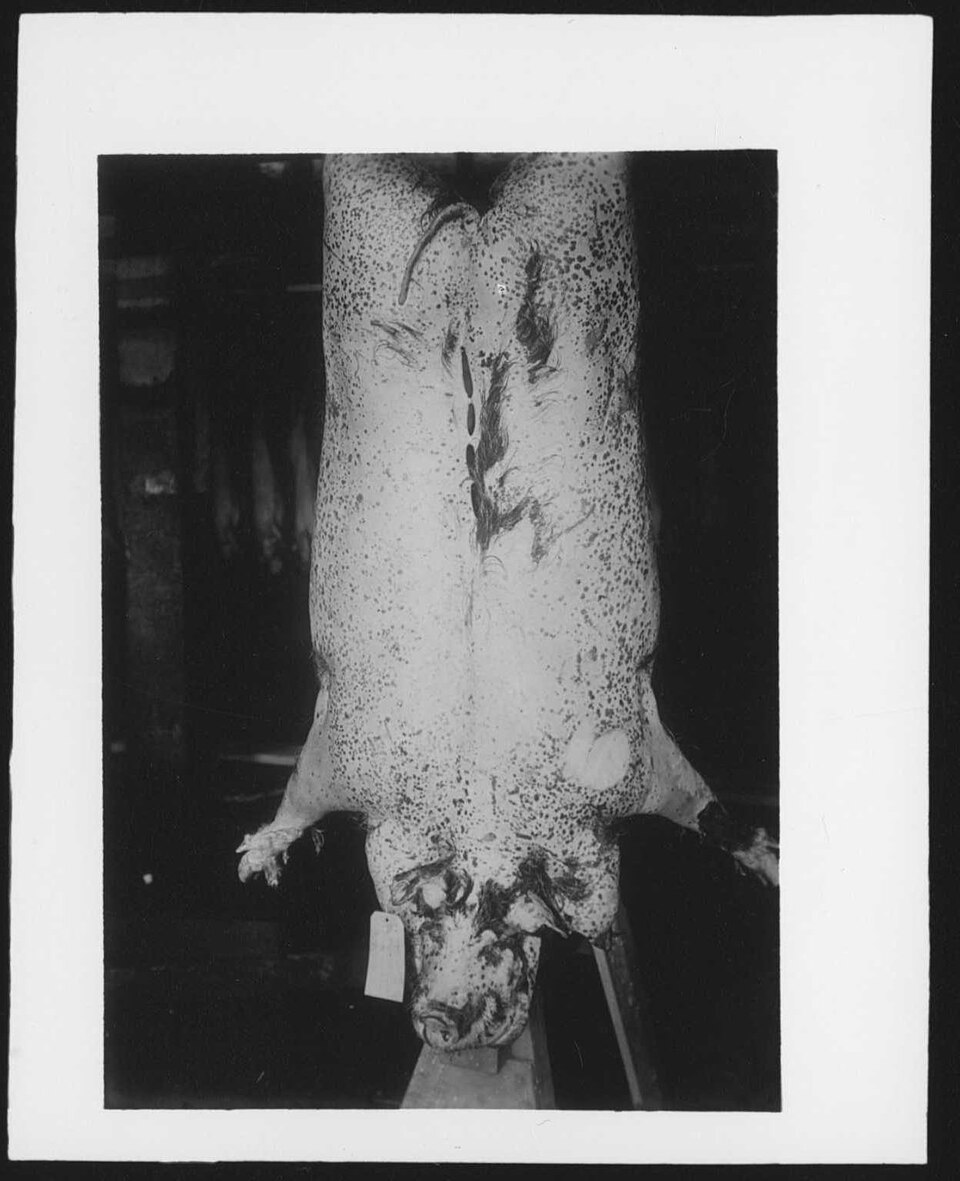
Affected pigs may become depressed, stop eating, huddle and develop fever. Conjunctivitis, constipation followed by diarrhea, weakness and an unsteady gait can occur. Red or purple skin changes and hemorrhage may become evident in severe disease.
Vascular injury helps explain the bleeding and skin discoloration, while nervous-system involvement can cause incoordination or convulsions. These mechanisms do not make the visible signs specific. Septicemia, toxic disease and other viral infections can produce overlap.
High fever with sudden losses, neurologic signs, hemorrhage or unexplained reproductive failure warrants immediate veterinary contact. Do not wait for every characteristic sign to appear. Mild disease in some pigs does not exclude serious infection in the group.
Chronic or subtle disease can be missed
Some infected pigs show a less dramatic or prolonged course, with intermittent illness, poor growth or apparent improvement followed by deterioration. Others may show few signs initially. A short period of brighter behavior is therefore not proof that infection has resolved.
USDA APHIS emphasizes that exposed pigs or pigs infected with less severe strains may appear mildly affected or clinically normal. Recovered pigs may still carry and spread the virus for variable periods.
This matters when deciding whether to move, sell or mix animals. An owner cannot clear a group through visual inspection alone. Suspected exposure needs professional assessment before movements connect it to another herd.
Fetal infection and congenital tremor type A-I
Infection during pregnancy can cause fetal death, resorption, mummification, abortion, stillbirth or weak offspring. Some live piglets have congenital neurologic defects, including tremor. Others may appear healthy yet remain persistently infected and shed virus.
The CFIA factsheet explicitly describes these different outcomes. Their occurrence depends on the infection circumstances rather than one inevitable result for every infected pregnancy.
The historical classification congenital tremor type A-I, also written A1, refers to the CSF-associated form. Merck's myelin-disorder reference identifies this exact association. A-I is not a designation for a single inherited tremor gene. Developmental nervous-system injury after fetal infection is the relevant context.
The general congenital-tremor profile remains separate because it includes several causes, including atypical porcine pestivirus-associated type A-II. A shaking piglet cannot be assigned A-I or A-II by appearance alone. Normal-looking sows and mild herd signs do not remove the need to exclude CSF where the clinical context warrants it.
Persistent congenital infection changes the meaning of healthy-looking
A persistently infected piglet can be an important source of virus despite appearing relatively normal. Failure to thrive may become evident later, but transmission risk does not wait for obvious wasting. Simply supporting a weak newborn until its tremor looks better cannot establish that it is safe to move.
The veterinarian must assess the whole reproductive and herd picture. Porcine reproductive and respiratory syndrome, parvovirus-associated reproductive disease and other causes can produce overlapping losses.
A congenital case therefore deserves both individual welfare care and an infection-focused investigation. It should not be reduced to a breeding defect without evidence.
Stop avoidable movement while seeking professional help
Contact the veterinarian promptly and follow directions from the local animal-health authority. Avoid moving suspect pigs, carcasses or potentially contaminated equipment off the premises. Do not take an ill pig to a market or another farm to obtain an informal opinion.
Keep handling calm and minimize unnecessary contact between groups. Essential welfare care should continue under professional advice. A severely distressed pig may require urgent euthanasia, but the veterinarian and authority should guide how the suspected case is managed.
Owners should not perform postmortem examination, collect internal tissues or attempt to isolate the virus. Officially coordinated testing protects diagnostic usefulness and helps prevent further spread.
Laboratory confirmation separates serious look-alikes
Diagnosis relies on authorized laboratory testing, including specific viral detection and appropriately interpreted antibody tests. Other pestiviruses can complicate serology, so a broad positive result may need discrimination rather than automatic assignment to CSF.
African swine fever, erysipelas, Streptococcus suis disease and other septicemic conditions are relevant differentials. Salt poisoning and other neurologic diseases can resemble part of the presentation.
The laboratory and veterinarian select testing according to clinical findings and exposure. A normal appearance or a negative result from an unrelated test cannot substitute for the appropriate assessment.
There is no specific curative treatment
Antibiotics do not eliminate CSF virus. Supportive care addresses immediate welfare needs but does not convert an infected pig into a disease-free one. Outbreak control follows the competent authority's plan and may include movement restrictions and humane destruction of affected or exposed animals.
Vaccines are useful in some control programs, but policy varies between disease-free and endemic settings. APHIS states that US use requires USDA approval. Do not obtain or administer a vaccine independently as a response to suspected disease.
The relevant goal is both humane animal care and interruption of transmission. These decisions require a coordinated response rather than repeated unselected medication while infection spreads.
Prevention reduces contact with infected pigs and pork material
Maintain healthy sources and separation from wild or feral pigs. Contaminated pens, footwear, clothing, vehicles and equipment can move infection. Infected pork in untreated food waste is another important route, so follow current feed and waste restrictions rather than relying on an improvised heating procedure.
The pig reference and biosecurity collection provide practical supporting information. Check current travel and import guidance before bringing pig products or potentially contaminated items into a pig setting.
Is congenital tremor type A-I an inherited subtype?
No. In the cited historical classification it is associated with classical swine fever. Other congenital tremor forms can have inherited causes.
Can CSF-infected piglets look healthy at birth?
Yes. Persistent congenital infection can occur without obvious initial illness and remains important for transmission.
Research articles on this topic
Cite this reference
LivestockDefense. “Classical swine fever: signs, fetal infection and urgent response.” Updated 2026-11-02. https://livestockdefense.com/threats/classical-swine-fever/
Add the date you accessed the page. This identifies the current reference; keep a permitted saved copy if your work depends on its exact wording. A citation alone does not establish support for a claim.
How to cite a page and its revision ↗Sources & boundaries
Read the evidence in context.
These documents support the statements identified in this reference. Check their scope and dates when deciding whether they answer your question.
- USDA APHIS: Classical swine fever
Source update: 2025-07-30. Most recent check: 2026-11-03.
Document scope and recorded checks
Variable signs, contact pathways and veterinary reporting.
Entries retain the date and scope of each recorded inspection.
- 2026-11-03 — Official owner-facing disease page rechecked for the limits of clinical recognition, national surveillance context and direction to contact a veterinarian. No collection or test procedure adopted.
Exact official HTML page inspected for the stated bounded reader-facing facts; no independent clinical review.
- 2026-10-28 — Variable signs, contact pathways and veterinary reporting.
Exact source page inspected; bounded editorial summary
- 2026-11-03 — Official owner-facing disease page rechecked for the limits of clinical recognition, national surveillance context and direction to contact a veterinarian. No collection or test procedure adopted.
- World Organisation for Animal Health: Classical swine fever
Source update: Not provided. Most recent check: 2026-10-28.
Variable presentation, overlap with ASF, need for laboratory diagnosis and source-specific virus/antibody evidence.
- Merck Veterinary Manual: Classical swine fever
Source update: 2025-04. Most recent check: 2026-11-02.
Variable systemic and congenital CSF, persistent fetal infection, professional diagnostic differentiation and control. Viral isolation, sample collection, vaccine production and experimental infection procedures excluded.
- Canadian Food Inspection Agency: Classical swine fever fact sheet
Source update: 2026-01-23. Most recent check: 2026-11-02.
Congenital outcomes, healthy-looking persistent carriers, transmission, laboratory confirmation and no specific treatment. No blanket mortality percentage generalized.
- Merck Veterinary Manual: Myelin disorders in animals: porcine type A-I classification
Source update: 2024-09. Most recent check: 2026-11-02.
Only the exact porcine type A-I/classical-swine-fever classification and developmental myelin distinction are used. The page has outdated A-II-agent and pestivirus-family wording; those statements are not imported, with current APPV evidence cited separately.