
This reference uses the specific documents linked in the article and listed below. Check their scope, publication dates and the statements they support.
One bacterium can produce several forms of disease
Acute erysipelas is a systemic infection, while chronic disease often involves joints or heart valves. A pig may have one form without an owner having noticed the earlier episode. Skin lesions are useful clues but are not required for every case.
The Merck erysipelas chapter describes this range. Growing and adult pigs are important clinical groups, including breeding animals whose welfare and reproductive performance can both be affected.
Carrier pigs and environmental contamination contribute to exposure. An apparently healthy herd member does not necessarily remove the infection from the farm, and disease in one pig does not mean every contact will show identical signs.
Acute fever and diamond skin require prompt action
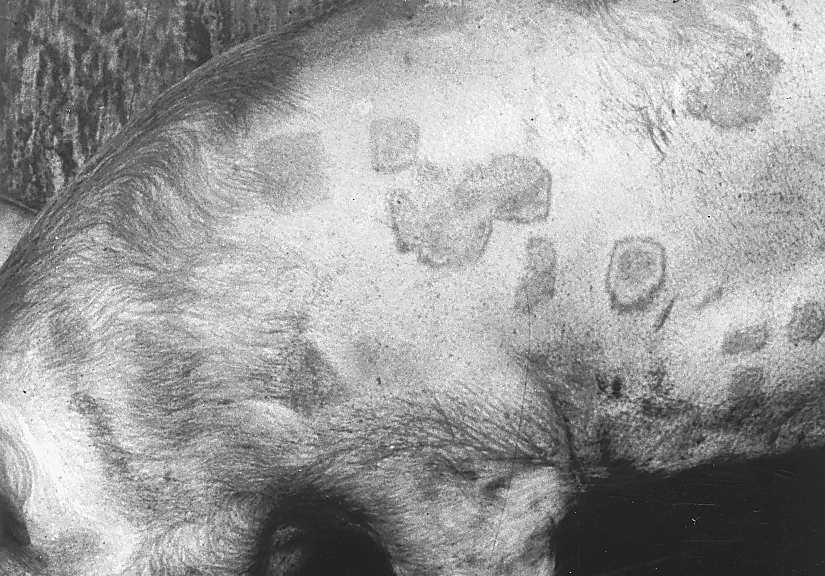
Affected pigs may become depressed, stop eating and be reluctant to move. Fever can be substantial, and some pigs seek cool wet areas. Raised red or purple rhomboid lesions may develop, while others die suddenly without a clear skin pattern.
Contact the veterinarian promptly for suspected acute erysipelas. Severe depression, collapse, breathing difficulty or unusual deaths needs urgent assessment. Maintain access to water and a suitable environment, with minimal unnecessary movement.
Other systemic diseases can overlap, including African swine fever, classical swine fever and bacterial septicemias. Follow local reporting advice where those diseases are suspected. Do not declare a serious febrile outbreak ordinary erysipelas from a skin photograph alone.
Chronic arthritis in breeding pigs is a distinct welfare problem
Erysipelothrix-associated arthritis can make gilts, sows or boars persistently stiff and lame. The pig may have little or no fever, and no preceding diamond lesions may have been noticed. Joint damage can continue to affect movement after the acute infection has passed.
NADIS describes severe chronic lameness and the limited likelihood of recovery once advanced crippling changes develop. This is not equivalent to a brief febrile reluctance to walk that improves with early treatment.
Breeding animals need comfortable access to feed, water and resting space. A sow unable to rise reliably or a boar with persistent painful movement requires a welfare and fitness assessment, not simply retention because of breeding value. Some animals will be unfit for transport and need a humane on-farm decision.
The differential includes osteochondrosis, hoof disease and other infectious arthritis, including Mycoplasma hyosynoviae. Not every chronically lame breeder has erysipelas.
Heart disease can appear after an apparent recovery
Vegetative lesions on heart valves can impair circulation and cause wasting, breathing difficulty, cyanosis or sudden death. The Texas A&M confirmed case illustrates this cardiac form.
The separate porcine endocarditis article explains why the lesion also has other bacterial causes. A pig with valve disease should not automatically be assigned erysipelas without supporting evidence.
Do not repeatedly exercise a short-of-breath pig to test its stamina. Veterinary assessment should determine whether the problem is cardiac, pulmonary or another systemic condition and whether recovery is realistic.
Reproductive effects deserve attention in the whole animal
Acute illness and fever in sows can be associated with abortion or reproductive loss. Fever in boars may temporarily compromise fertility. The NADIS description discusses these breeding consequences.
Erysipelas is only one differential for reproductive problems. PRRS, porcine parvovirus and other infectious or noninfectious causes need consideration.
Assess the sow or boar's health rather than treating fertility as a separate numerical problem. A febrile, painful animal needs clinical care while the reproductive implications are investigated.
Diagnosis and early treatment differ from managing old lesions
Veterinary diagnosis can use clinical assessment with bacterial or molecular confirmation from appropriate affected material. Previous treatment and chronic lesions can affect the chance of recovering the organism. A negative result should therefore be interpreted with the complete findings.
Acute disease often responds to appropriate antimicrobial treatment started promptly. The veterinarian should select the agent and route and address withdrawal requirements. A pig not drinking or eating normally may not receive an effective share of a group-delivered treatment.
Chronic structural arthritis or advanced valve damage may not reverse even when the bacterium is susceptible. Reassess pain, mobility, breathing and sustained intake rather than judging success only by disappearance of fever or skin lesions.
Vaccination supports prevention, not repair of damaged joints
Vaccines are generally effective against acute erysipelas when appropriately selected and used. They do not restore a chronically damaged joint or cure established endocarditis. Product choice and timing belong within the herd veterinarian's prevention plan.
Review the program for replacement gilts, breeding animals and growing pigs as appropriate. A general claim that a farm vaccinates does not show that every new group has suitable protection at the time of exposure.
Reduce avoidable contamination, manage rodents and other relevant contacts, and address injuries and hygiene. Use the pig overview and biosecurity collection for supporting husbandry.
Protect people handling affected animals
Erysipelothrix can cause occupational infection in people through contact with animals or contaminated material, especially through damaged skin. Protect wounds, use appropriate hygiene and seek medical advice for concerning illness after exposure, explaining the pig contact.
This human risk is a reason for sound handling practices, not evidence that every person near an affected herd has become infected. Veterinary and medical assessments answer different questions.
Must a pig have diamond-shaped skin lesions to have erysipelas?
No. Sudden septicemia, chronic arthritis or endocarditis can occur without a recognized skin episode.
Will an antibiotic cure an old crippling joint lesion?
Not reliably. Advanced structural damage may be irreversible, so prognosis and welfare require a separate assessment from bacterial susceptibility.
Cite this reference
LivestockDefense. “Swine erysipelas: acute illness, chronic arthritis and heart disease.” Updated 2026-11-02. https://livestockdefense.com/threats/swine-erysipelas/
Add the date you accessed the page. This identifies the current reference; keep a permitted saved copy if your work depends on its exact wording. A citation alone does not establish support for a claim.
How to cite a page and its revision ↗Sources & boundaries
Read the evidence in context.
These documents support the statements identified in this reference. Check their scope and dates when deciding whether they answer your question.
- Merck Veterinary Manual: Swine Erysipelas
Source update: Not provided. Most recent check: 2026-10-31.
Bounded to the reference describing purplish ear/skin discoloration in one condition, illustrating why a color label alone does not uniquely identify a disease. No organism handling, diagnostic procedure, treatment or current disease status supplied.
- Texas A&M Veterinary Medical Diagnostic Laboratory: Valvular endocarditis in a pig due to Erysipelothrix rhusiopathiae
Source update: 2024-08-08. Most recent check: 2026-11-02.
Primary diagnostic case and clinical explanation inspected for valve lesions, cardiac insufficiency, causes and zoonotic context. Laboratory culture procedures are not reproduced.
- National Animal Disease Information Service: Erysipelas
Source update: Not provided. Most recent check: 2026-11-02.
Acute/chronic disease, breeding impacts, chronic-arthritis prognosis and exposure context inspected; historical treatment prescriptions and editorial housing characterizations not reproduced.
- Merck Veterinary Manual: Lameness in growing-finishing pigs
Source update: Not provided. Most recent check: 2026-11-02.
Clinical identity, signs, diagnostic interpretation and prevention statements bounded to the sections mapped in the pig/poultry condition article.