
This reference uses the specific documents linked in the article and listed below. Check their scope, publication dates and the statements they support.
Very young trout need a different clinical interpretation from grow-out fish
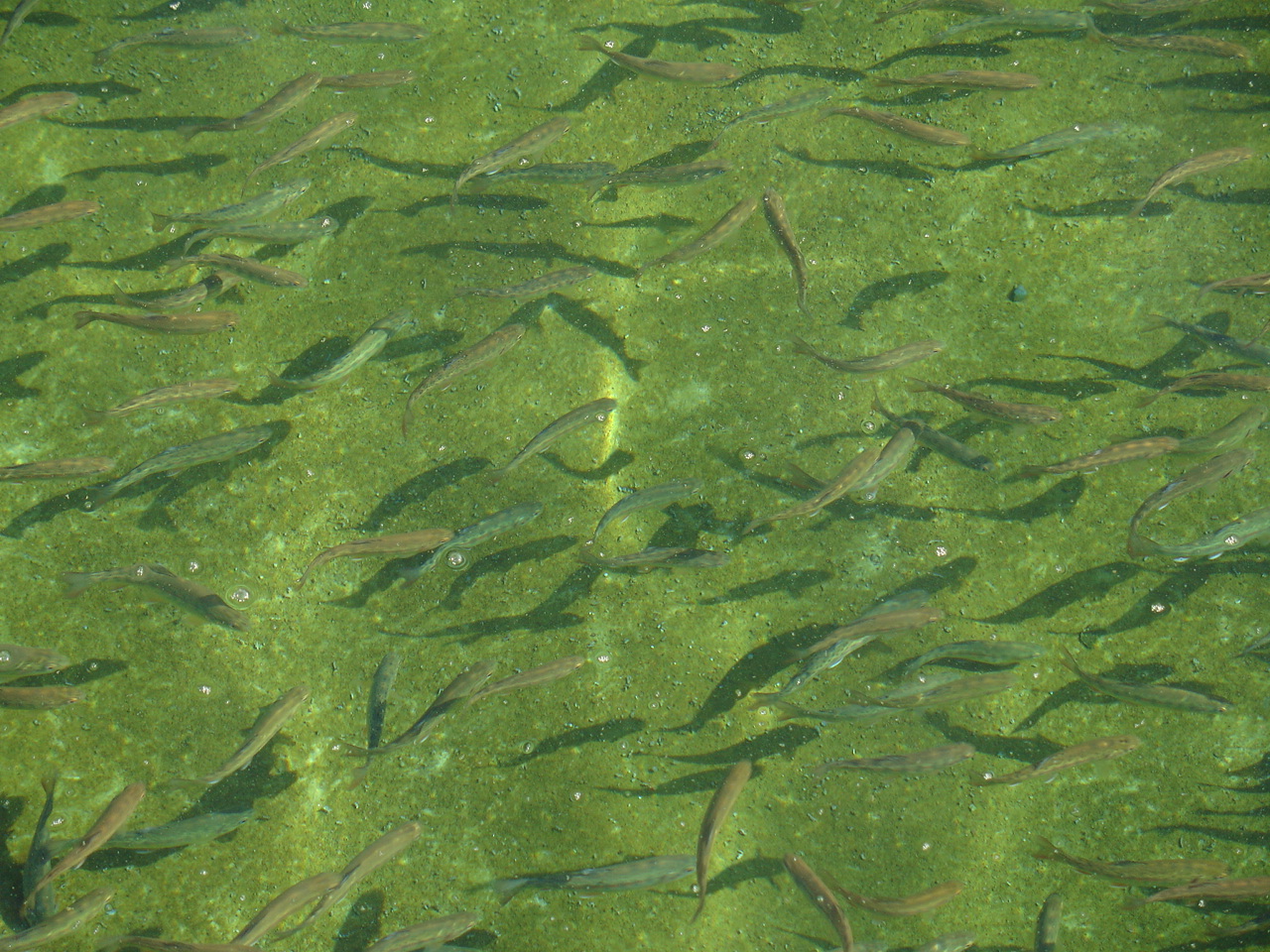
The fry syndrome emphasizes systemic disease in a small, developing animal. The same pathogen can produce conspicuous skin or peduncle damage in larger salmonids, but requiring that external pattern would delay recognition in fry. Tiny fish have limited reserves and can deteriorate quickly when feeding and circulation are affected.
Historical names include fry mortality syndrome and visceral myxobacteriosis. These terms should be connected to current F. psychrophilum terminology rather than treated as several independent diseases. This page focuses on the practical early-life presentation; the broader coldwater-disease reference covers older fish and the external lesions in more detail.
Source: Flavobacterium psychrophilum, cause of bacterial cold-water disease and rainbow trout fry syndrome; Flavobacterium psychrophilum.
A feeding decline can matter before a dramatic rise in deaths
Affected fry may lose appetite, remain near the surface or swim in spirals. Darkening can give way to pallor, and abdominal swelling may occur. These signs do not uniquely identify the organism, and some fry die before a clear external pattern develops.
Arrange aquatic veterinary assessment when losses rise or a cohort’s feeding behavior changes unexpectedly. Check oxygen delivery, flow and other basic water parameters at once. An oxygen failure requires urgent correction even if infection is also suspected. Repeated grading, netting or transfer of weak fry can add injury and stress without answering the diagnostic question.
Source: Flavobacterium psychrophilum; Flavobacterium psychrophilum, cause of bacterial cold-water disease and rainbow trout fry syndrome.
The differential includes mixed infection rather than one exclusive cause
Infectious pancreatic necrosis and other viral diseases can affect young salmonids, while parasites and poor rearing conditions can worsen mortality. Mixed infections with F. psychrophilum have been described. Finding one agent should therefore prompt the clinician to ask whether it explains the severity and distribution of the problem.
A diagnosis integrates the age and source of the fish, pathology and specific laboratory evidence. Environmental detection alone is not enough. The fish-health laboratory should select the diagnostic approach; owners should not attempt to culture the bacterium or use a skin photograph to decide which antibiotic to buy.
Source: Flavobacterium psychrophilum, cause of bacterial cold-water disease and rainbow trout fry syndrome; Flavobacterium psychrophilum; Bacterial diseases in aquaculture.
Feed-based treatment has a practical limit when fry stop eating
Veterinary management may include a suitable antimicrobial treatment where permitted and correction of avoidable stresses. The ability of affected fry to consume the intended ration matters. More medicated feed placed into the water does not ensure that a nonfeeding fish receives treatment and can worsen organic loading.
Food-fish rules and product indications apply even to very small trout. A treatment authorized for a different species, age or route cannot be assumed appropriate. The veterinarian should explain expected early response, when losses require reassessment and how treatment interacts with the rest of the hatchery system. Avoid stacking unprescribed water chemicals onto already compromised fry.
Source: Aquaculture and aquaculture drugs basics; Bacterial diseases in aquaculture; Flavobacterium psychrophilum.
Broodstock and egg pathways affect prevention before hatch-out
The organism can be associated with reproductive material and egg exposure. Current Norwegian guidance describes vertical transmission as a concern rather than claiming that every outbreak has one proven route. Health-assessed broodstock, appropriate hatchery hygiene and professional egg-management protocols belong in prevention.
Those measures should also address horizontal exposure through shared water, fish and equipment. A problem restricted to one batch may provide a useful clue, but it does not prove that every neighboring batch is uninfected. Avoid moving apparently healthy survivors to another facility without an assessment of the infection risk.
Source: Flavobacterium psychrophilum; Flavobacterium psychrophilum, cause of bacterial cold-water disease and rainbow trout fry syndrome.
Survival should include useful growth and swimming function
An early fall in deaths is only part of recovery. Some survivors can have persistent deformity or abnormal swimming after serious tissue injury. The veterinarian should distinguish an improving cohort from fish with enduring impairment and advise on humane management where normal function cannot return.
Do not assume that a grow-out vaccine solution provides reliable protection to newly feeding fry. Age, product and local availability matter, and satisfactory fry protection remains difficult. Long-term prevention combines appropriate source stock, reduced avoidable stress, prompt investigation and feasible hygiene rather than a promise that one treatment makes the hatchery permanently free of risk.
Source: Bacterial coldwater disease and other freshwater flavobacteria; Flavobacterium psychrophilum; Flavobacterium psychrophilum, cause of bacterial cold-water disease and rainbow trout fry syndrome.
Practical questions
Can the fry syndrome occur without obvious fin rot?
Yes. Systemic signs and mortality may predominate in young trout.
Should I increase medicated feed if they are not eating?
Do not improvise. Contact the veterinarian because appetite changes treatment delivery and excess feed can worsen the environment.
Are survivors automatically suitable for transfer?
No. Their health, function and possible transmission risk need an appropriate assessment.
Related animal-health reading
Cite this reference
LivestockDefense. “Rainbow trout fry syndrome: early systemic Flavobacterium disease in young fish.” Updated 2026-11-02. https://livestockdefense.com/threats/flavobacterium-psychrophilum-rainbow-trout-fry-syndrome/
Add the date you accessed the page. This identifies the current reference; keep a permitted saved copy if your work depends on its exact wording. A citation alone does not establish support for a claim.
How to cite a page and its revision ↗Sources & boundaries
Read the evidence in context.
These documents support the statements identified in this reference. Check their scope and dates when deciding whether they answer your question.
- U.S. Food and Drug Administration: Aquaculture and Aquaculture Drugs Basics
Source update: Not provided. Most recent check: 2026-10-29.
FDA approves final drug products and intended uses, not active ingredients alone; no treatment authorization, drug choice or dosage inferred from a laboratory result.
- Merck Veterinary Manual: Bacterial diseases in aquaculture
Source update: 2026-06. Most recent check: 2026-11-02.
Bounded clinical distinctions among major fish bacterial diseases; no culture media, incubation, pathogen handling, drug doses or blanket extra-label-feed advice.
- Alaska Department of Fish and Game: Bacterial coldwater disease and other freshwater flavobacteria
Source update: Not provided. Most recent check: 2026-11-02.
F. psychrophilum skin/systemic disease and possible chronic sequelae; no laboratory or treatment protocols.
- Norwegian Veterinary Institute: Flavobacterium psychrophilum
Source update: 2026-06-23. Most recent check: 2026-11-02.
Current age-related presentations, diagnostic integration, carriage/exposure uncertainty and vaccine limits in fry; no pathogen growth or disinfection procedures.
- USGS National Fish Health Research Laboratory / Oregon State University: Flavobacterium psychrophilum, cause of bacterial cold-water disease and rainbow trout fry syndrome
Source update: 2005. Most recent check: 2026-11-02.
Clinical and host-age sections inspected: fry systemic presentation, older-fish lesions, mixed infection and historical terminology. No whole-monograph review claimed and no laboratory/culture procedures reproduced.