
This reference uses the specific documents linked in the article and listed below. Check their scope, publication dates and the statements they support.
Dry and wet forms describe different lesion locations
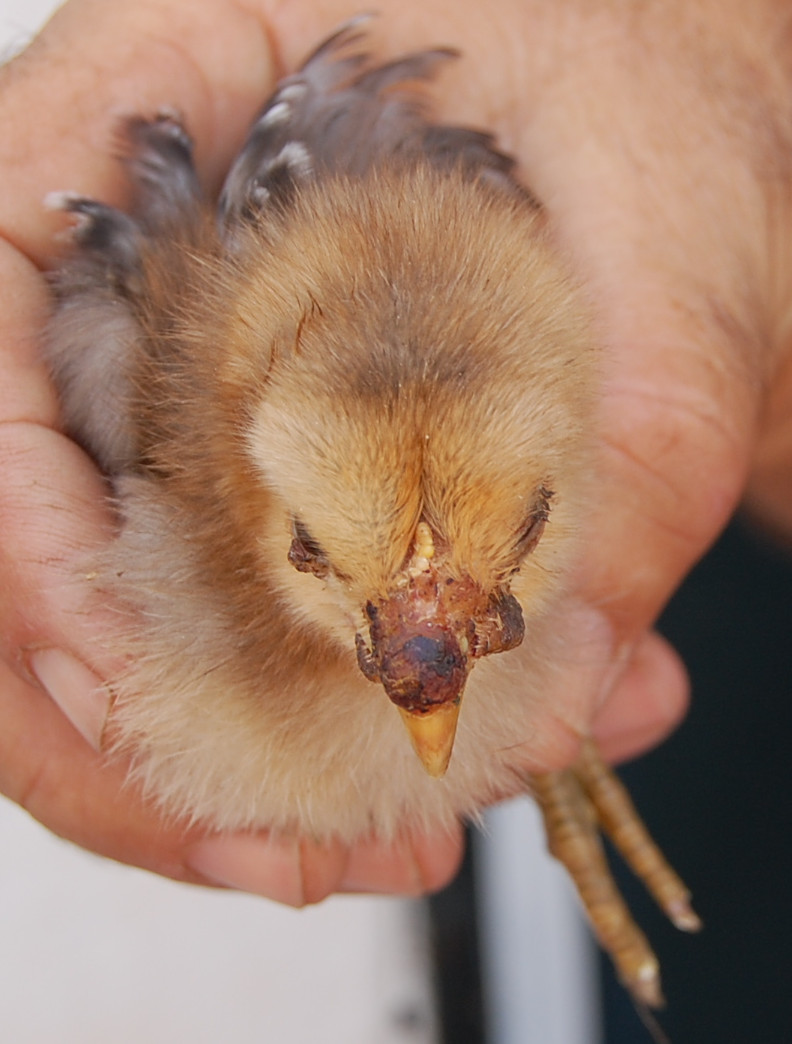
The Merck fowlpox chapter describes a cutaneous form with skin lesions and a diphtheritic form involving upper digestive or respiratory tissues. Dry pox and wet pox are common terms for these presentations. They should not be treated as a guarantee that a particular bird will remain mildly affected or develop one predictable sequence.
Scabs commonly occur on unfeathered areas such as the comb or wattles. Lesions near eyes can interfere with normal behavior and access to feed. Internal lesions raise a different concern because damaged tissue may interfere with swallowing or breathing even when the external scabs do not appear dramatic.
Assess what the lesions prevent the bird from doing
Watch whether the bird can see, feed, drink and breathe comfortably. A bird with facial lesions may become disadvantaged within a competitive group before it appears profoundly ill. Provide a calmer care arrangement when advised, with resources the bird can use safely.
Urgent veterinary help is needed for breathing difficulty, inability to swallow, marked weakness or progressive deterioration. Do not wait for skin lesions to heal while an internal problem worsens. Repeatedly forcing the beak open or pulling at a mouth plaque can add injury and distress.
The poultry Extension explanation distinguishes this avian disease from human chickenpox. The similar informal name should not lead to use of human skin treatments or assumptions about the course of illness in poultry.
A scab or mouth plaque is not a complete diagnosis
Injury, other skin disease and insect-associated damage can overlap in appearance with external pox lesions. Inside the mouth, candidiasis and trichomoniasis are important distinct subjects. A pale plaque cannot safely be assigned to one organism from color alone.
The Texas A&M diagnostic guidance explains the value of an appropriate veterinary diagnostic investigation. Examination and suitable laboratory evidence can establish what the lesions represent and whether another problem is also affecting the flock.
Let the veterinarian arrange any needed material with the laboratory. Do not remove scabs or scrape lesions as a home diagnostic test. Nor should an owner open a bird to decide whether wet pox is present before contacting help.
How infection can continue through a holding
Fowlpox can spread through damaged skin or mucosal contacts, and biting insects can contribute. A flock may therefore have continuing exposures even when birds with the largest scabs have been separated. The house, equipment, group contacts and insect situation all deserve attention.
Reduce avoidable mixing and shared equipment between affected and susceptible groups. Consider multi-age systems, where younger birds repeatedly enter a holding with older birds still present. A new pen name does not remove the physical contacts linking the groups.
Manage biting-insect exposure with suitable local advice. Remove avoidable standing-water sources and review screens or other barriers without compromising ventilation. A household pesticide or a product intended for a different livestock species should not be applied to poultry without checking its suitability and permitted use.
Care addresses function and complications
There is no routine antibiotic cure for the pox virus itself. A veterinarian may need to address secondary bacterial problems, pain or other complications, but those decisions should fit the examination and the birds' food-production role.
Support access to appropriate feed and clean water. A bird that cannot swallow normally must not have liquid forced into its mouth. Do not coat lesions with caustic household products or try to remove all scabs to accelerate recovery. Ask for a care plan that matches the actual lesion site and severity.
Monitor recovery through the bird's comfort and normal function as well as the surface appearance. A drying lesion is encouraging only if the bird can continue feeding and breathing adequately. A severely compromised bird needs a prompt humane decision rather than an indefinite wait for scabs to fall away.
Vaccination is planned prevention
Vaccination can be an important part of preventing fowlpox in an appropriate flock. Discuss the local risk, birds' ages, species and previous vaccination with a poultry veterinarian or qualified adviser. A preventive program should be chosen before relying on a product during an unresolved flock illness.
A statement that a bird was vaccinated is not proof that every later scab has a harmless cause or that the bird cannot develop pox. Administration, immune response and the actual diagnosis still matter. Do not repeat vaccination or change products solely because an internet photograph looks similar.
Product instructions and trained administration are important. This article does not reproduce vaccine-handling or administration procedures. The practical goal is a correctly planned prevention program, with the continuing husbandry and contact controls needed to support it.
Supporting a healthier following group
Review the route by which susceptible birds enter the holding, how groups are separated and whether insects or shared equipment keep reconnecting them. Correct the practical problem before the next placement rather than assume an empty-looking pen is automatically free of exposure.
The chicken, turkey and poultry brooding pages provide related care. Unusual flock deaths or severe respiratory illness should receive a broader veterinary assessment rather than be assigned casually to familiar skin pox.
Does dry pox mean the bird only needs time?
Not necessarily. Lesion position, pain, feeding access and complications affect welfare. A bird that cannot use resources or is deteriorating needs veterinary attention.
Will an antibiotic treat the virus?
No. It may be prescribed for a relevant secondary bacterial problem, but it does not directly cure fowlpox. The diagnosis and any treatment purpose should be explained by the veterinarian.
Cite this reference
LivestockDefense. “Fowlpox in chickens and turkeys: skin scabs, wet pox and prevention.” Updated 2026-11-02. https://livestockdefense.com/threats/fowl-pox/
Add the date you accessed the page. This identifies the current reference; keep a permitted saved copy if your work depends on its exact wording. A citation alone does not establish support for a claim.
How to cite a page and its revision ↗Sources & boundaries
Read the evidence in context.
These documents support the statements identified in this reference. Check their scope and dates when deciding whether they answer your question.
- Merck Veterinary Manual: Fowlpox in chickens and turkeys
Source update: Not provided. Most recent check: 2026-11-02.
Clinical identity, signs, diagnostic interpretation and prevention statements bounded to the sections mapped in the pig/poultry condition article.
- University poultry Extension / Small and Backyard Poultry: Fowl pox in poultry
Source update: Not provided. Most recent check: 2026-11-02.
Clinical identity, signs, diagnostic interpretation and prevention statements bounded to the sections mapped in the pig/poultry condition article.
- Texas A&M Veterinary Medical Diagnostic Laboratory: Diagnostic guidance: fowl pox
Source update: Not provided. Most recent check: 2026-11-02.
Clinical identity, signs, diagnostic interpretation and prevention statements bounded to the sections mapped in the pig/poultry condition article.