
This reference uses the specific documents linked in the article and listed below. Check their scope, publication dates and the statements they support.
Each leaf-lined cell contains a developing bee and its food
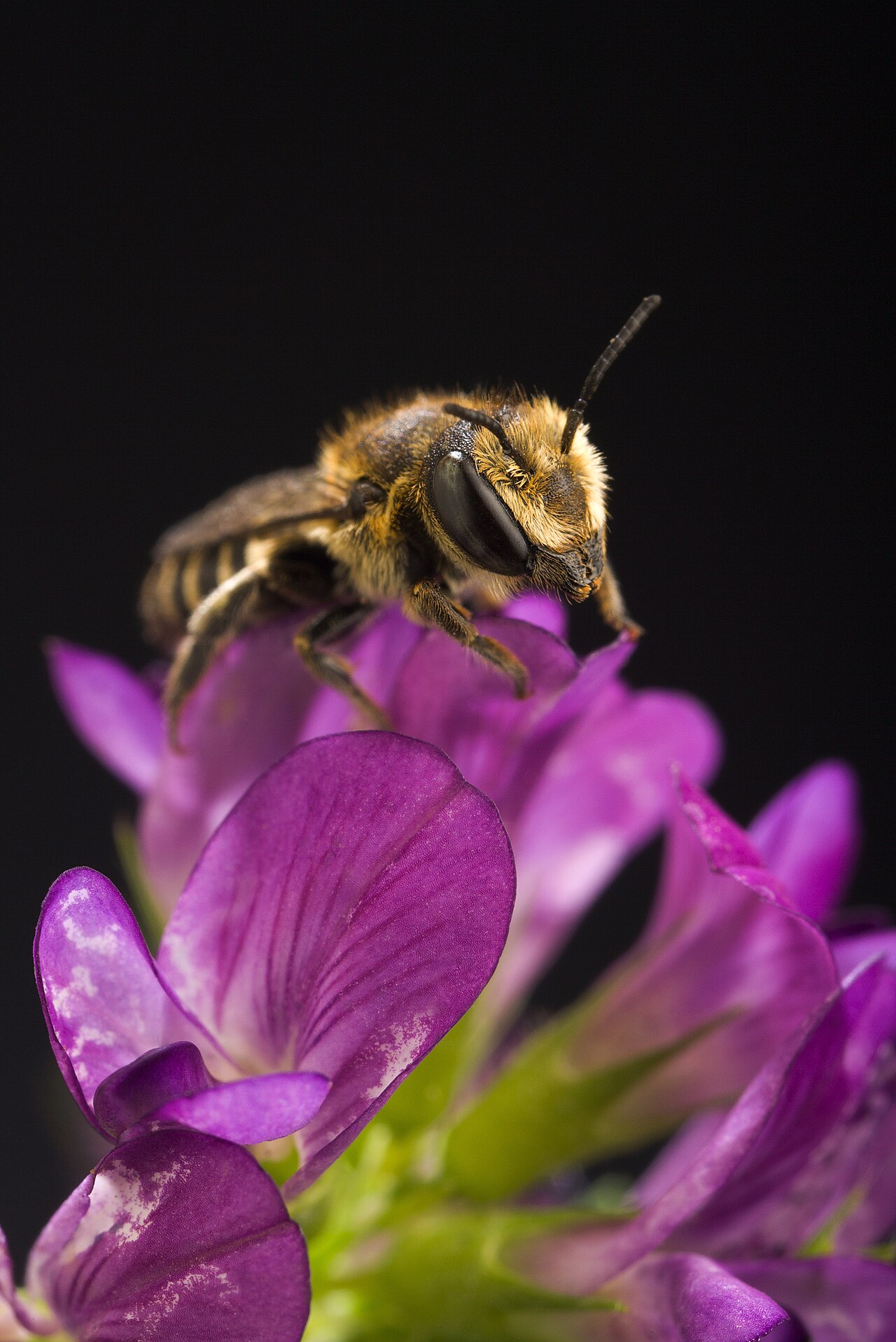
Alfalfa leafcutting bees are solitary bees managed in aggregations, especially for alfalfa seed production. Each female constructs and provisions individual cells, rather than relying on a honey-bee-like workforce continually feeding larvae. Her young develop on the food placed with them.
This life history makes contaminated provisions and nesting material important. An adult can appear active while carrying a risk to developing offspring. The absence of obvious adult illness therefore does not establish that the next generation in the boards or loose cells is healthy.
Source: Alfalfa Leafcutting Bee (ALCB); Chalkbrood: a disease of bees.
Chalkbrood is a pathogenic infection, not any fungal growth
USDA ARS explicitly distinguishes pathogenic Ascosphaera infection from molds that grow opportunistically on dead insects or pollen. The affected larva dies, and fungal development can produce a characteristic cadaver. In M. rotundata, A. aggregata is an important named agent.
Color or a dry-looking larva alone is insufficient for confident species diagnosis. Other fungi, parasites, failed development and damaged provisions can leave unsuccessful cells. Expert cocoon or bee-cell assessment helps establish which problem is reducing viable offspring before a management response is selected.
Source: Chalkbrood: a disease of bees; Alfalfa leaf-cutter bee Megachile rotundata; Alfalfa leaf cutting bee producer guide to the National Bee Farm-level Biosecurity Standard.
Contaminated cells can connect successive bee generations
Adult females can move spores onto the materials and provisions used for new cells. Developing larvae encounter contaminated food. Emerging adults can also contact contaminated material left from the preceding generation, creating a recurring problem in the management system.
Removing only the visible dead larvae does not necessarily address all contaminated equipment or nesting surfaces. Nor does a strong honey-bee colony elsewhere protect solitary-bee cells. The plan needs to consider the nesting boards, loose cells, emergence material and shared handling areas relevant to this species.
Source: Chalkbrood: a disease of bees; Alfalfa leaf cutting bee producer guide to the National Bee Farm-level Biosecurity Standard.
Measure viable offspring rather than count filled holes alone
A filled nesting cavity shows that nesting occurred; it does not show that each occupant survived or will emerge normally. Appropriate professional testing can distinguish live developing bees from diseased cadavers, parasites and other failed cells. That distinction matters when planning the next season's pollination stock.
Ask the testing service which material and interpretation are suitable. Avoid turning a sample result into a claim that every unexamined board has the same status. Most importantly, do not repeatedly redistribute suspect cells while waiting for more adults to become available.
Source: Alfalfa leaf cutting bee producer guide to the National Bee Farm-level Biosecurity Standard; Alfalfa Leafcutting Bee (ALCB).
Prevention combines sound stock, hygiene and suitable conditions
Source bees with meaningful health assessment and manage suspect lots separately from healthy material. Maintain suitable shelter, storage and incubation conditions for the bee stage, including moisture and air circulation. Keep nesting material protected from unnecessary wetting and damage.
Use current species-appropriate guidance for equipment treatment, replacement or disposal. Older manuals include fumigation and chemical methods that should not be copied as a home recipe or assumed currently authorized. A successful plan reduces exposure while preserving viable developing bees; it should not solve a fungus problem by damaging the pollinator stock.
Source: Alfalfa leaf cutting bee producer guide to the National Bee Farm-level Biosecurity Standard; Storage, Incubation, and Emergence; Chalkbrood: a disease of bees.
Practical questions
Is this the same as chalkbrood in honey bees?
They are related fungal brood problems but involve different bee biology and important species distinctions. Do not substitute a honey-bee treatment plan.
Do filled nesting boards prove I have enough live bees for next year?
No. Disease, parasites and failed development can occur inside filled cells.
Does any mold on leaves prove Ascosphaera aggregata?
No. Opportunistic molds and true chalkbrood require distinction.
Related animal-health reading
Cite this reference
LivestockDefense. “Chalkbrood in alfalfa leafcutting bees: larval infection and healthy nesting stock.” Updated 2026-11-02. https://livestockdefense.com/threats/managed-alfalfa-leafcutting-bee-chalkbrood/
Add the date you accessed the page. This identifies the current reference; keep a permitted saved copy if your work depends on its exact wording. A citation alone does not establish support for a claim.
How to cite a page and its revision ↗Sources & boundaries
Read the evidence in context.
These documents support the statements identified in this reference. Check their scope and dates when deciding whether they answer your question.
- USDA Agricultural Research Service: Alfalfa Leafcutting Bee (ALCB)
Source update: Not provided. Most recent check: 2026-10-29.
Solitary nesting life cycle, overwintering prepupae, managed emergence/bloom relationship and separate immature mortality causes. Historic pesticide practices not transferred.
- Sustainable Agriculture Research and Education: Storage, Incubation, and Emergence
Source update: 2010. Most recent check: 2026-10-29.
Storage/incubation influence, sex-specific emergence sequence, uneven temperatures and constraints on delaying release. No pesticide protocol reproduced.
- Canadian Food Inspection Agency: Alfalfa leaf cutting bee producer guide to the National Bee Farm-level Biosecurity Standard
Source update: Not provided. Most recent check: 2026-11-02.
Species-specific life-cycle, chalkbrood/foliar-mold distinction, moisture and storage management, sourcing and hygiene; old pesticide, fumigation and disinfection recipes are not reproduced.
- USDA Agricultural Research Service: Chalkbrood: a disease of bees
Source update: Not provided. Most recent check: 2026-11-02.
Distinction between pathogenic chalkbrood and opportunistic molds, solitary-bee provisioned-cell biology and general transmission; historic loss percentages and pathogen-handling procedures not reproduced.
- University of Florida IFAS Extension: Alfalfa leaf-cutter bee Megachile rotundata
Source update: Not provided. Most recent check: 2026-11-02.
Solitary cavity-nesting identity and Ascosphaera aggregata association; no product-use or propagation procedure reproduced.