
This reference uses the specific documents linked in the article and listed below. Check their scope, publication dates and the statements they support.
Why the nervous system changes the response
The Merck rabies reference describes virus traveling through peripheral nerves toward the brain, then reaching tissues including salivary glands. Exposure usually involves infected saliva entering a bite wound; fresh wounds or mucous membranes can also provide entry. Rabies is therefore an animal-health emergency with a separate, time-sensitive human exposure question.
Do not wait for an animal diagnosis before seeking medical advice about a plausible human exposure. Tell the healthcare professional what contact occurred, which animal was involved and whether saliva reached broken skin, eyes or mouth. An animal-health investigation and a person's assessment can proceed together without one being mistaken for the other.
The animal does not have to be aggressive
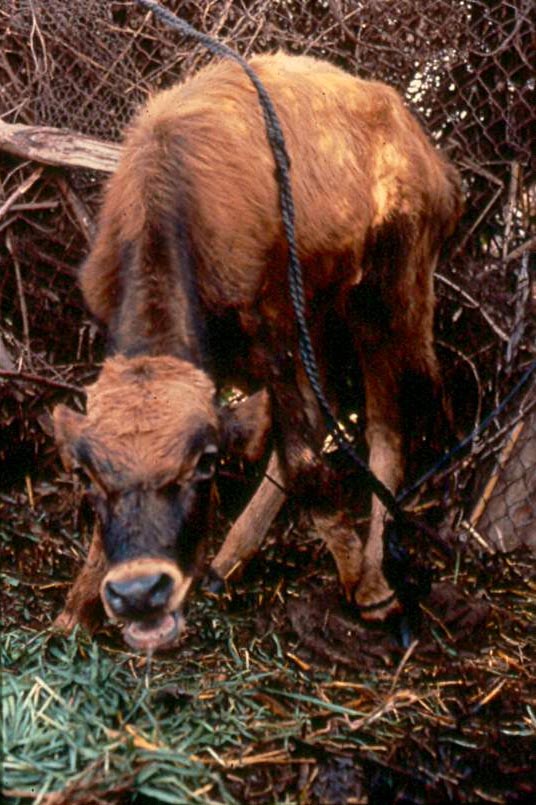
CDC's veterinary guidance lists behavioral change, weakness, incoordination, paralysis, swallowing difficulty and salivation among possible signs. Rapid progression is concerning. The familiar image of an attacking animal captures only part of the disease; a paralytic presentation can draw a well-intentioned person close to the mouth of an animal that seems to be choking.
Merck specifically warns about this exposure during attempted mouth examination. Do not reach into the mouth, attempt to remove an imagined obstruction or offer oral medication to test whether swallowing works. Describe the observed problem from a safe position and let the responding veterinarian decide how assessment should occur.
Other neurologic conditions still need consideration
Behavioral change and paralysis suggest nervous-system disease, rather than confirming rabies. The original livestock profile also identifies listeriosis and toxic exposures as alternative explanations. Their inclusion is a reason for a proper differential assessment, not permission to dismiss rabies because another diagnosis seems more familiar.
Keep the sequence clear: what was first noticed, what changed next and when people or other animals had contact. Distinguish an observed bite from a suspected wildlife encounter. An unwitnessed exposure cannot be reconstructed confidently by inventing a bite date from the onset of signs.
Confirmation belongs to the authorized investigation
Clinical appearance alone cannot establish the diagnosis. Merck describes laboratory confirmation, and CDC places suspect-animal management within veterinary and public-health coordination. Owners should not collect nervous tissue, handle a suspect carcass or send material to a laboratory independently.
Ask who is directing the investigation and how its findings will be communicated. A pending result, a confirmed result and an alternative diagnosis have different meanings for follow-up. Keep the actual laboratory or official report rather than relying on a message that simply says the animal was “checked.”
Assess exposed animals individually
CDC recommends that a public-health official assess possible exposures in pets and livestock. Physical proximity by itself is not an exposure, while a bite or relevant saliva contact may need urgent action. Species, vaccination documentation, local rabies circumstances and the details of contact affect the decision.
Do not copy the familiar observation rule for a healthy dog, cat or ferret onto cattle or horses. Similarly, an overdue vaccine, an undocumented injection and a current licensed vaccination should not be recorded as the same history. Make the original product and administration records available so officials can apply the appropriate guidance.
Prevention before an incident
Arrange an appropriate vaccination plan with the herd or equine veterinarian and follow applicable local requirements. Review how workers report abnormal wildlife and neurologic animals, and identify who contacts public health. The zoonoses collection connects this concern with other animal-associated exposures; each disease still needs its own exposure definition.
A useful exercise is to ask how someone feeding alone would recognize that a swallowing problem warrants a call, then check whether that person has the right contact information. Prevention includes avoiding a predictable hazardous response, not only keeping vaccine invoices.
Questions about livestock rabies
Can normal behavior earlier that day rule it out?
No. A brief earlier observation cannot exclude a developing neurologic disease or reconstruct every prior contact.
Does vaccination eliminate the need to report suspicious signs?
No. Give the veterinarian the vaccination record and describe the illness. Officials determine how that history changes the response.
Should everyone who passed the pen receive human treatment?
Human care depends on an exposure assessment, not a list of everyone nearby. Promptly provide accurate contact details to public health and follow the healthcare advice given.
Cite this reference
LivestockDefense. “Rabies in livestock: neurologic signs and immediate exposure assessment.” Updated 2026-10-29. https://livestockdefense.com/threats/rabies-in-livestock/
Add the date you accessed the page. This identifies the current reference; keep a permitted saved copy if your work depends on its exact wording. A citation alone does not establish support for a claim.
How to cite a page and its revision ↗Sources & boundaries
Read the evidence in context.
These documents support the statements identified in this reference. Check their scope and dates when deciding whether they answer your question.
- Centers for Disease Control and Prevention: Information for Veterinarians: Rabies
Source update: 2025-07-16. Most recent check: 2026-10-29.
Variable animal signs, exposure assessment, vaccination history and coordinated public/animal-health response. Dog observation rules are not transferred to livestock.
- Merck Veterinary Manual: Rabies in Animals
Source update: 2026-09. Most recent check: 2026-10-29.
Neural spread, saliva exposure, paralytic and behavioral presentations and laboratory confirmation; no specimen procedures.