
This reference uses the specific documents linked in the article and listed below. Check their scope, publication dates and the statements they support.
The fungi occupy the skin surface and hair
Dermatophytes infect keratinized structures. The species involved and the appearance differ among cattle, horses, small ruminants and other animals. The disease name does not mean that a worm is beneath the lesion, and ordinary deworming is not a treatment for the fungal infection.
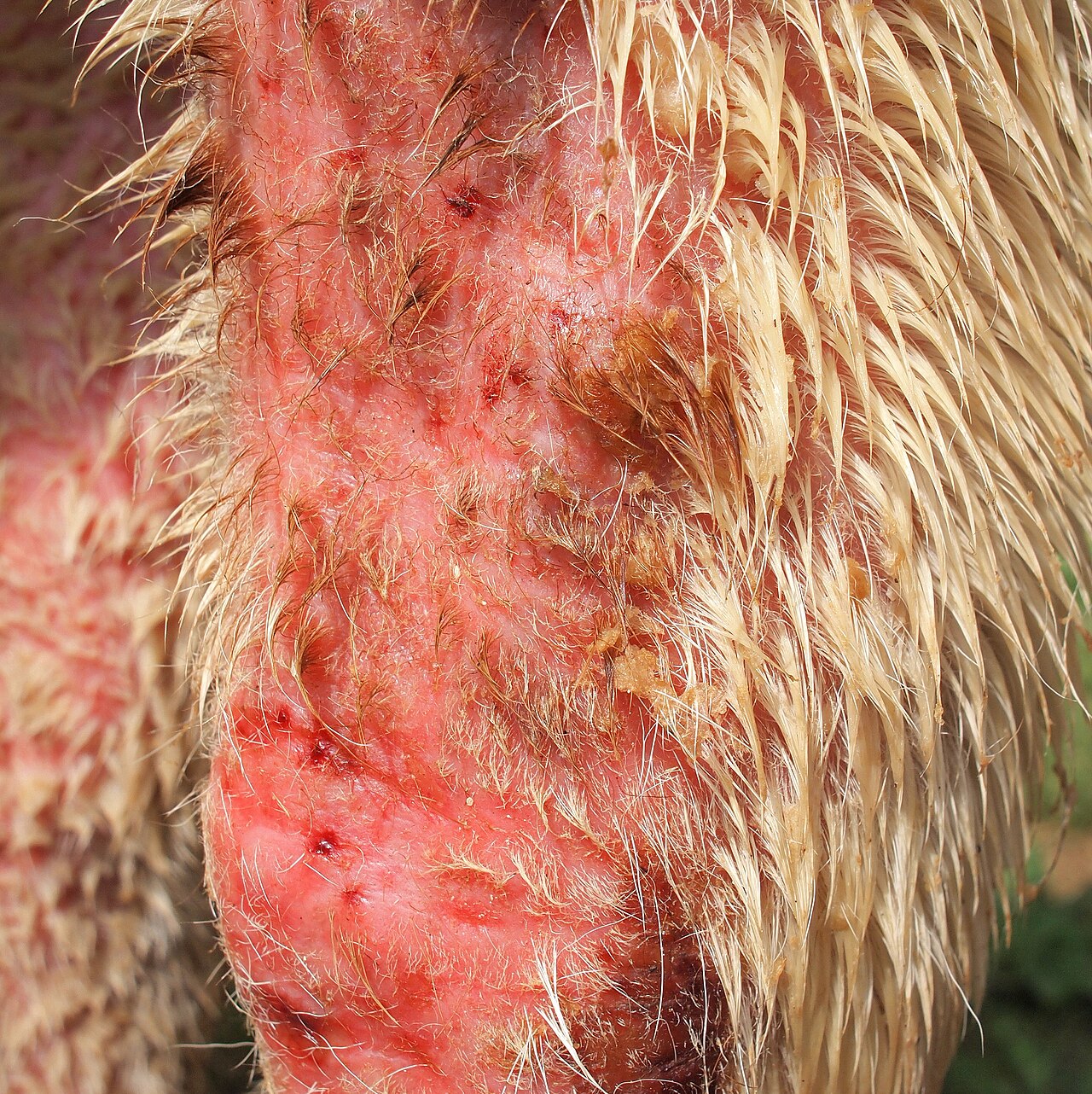
University of Minnesota's veterinary dermatology handbook and Merck's equine chapter describe variation in clinical appearance. Some lesions are circular, but others are less tidy or are partly hidden by crusts. A ring-shaped photograph is therefore not a complete diagnostic test, nor does an irregular lesion exclude ringworm.
Source: Dermatophytosis: large animals; Dermatophytosis in horses; Dermatophytosis/ringworm infestation in livestock.
Young or closely housed animals may be especially affected
Susceptibility varies with immunity, animal condition and contact patterns. Confined groups, young animals and shared grooming or handling equipment can provide opportunities for spread. In horses, lesions may occur where tack or grooming contributes contact or skin trauma; cattle can develop conspicuously crusted areas around the head and elsewhere.
These patterns help direct examination but should not become a reason to dismiss lesions in an adult or an animal kept outdoors. Other skin disorders, including mites, bacterial folliculitis and dermatophilosis, can resemble the fungal disease. Severe pain, extensive lesions or general illness needs assessment beyond a presumed superficial infection.
Source: Dermatophytosis: large animals; Dermatophytosis in horses.
A diagnosis should distinguish disease from a visual guess
Veterinary investigation may include examination of affected hairs or skin and suitable fungal testing, with biopsy in selected cases. The clinician selects methods for the species and lesion. A negative result from one screening technique does not necessarily exclude every dermatophyte infection.
Do not start shaving, scraping or applying harsh substances in an attempt to expose a perfect ring. Such handling can injure skin and spread infected material to equipment or people. Ask for a treatment and contact-management plan that fits the confirmed or strongly supported diagnosis rather than cycle through unrelated skin products.
Source: Dermatophytosis: large animals; Dermatophytosis in horses.
Treatment and environmental control complement each other
Veterinary care commonly uses appropriate topical therapy, with additional measures selected for lesion extent and the animal group. The suitable product and food-animal requirements vary. A product safe for a horse is not automatically approved for use on a lactating dairy animal, and unselected caustic remedies can damage tissues.
Separate grooming tools or manage them according to the control plan, and clean contaminated handling items appropriately. Infected hairs and crusts can contribute to exposure after the first animal appears improved. Reassess persistent or spreading lesions because another diagnosis, ongoing contact or an unsuitable treatment may be involved.
Source: Dermatophytosis: large animals; Dermatophytosis in horses; Dermatophytosis/ringworm infestation in livestock.
Protect people without assuming every skin lesion is zoonotic ringworm
Use appropriate hand hygiene and protective handling of affected animals and contaminated items. People who develop suspicious skin lesions should seek medical advice and mention animal contact. Children and people with increased susceptibility may need particular consideration when visits or close handling are planned.
The presence of animal lesions should prompt practical precautions, not public claims that a specific person or farm is infected. Likewise, successful treatment of one animal does not establish clearance of every contact. The veterinary plan should explain which animals require assessment and what criteria matter before returning to close mixing or shared equipment.
Source: Dermatophytosis: large animals; Dermatophytosis/ringworm infestation in livestock.
Support normal skin health and reduce re-exposure
Maintain suitable nutrition, clean dry housing and management of crowding or repeated skin trauma. These steps support resistance and comfort but do not guarantee prevention of all exposure. New animals and unexplained skin lesions need an appropriate introduction and assessment process.
Hair regrowth and reduction of crusting are useful recovery observations, but the management question may require more than a better-looking coat. Follow the clinician's advice for contacts and any relevant local movement or event requirements. Do not use a generic website reference as a health certificate for a show or sale animal.
Source: Dermatophytosis: large animals; Dermatophytosis in horses.
Practical questions
Is ringworm caused by a worm?
No. It is a fungal infection of skin and hair, so routine intestinal worming does not address the cause.
Does every circular bald patch mean ringworm?
No. Several disorders can look similar, and ringworm can also have noncircular lesions. A specific diagnosis needs supporting evidence.
Related animal-health reading
Cite this reference
LivestockDefense. “Ringworm in livestock: fungal skin disease, contacts and people.” Updated 2026-11-02. https://livestockdefense.com/threats/ringworm-in-livestock/
Add the date you accessed the page. This identifies the current reference; keep a permitted saved copy if your work depends on its exact wording. A citation alone does not establish support for a claim.
How to cite a page and its revision ↗Sources & boundaries
Read the evidence in context.
These documents support the statements identified in this reference. Check their scope and dates when deciding whether they answer your question.
- University of Minnesota Small and Large Animal Dermatology Handbook: Dermatophytosis: large animals
Source update: Not provided. Most recent check: 2026-11-02.
Condition-specific mechanisms, signs, diagnostic limitations and care principles attributed to this document; no drug dosages or invasive procedures reproduced.
- Merck Veterinary Manual: Dermatophytosis in horses
Source update: 2025-02. Most recent check: 2026-11-02.
Condition-specific mechanisms, signs, diagnostic limitations and care principles attributed to this document; no drug dosages or invasive procedures reproduced.
- Government of Assam Directorate of Animal Husbandry and Veterinary: Dermatophytosis/ringworm infestation in livestock
Source update: Not provided. Most recent check: 2026-11-02.
Condition-specific mechanisms, signs, diagnostic limitations and care principles attributed to this document; no drug dosages or invasive procedures reproduced.