
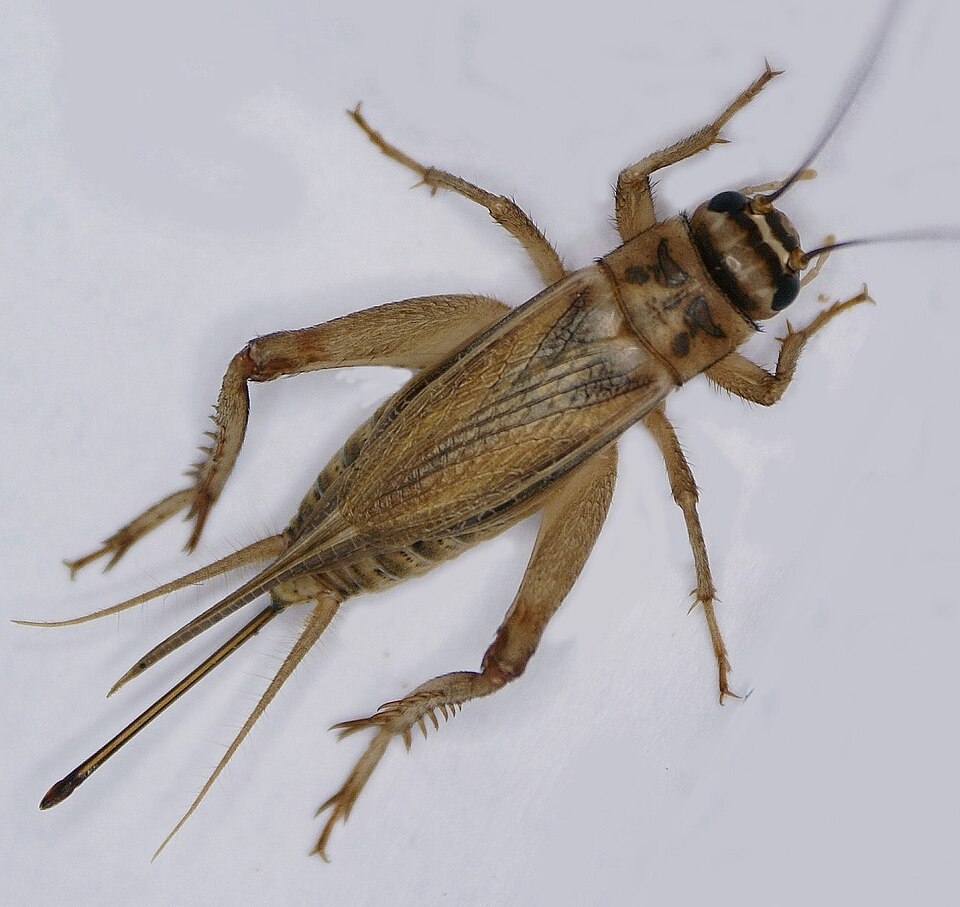
Cricket production life stages
- Eggs
Protected laying material and suitable hatch conditions
- Small nymphs
Accessible starter feed and safe moisture supply
- Growing nymphs
More surface area, suitable feed and ventilation
- Adults
Separate harvest and healthy replacement breeders
This reference uses the specific documents linked in the article and listed below. Check their scope, publication dates and the statements they support.
Animal at a glance
| Topic | Overview |
|---|---|
| Animal group | Insects raised as named cricket species |
| Production roles | Food or feed products in defined markets |
| Life stages | Breeding adults, eggs and successive growing stages |
Start with the species and the intended product
House crickets and other farmed cricket species do not have identical requirements. Confirm the stock identity and whether the intended product is live feed, a feed ingredient or food for people. Each destination has different quality and safety requirements. FAO's cricket-farming manual offers a practical production framework rather than a promise that every species or input is suitable everywhere.
Build the breeding, growing and harvest areas around the intended scale. A hobby container can show that crickets reproduce, but it does not demonstrate control of feed quality, environmental variation, cleaning or processing at a commercial scale.
Feed quality begins before the insects receive it
Use suitable ingredients from a known source and confirm that they are permitted for the intended product. Keep feed dry where required, remove spoiled material and exclude pesticides and household chemicals. Agricultural by-products differ in nutrition and contamination risk; the word natural does not resolve either issue.
Do not assume that crickets remove every hazard from what they eat. Metals, chemical residues, unwanted microbes and foreign material require input control and, where appropriate, testing and validated processing. The FAO food-and-feed assessment discusses opportunities alongside safety considerations. The substrate guide separates feed selection from waste disposal.
Give crickets usable surface area, air and safe water
Crickets need places to shelter and move without crowding at a single surface. Stacking refuges can increase usable area, but only when air circulates and the material remains clean and serviceable. A dense stack hiding dead insects and damp feed is not an improvement merely because it holds more animals.
Measure conditions inside the occupied area. Room air may differ from the environment within a crowded container. Excess moisture, poor ventilation or heat generated within the system can create unsuitable pockets. Choose operating ranges for the species and stage with technical guidance rather than a universal thermostat setting.
Water should be accessible without creating drowning or persistent wet-substrate hazards. Inspect the actual water-delivery surface, its cleanliness and whether small nymphs can reach it. An adult drinking point may be unsuitable for newly hatched crickets.
Keep breeding and growing stages deliberate
Retain healthy breeders and provide suitable egg-laying material. Protect eggs and newly hatched nymphs from drying, overheating and contamination. Their requirements are not identical to those of large growing crickets.
Separate cohorts where practical so cleaning and environmental adjustment can suit the stage. A continuously mixed container may be convenient, but makes it harder to protect vulnerable young stages and remove accumulated waste. Before expanding, ensure the farm can supply replacement breeding stock without continually introducing unfamiliar insects into every production unit.
Hygiene and health are production care
Remove dead insects and spoiled material promptly and clean equipment between cohorts using an appropriate, verified method. Avoid transferring dirty shelter materials from a failing group into a new one. Keep pests and wild insects out without applying an unapproved pesticide inside the rearing area.
A sudden rise in deaths, abnormal movement, failure to molt or a marked feeding change needs investigation. Review feed, water, environmental conditions and possible infection rather than repeatedly adding new insects to replace losses. Obtain competent insect-production or veterinary support for unexplained problems.
Harvest and processing must fit the final use. Insects intended for people need an appropriate food-safety process and honest labeling, including allergen requirements where applicable. Live crickets that look healthy are not automatically ready-to-eat food.
Can crickets live entirely on kitchen scraps?
That is not a sound commercial assumption. Nutritional adequacy, permitted input status and contamination risks must all be resolved.
Does washing make a poorly controlled batch safe?
Washing alone cannot establish control of hazards introduced through feed or production. Prevention and validated product-specific processing are needed.
Continue reading
Field guides for this animal
Browse all Farmed edible crickets field guides for husbandry advice, health explanations and practical farm routines.
Cite this reference
LivestockDefense. “Farmed edible crickets: feed, water, breeding and rearing hygiene.” Updated 2026-11-02. https://livestockdefense.com/animals/edible-crickets/
Add the date you accessed the page. This identifies the current reference; keep a permitted saved copy if your work depends on its exact wording. A citation alone does not establish support for a claim.
How to cite a page and its revision ↗Sources & boundaries
Read the evidence in context.
These documents support the statements identified in this reference. Check their scope and dates when deciding whether they answer your question.
- Feedipedia / FAO, INRAE, CIRAD, AFZ: Locust meal, locusts, grasshoppers and crickets
Source update: Not provided. Most recent check: 2026-11-02.
Bounded species biology, feeding context and production or husbandry statements attributed to this document in the animal overview sections. No numerical feeding, medication, restraint or breeding protocol reproduced.
- FAO: Guidance on sustainable cricket farming: a practical manual for farmers and inspectors
Source update: Not provided. Most recent check: 2026-11-02.
Cricket production stages, clean feed and water, rearing environment and separation of food production from waste disposal.
- FAO: Edible insects: future prospects for food and feed security
Source update: Not provided. Most recent check: 2026-11-02.
Insect production biology, food/feed uses, substrate quality and the need for product-specific food safety assessment.