
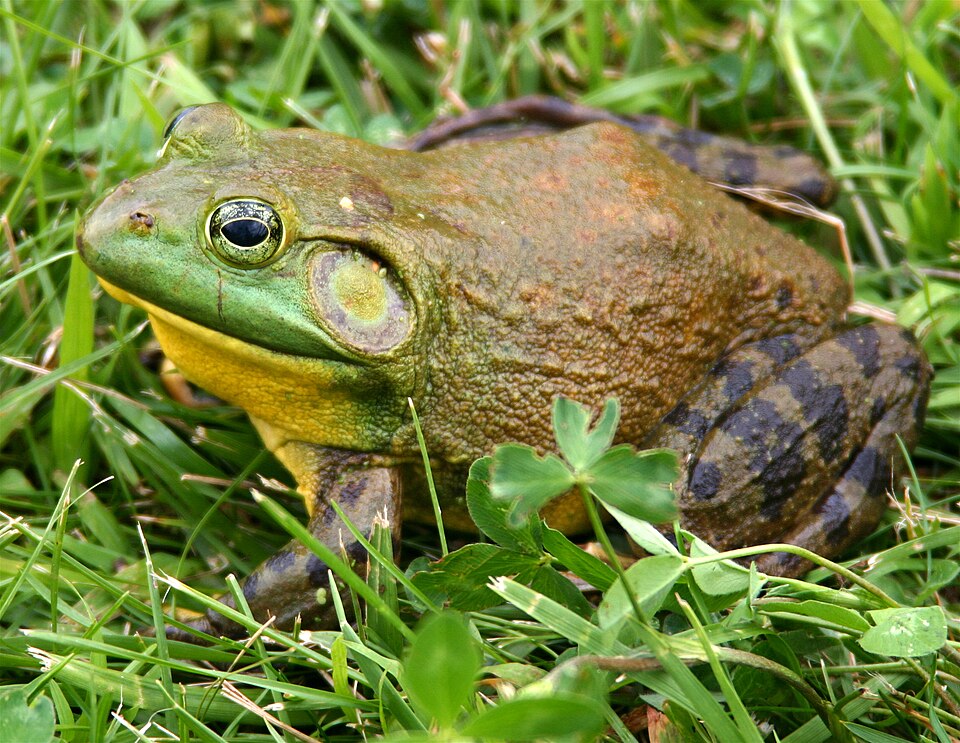
Food-frog care changes at metamorphosis
- Eggs and hatchlings
Protected aquatic development in appropriate water.
- Tadpoles
Aquatic feeding and growth; food and water conditions suit larvae.
- Metamorphosis
Body form, feeding and habitat use change.
- Froglet nursery and grow-out
Suitable food, water access and resting habitat for post-metamorphic animals.
This reference uses the specific documents linked in the article and listed below. Check their scope, publication dates and the statements they support.
Animal at a glance
| Topic | Overview |
|---|---|
| Animal group | Amphibians, including cultured American bullfrogs |
| Production roles | Food frogs and hatchery or growing stock |
| Life stages | Egg, tadpole, metamorphosis and later growing frog |
Begin with a farmed species and a defined system
The American bullfrog, described as Rana catesbeiana in FAO's culture profile, is one food-frog species. It is also encountered under updated scientific combinations. Other farmed frogs should not be assumed to share the same environmental requirements or production methods.
The enterprise needs lawful stock, secure facilities and suitable technical support. A species that grows successfully in one region may create ecological problems if it escapes elsewhere. Secure inlets, outlets and boundaries are part of responsible husbandry, not merely a way to avoid losing saleable animals.
Eggs and tadpoles are an aquatic production stage
Eggs and newly hatched animals depend on appropriate water conditions. Tadpoles later feed and grow within that water environment. The stocking, food and water-management plan should be specific to the stage rather than borrowed from a fish pond or a tank of adult frogs.
Protect small animals from predators and unsuitable screens or outlets. The facility should allow competent observation without repeated disruptive handling. If survival declines, investigate water conditions, food supply and interactions before assuming that the species is simply fragile.
Temperature affects development, which makes local conditions important when considering a production schedule. A timetable from a warmer farm cannot guarantee the same progression in a cooler facility. The useful plan follows development and environmental suitability rather than promising a fixed number of days for every stock.
Metamorphosis changes the care problem
During metamorphosis, tadpoles develop into froglets with a different body form and way of using their environment. Feeding and access to suitable resting areas change along with anatomy. The transition deserves specific facilities and attention rather than being treated as an inconvenience between two saleable stages.
Prepare the receiving habitat before substantial numbers reach that stage. A unit that works well for swimming tadpoles may not allow emerging froglets to use the environment appropriately. Management should respond to the animals present, including individuals that develop earlier or later than the main group.
The post-metamorphic nursery can help small frogs progress toward grow-out. It should provide suitable access to food and reduce harmful interactions. Marked size differences can make a group harder to manage, particularly where larger frogs can prey on smaller animals.
Feed changes with development
Larval and post-metamorphic feeding are different tasks. The type, size and presentation of food should fit the animal's current stage. A ration that meets the needs of a growing frog should not be assumed appropriate for a filter-feeding tadpole.
Use a feeding programme evaluated for the farmed species and production method. Historical descriptions of farms do not justify feeding decomposing wastes or attempting improvised methods of stimulating feeding. Food hygiene and a dependable nutrient supply matter for both growth and the condition of the environment.
Watch access as well as total quantity. Small or less competitive frogs can be left behind when feed is concentrated in limited places. An apparently active feeding area is not evidence that the entire group has eaten adequately.
Housing should support normal use of water and resting space
Frog grow-out systems use different arrangements of water and non-submerged areas. The appropriate design depends on the species, stage and production method. It should allow the animals to use the environment without persistent crowding or difficulty leaving unsuitable water.
Maintain cleanable surfaces and appropriate water management. Smooth, safe materials and sensible layout reduce avoidable injury and make it easier to notice animals that are not feeding or moving normally. Sanitation should not expose frogs to unsuitable chemical residues.
Limit unnecessary disturbance. Rough handling, abrasive contact and repeated crowding can injure animals and complicate health problems. Staff should use species-appropriate methods and obtain veterinary or technical guidance for unfamiliar procedures.
Health and when to seek help
Poor appetite, abnormal posture or swimming, skin damage and increasing deaths require prompt assessment. Water, feeding, injury and infectious disease can interact. A red area on the skin is not enough to identify a particular pathogen or select a medicine.
An amphibian-experienced veterinarian or aquaculture specialist can help evaluate the environment and determine appropriate diagnostic steps. Keep affected animals out of movements to other units until the farm's health response has been agreed. This is an animal-care decision rather than a reason to spend days preparing a perfect account before seeking advice.
Can tadpoles and market frogs use the same care programme?
No. Metamorphosis changes feeding and habitat needs. A production system should plan explicitly for the transition and for the small froglets afterward.
Is a fast-growing stock suitable anywhere?
No. Climate, lawful species use, facilities, containment and local technical support all matter. Growth potential cannot compensate for an unsuitable environment or an operation unable to care for each life stage.
Continue with practical guidance
Cite this reference
LivestockDefense. “Food-frog farming: tadpoles, metamorphosis, feeding and healthy housing.” Updated 2026-11-02. https://livestockdefense.com/animals/farmed-frogs/
Add the date you accessed the page. This identifies the current reference; keep a permitted saved copy if your work depends on its exact wording. A citation alone does not establish support for a claim.
How to cite a page and its revision ↗Sources & boundaries
Read the evidence in context.
These documents support the statements identified in this reference. Check their scope and dates when deciding whether they answer your question.
- FAO: American bullfrog: cultured aquatic species fact sheet
Source update: Not provided. Most recent check: 2026-11-02.
Bounded production identity and species context cited in the global livestock hubs. Practical examples are editorial suggestions. Historical sources do not establish current local market permissions or clinical protocols.