
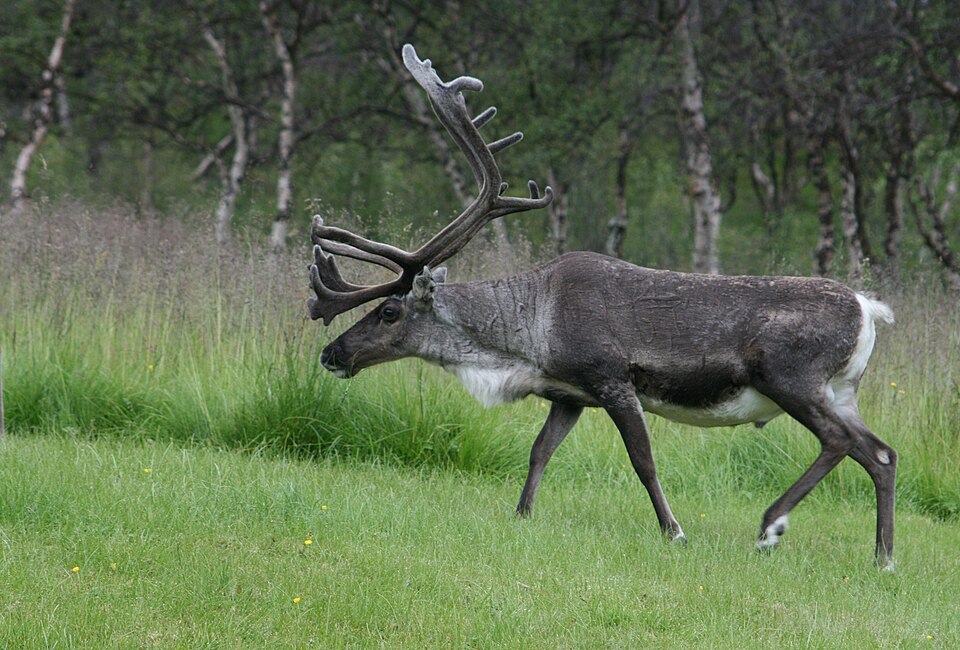
This reference uses the specific documents linked in the article and listed below. Check their scope, publication dates and the statements they support.
Animal at a glance
| Topic | Overview |
|---|---|
| Animal group | Managed cervids that can be kept in seasonal-range herding systems |
| Production roles | Food and other regional livestock products and services |
| Life stages | Young stock, owner groups, seasonal herds and selected sale animals |
Plan for access, not only the amount of land
Reindeer are ruminants with strongly seasonal production. Vegetation that appears abundant in summer may be unavailable beneath winter snow or ice. University of Alaska research discusses how snow conditions and rain-on-snow events can limit winter foraging and increase the effort needed to feed.
Assess the herd's usable range, the weather exposure and the route to alternative grazing. A large pasture is not an adequate reserve if animals cannot reach its edible plants. Make decisions early enough to move or supplement before the animals become weak.
Supplementary feeding changes the whole system
Use feeds appropriate for reindeer and introduce changes gradually. Reindeer share the ruminant need for a functioning microbial fermentation system, explained in UAF's nutrition guide. A sudden switch from natural forage to a rich unfamiliar feed is not simply extra energy; it changes what the rumen must process.
Supplementation also concentrates animals around feeders. Provide enough access points, maintain clean ground where practical and avoid placing feed where subordinate animals must pass aggressive adults. A feeding site that attracts the whole herd can increase competition and contamination if it is not managed as part of the husbandry plan.
Seek advice on forage analysis and ration balance. Cattle feed, horse feed and reindeer formulations are not interchangeable by default. Account for the actual product, including minerals and additives, rather than its pellet shape. Provide an appropriate water supply in managed enclosures and ensure it remains accessible during freezing conditions.
Support females through calving
Maternal condition before calving affects the demands that follow. Prepare suitable calving areas and minimize unnecessary disturbance while retaining the ability to check vulnerable animals. Observe whether calves stand, follow their dams and nurse; a calf close to a female is not necessarily feeding successfully.
If a calf is weak, separated or unable to suck, obtain experienced help promptly. Do not begin indiscriminate bottle-feeding of every animal found alone; first establish the situation and use the herd's calf-care plan. Human intervention can create handling and reunion difficulties when it is poorly timed.
As calves grow, ensure access to the feed sources intended for them. Adult performance can conceal poor calf intake. The herd should have a practical response for bad weather during calving and for females whose condition makes lactation difficult.
Design handling around antlers, escape behavior and weather
Use facilities and handlers familiar with reindeer. Antlers change the space needed at gates, feeders and races, and behavior changes with season and sex. Avoid tight protrusions, broken fencing and layouts where animals pile into a blind corner.
Plan handling so it does not combine unnecessary exertion with adverse weather or heavy insect pressure. Gather only the animals needed and prepare the task before bringing them into the working area. An animal that has become exhausted or cannot keep up should not be forced through the same routine as the sound group.
Herd health is local and seasonal
Work with a veterinarian and experienced herders on regional parasites, infections, introductions and movement requirements. Domestic herd advice should not be used to infer disease status in nearby wild animals. Persistent weight loss, lameness, mouth problems, difficult breathing or unusual mortality require investigation.
Where several herds share land or facilities, prevention depends on cooperation. Keep unfamiliar animals from directly joining a managed group before their health and origin have been assessed. Disease prevention should make care practical, not prevent the keeper from reaching and helping an animal in distress.
Can reindeer live on lichens alone year-round?
Do not reduce their diet to one familiar winter food. Suitable forage and nutritional needs change with season and production stage.
Does supplementary feed remove the need for good range?
No. It can bridge a shortage, but it introduces its own nutritional, hygiene and competition issues. Long-term land and herd planning remain central.
Continue reading
Cite this reference
LivestockDefense. “Managed reindeer: seasonal forage, winter feeding and calf care.” Updated 2026-11-02. https://livestockdefense.com/animals/reindeer/
Add the date you accessed the page. This identifies the current reference; keep a permitted saved copy if your work depends on its exact wording. A citation alone does not establish support for a claim.
How to cite a page and its revision ↗Sources & boundaries
Read the evidence in context.
These documents support the statements identified in this reference. Check their scope and dates when deciding whether they answer your question.
- Rangifer / Jouni Filppa: Organization of reindeer husbandry in Finland
Source update: Not provided. Most recent check: 2026-11-02.
Bounded production identity and species context cited in the global livestock hubs. Practical examples are editorial suggestions. Historical sources do not establish current local market permissions or clinical protocols.
- University of Alaska Fairbanks: Reindeer in Alaska: nutrition and seasonal production
Source update: Not provided. Most recent check: 2026-11-02.
Seasonal forage access, calving nutrition and supplementary-feeding context; regional historical research, not a fixed ration.
- University of Alaska Fairbanks Cooperative Extension: Introduction to ruminant nutrition
Source update: Not provided. Most recent check: 2026-11-02.
Rumen fermentation, balanced diets and feed-analysis principles, including reindeer.