
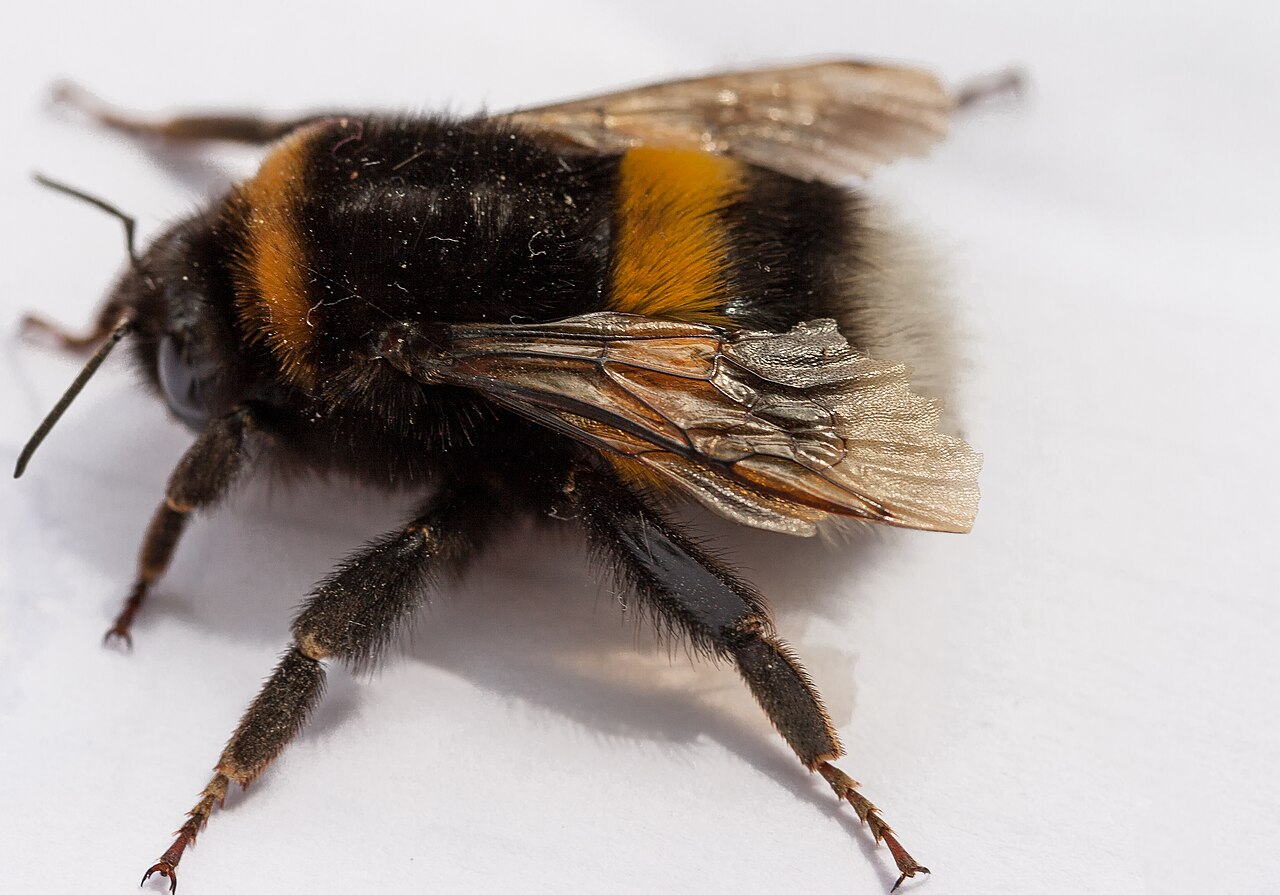
This reference uses the specific documents linked in the article and listed below. Check their scope, publication dates and the statements they support.
A flowering crop does not necessarily provide a complete diet
Flowers differ in the resources they offer. Greenhouse tomato flowers are a clear example: bumble bees can obtain pollen by vibrating the flower, but tomato provides no nectar. A box may therefore be surrounded by bloom and still need its supplied carbohydrate system to function.
Other crops and production stages present different opportunities. Do not copy a feeding conclusion from tomatoes to every protected crop without examining the resources available. Assess what the managed bee species can actually collect and whether the colony has access throughout its intended use.
Source: Pollination of greenhouse tomatoes; Bumblebee sector guide to the National Bee Farm-level Biosecurity Standard.
Food must be accessible, not merely present in the building
Commercial colonies can arrive with a designed feed supply. Follow the supplier's instructions about placement and use, and check that the system has not leaked or become inaccessible. A feeder beneath a tilted box may not function as intended, even when it was adequate at delivery.
Poor weather or greenhouse light conditions can reduce foraging and increase reliance on supplemental food. Food need and colony demand can change as workers and brood develop. The word maintenance-free should not be interpreted as meaning that live pollinators have no nutritional or environmental needs.
Source: Bumblebee sector guide to the National Bee Farm-level Biosecurity Standard; Pollination of greenhouse tomatoes.
Pollen shortage affects the capacity to rear bees
Pollen supports developing bees and the workers that care for them. Insufficient useful pollen can limit colony growth even when energy feed is available. A temporary crop flowering gap differs from a sustained mismatch between the colony's needs and available resources.
Any supplementation should be suitable for Bombus and the particular production system. Honey or unknown-source bee products can introduce disease risks; they are not automatically a safe replacement for the commercial feed. Consult the supplier about a real deficit rather than improvise from household foods or honey-bee recipes.
Source: Bumblebee sector guide to the National Bee Farm-level Biosecurity Standard; Pollination of greenhouse tomatoes.
Poor pollination needs a broader explanation
A low number of flower visits can reflect food, heat, light, pesticide effects, colony age or health. Crop flowers themselves may not be ready to release suitable pollen, and pollination and fruit set are not governed by bee activity alone. Avoid calling a colony starved solely because a grower sees poor fruit set.
The supplier and crop adviser can assess whether the colony is still in its expected working period and whether the box's environment suits it. Where adults are dying, workers cannot fly normally or activity falls abruptly, seek bee-health advice rather than repeatedly adding feed while the underlying hazard continues.
Source: Pollination of greenhouse tomatoes; Bumblebee sector guide to the National Bee Farm-level Biosecurity Standard.
Resource quality and heat belong in the same management plan
Research on bumble-bee colonies shows that resource quality can change the consequences of heat stress. A nutritionally marginal unit may consequently have less capacity to tolerate an adverse environment. Conversely, improving feed does not make excessive heat harmless.
Plan colony placement, crop timing and the intended feed system together. Maintain suitable shade and environmental conditions, and obtain replacement or end-of-use advice when a commercial unit is no longer viable. Do not release an exhausted or suspect colony into the surrounding landscape as a feeding solution, because managed-bee disease and species movements can affect wild pollinators.
Source: Ensuring access to high-quality resources reduces the impacts of heat stress on bees; Bumblebee sector guide to the National Bee Farm-level Biosecurity Standard.
Practical questions
Do tomato flowers provide nectar for bumble bees?
No. They provide pollen, so managed colonies require an appropriate carbohydrate source.
Can sugar feed replace all pollen needs?
No. Energy and pollen-derived nutrients serve different roles.
Does poor fruit set prove that the bees are starving?
No. Crop, environment, colony stage and disease or pesticide problems can affect pollination and fruit set.
Related animal-health reading
Cite this reference
LivestockDefense. “Bumble-bee nutrition in protected crops: pollen, nectar gaps and colony performance.” Updated 2026-11-02. https://livestockdefense.com/threats/bumble-bee-forage-scarcity-in-protected-crops/
Add the date you accessed the page. This identifies the current reference; keep a permitted saved copy if your work depends on its exact wording. A citation alone does not establish support for a claim.
How to cite a page and its revision ↗Sources & boundaries
Read the evidence in context.
These documents support the statements identified in this reference. Check their scope and dates when deciding whether they answer your question.
- Canadian Food Inspection Agency: Bumblebee sector guide to the National Bee Farm-level Biosecurity Standard
Source update: Not provided. Most recent check: 2026-11-02.
Managed Bombus sourcing, nutrition, housing, hygiene and disease-prevention principles; historic pesticide recipes, blanket product claims and laboratory procedures are not reproduced.
- Scientific Reports / primary research: Ensuring access to high-quality resources reduces the impacts of heat stress on bees
Source update: 2019. Most recent check: 2026-11-02.
Bounded experimental findings on nutrition–heat interaction in bumble-bee colony performance, not a guaranteed supplement treatment.
- University of Connecticut Integrated Pest Management: Pollination of greenhouse tomatoes
Source update: Not provided. Most recent check: 2026-11-02.
Tomato buzz pollination, pollen and lack of nectar, suitable shade and commercial-hive feeding context; product lifespans are not universalized.