
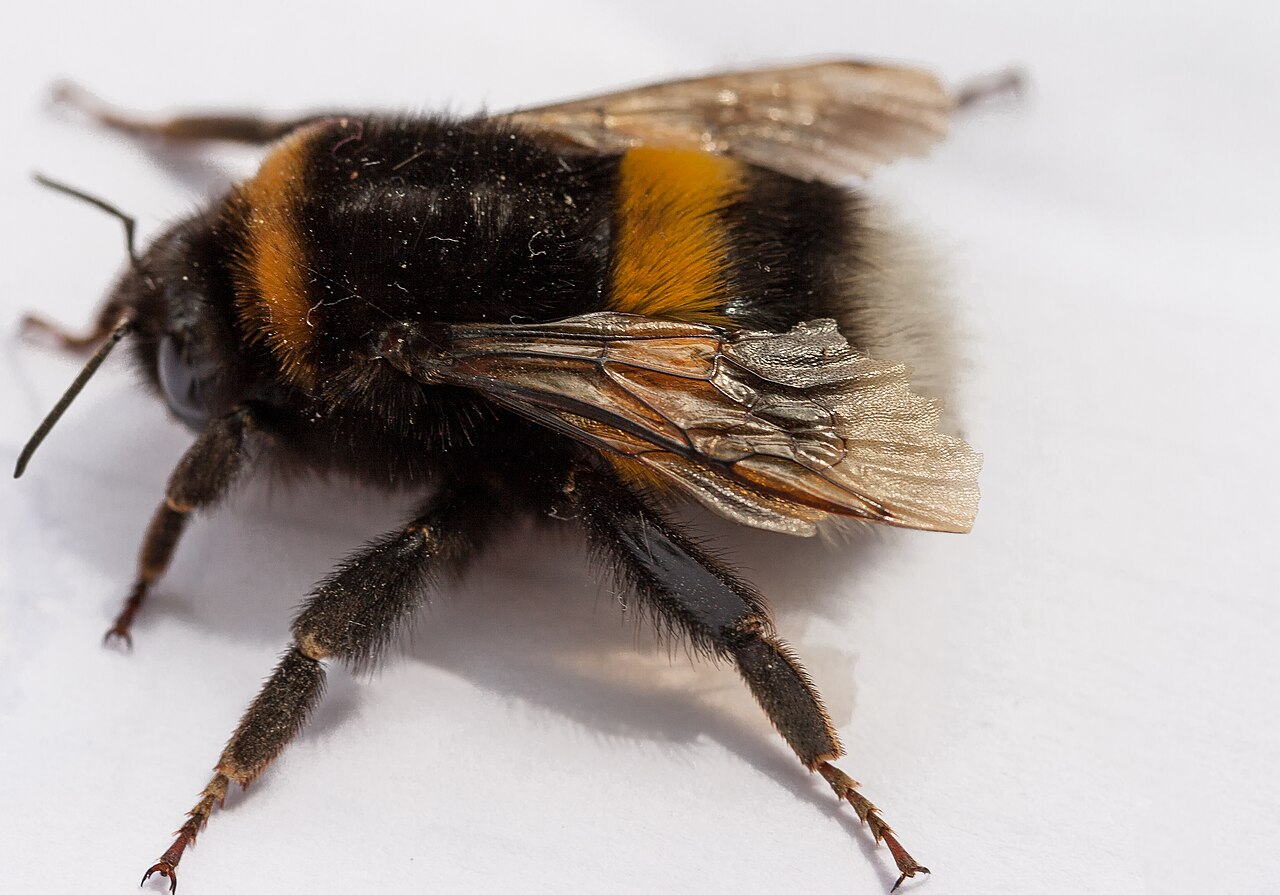
This reference uses the specific documents linked in the article and listed below. Check their scope, publication dates and the statements they support.
A bumble-bee gut parasite with context-dependent effects
Crithidia bombi differs from the honey-bee parasite Lotmaria passim and from the microsporidian Vairimorpha bombi. Similar placement within a broad gut-parasite discussion does not make these organisms equivalent. This profile focuses on Bombus, including species used in commercial pollination.
The parasite can persist without an obvious dramatic disease episode. Research on queen fitness demonstrates that the context and stressful parts of the life cycle influence the effect. Detection therefore should not be interpreted as inevitable immediate colony death, but absence of conspicuous signs does not establish that reproduction is unaffected.
Source: Strong context-dependent virulence in a host–parasite system: reconciling genetic evidence with theory; Microbiome structure influences infection by the parasite Crithidia bombi in bumble bees.
Shared flowers connect colonies without direct nest contact
Fecal contamination and oral acquisition provide a transmission route among bumble bees. A colony does not need to share a box with another for their foragers to use the same resource. Within-colony transmission also connects an introduced infection with later worker and reproductive stages.
That ecology matters when commercial bees are placed near wild populations. However, a shared detection does not automatically reveal the direction of movement. Disease prevention should reduce avoidable mixing and contaminated material while allowing a specialist to interpret the actual evidence.
Source: Microbiome structure influences infection by the parasite Crithidia bombi in bumble bees; Within-colony transmission of microsporidian and trypanosomatid parasites in honey bee and bumble bee colonies; Bumblebee sector guide to the National Bee Farm-level Biosecurity Standard.
Plant composition can influence infection without becoming a cure
A primary experiment in Bombus impatiens found that flowering plant composition affected infection intensity under its tested conditions. Plantings can influence resource quality, bee movements and encounters with contaminated flowers, rather than simply supplying more of the same food.
This does not justify prescribing one plant or nectar ingredient as a guaranteed treatment. The experimental treatments and local environment matter. A grower's forage plan should provide suitable accessible nutrition across the relevant period, while parasite management and supplier biosecurity remain separate needs.
Source: Flowering plant composition shapes pathogen infection intensity and reproduction in bumble bee colonies; Bumblebee sector guide to the National Bee Farm-level Biosecurity Standard.
The microbiome is relevant but home manipulation is not established care
Primary work found that microbiome structure influenced Crithidia infection. That supports the idea that a bee's associated microbes can help shape susceptibility. It does not establish a safe standardized probiotic product or a reason to transfer gut material between commercial colonies.
Seek diagnostic help rather than perform home microbiota experiments on pollinators. A molecular result or parasite assessment should be interpreted with the colony's age, worker strength, food and environmental stress. Other parasites, pesticide exposure or overheating can coexist with Crithidia and may be more immediately correctable.
Source: Microbiome structure influences infection by the parasite Crithidia bombi in bumble bees; Bumblebee sector guide to the National Bee Farm-level Biosecurity Standard.
Support colony function and limit avoidable spread
Use bee-health-aware suppliers and appropriate receiving and placement practices. Keep food and equipment suitable for Bombus and avoid sharing suspect material among units. Correct shortages and excessive heat, recognizing that supportive care does not itself prove the parasite has been eliminated.
Do not use a honey-bee chemical program or livestock medication without species-appropriate professional authorization and evidence. When a commercial colony is failing, consult its supplier and the relevant authority about movement and end-of-use handling rather than release the bees. Evaluate recovery through healthy population and brood function as well as any diagnostic advice.
Source: Bumblebee sector guide to the National Bee Farm-level Biosecurity Standard; Within-colony transmission of microsporidian and trypanosomatid parasites in honey bee and bumble bee colonies; Strong context-dependent virulence in a host–parasite system: reconciling genetic evidence with theory.
Practical questions
Is every infected bee visibly ill?
No. Effects can be subtle and context dependent, including reproductive consequences.
Does planting a particular flower cure a colony?
The cited flowering experiment does not establish that. Forage composition can influence infection and nutrition, but treatment claims need separate evidence.
Related animal-health reading
Cite this reference
LivestockDefense. “Crithidia bombi in bumble bees: gut infection, flowers and colony fitness.” Updated 2026-11-02. https://livestockdefense.com/threats/crithidia-bombi-infection-in-bumble-bees/
Add the date you accessed the page. This identifies the current reference; keep a permitted saved copy if your work depends on its exact wording. A citation alone does not establish support for a claim.
How to cite a page and its revision ↗Sources & boundaries
Read the evidence in context.
These documents support the statements identified in this reference. Check their scope and dates when deciding whether they answer your question.
- Canadian Food Inspection Agency: Bumblebee sector guide to the National Bee Farm-level Biosecurity Standard
Source update: Not provided. Most recent check: 2026-11-02.
Managed Bombus sourcing, nutrition, housing, hygiene and disease-prevention principles; historic pesticide recipes, blanket product claims and laboratory procedures are not reproduced.
- Applied and Environmental Microbiology / primary research: Microbiome structure influences infection by the parasite Crithidia bombi in bumble bees
Source update: 2018. Most recent check: 2026-11-02.
Bounded microbiome and gut-parasite findings and transmission context; no microbiota-transplant, culture or infection instructions reproduced.
- PNAS / primary research: Flowering plant composition shapes pathogen infection intensity and reproduction in bumble bee colonies
Source update: 2020. Most recent check: 2026-11-02.
Observed differences among experimental flowering treatments in Bombus impatiens; not a universal medicinal-plant recommendation or pathogen-handling protocol.
- Journal of Animal Ecology / primary research: Strong context-dependent virulence in a host–parasite system: reconciling genetic evidence with theory
Source update: 2003. Most recent check: 2026-11-02.
Indexed primary study summary on queen fitness and context-dependent effects; not a guarantee of an outcome in every Bombus species.
- Ecology and Evolution / primary research: Within-colony transmission of microsporidian and trypanosomatid parasites in honey bee and bumble bee colonies
Source update: 2020. Most recent check: 2026-11-02.
Separate Bombus–Crithidia and Apis–Nosema experimental results considered within host scope; no infection or propagation procedure reproduced.