
This reference uses the specific documents linked in the article and listed below. Check their scope, publication dates and the statements they support.
A turkey can deteriorate before the illness is obvious
Erysipelas is a bacterial infection capable of spreading through the bloodstream. A flock may first attract attention because several birds have died, while others show only a short period of weakness or depression. Birds of different ages can be infected, although mature turkeys are an important field setting.
The Merck poultry reference identifies turkeys as a major affected production species. The organism also infects other birds and mammals, but that broad host range does not mean every case on a mixed farm has the same source or clinical pattern.
Do not wait for a textbook skin lesion before investigating increased mortality. A subtle change can be meaningful, especially when it occurs around a production or breeding event.
Skin, joints and reproduction provide additional clues
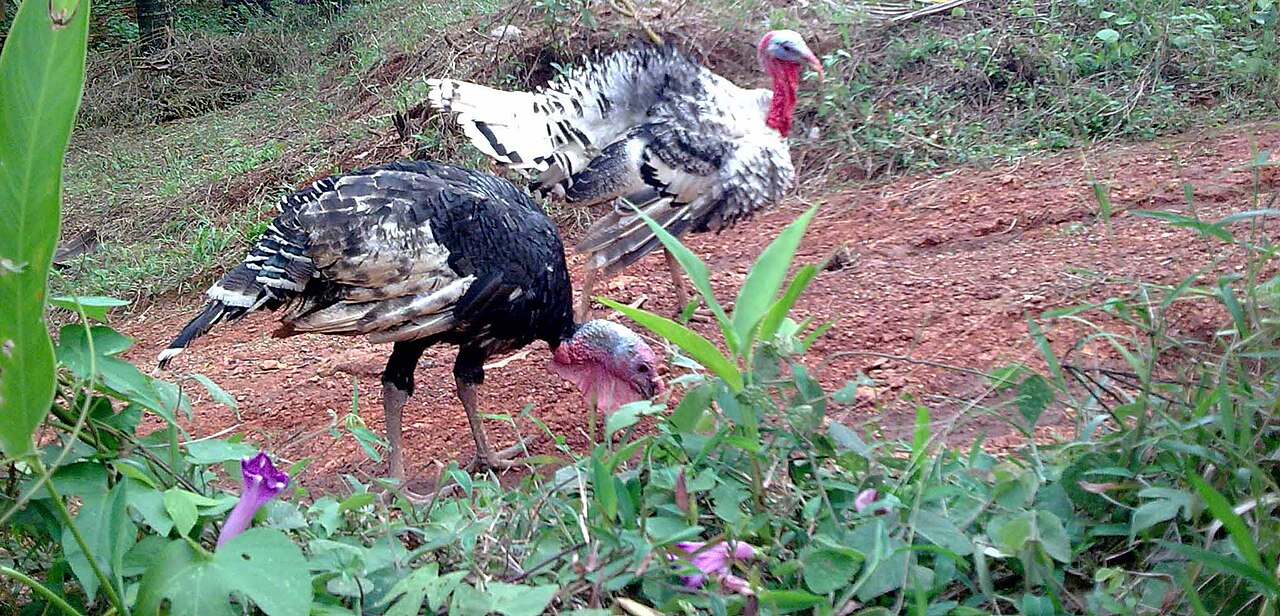
Sick birds may be listless, stop eating, become unsteady or have diarrhea. The snood, wattles or other skin may look dark red or purple. Swollen joints and lameness can occur when infection localizes, and breeder performance may also be affected.
Mississippi State Extension describes these turkey presentations and warns that they resemble other diseases. Color changes are particularly nonspecific: poor circulation from several causes can darken exposed tissues.
Provide a quiet protected area with suitable access to water and feed for birds still able to use them. A severely weak turkey should not be repeatedly chased or handled. Birds unable to recover acceptable comfort need prompt veterinary welfare decisions.
Breeder-flock cases may begin with modest mortality
A University of California Davis diagnostic case, reported in the 2020 AAAP proceedings, involved mature breeder hens from a flock with a slight increase in mortality. Laboratory findings linked characteristic liver and spleen injury with E rhusiopathiae.
This example illustrates why an apparently modest change can justify investigation. It does not provide a universal mortality threshold or establish that every liver lesion in a breeder hen is erysipelas.
Breeding procedures can create relevant mucosal exposure opportunities, while injuries from fighting or other trauma can breach the skin. Review hygiene and handling with the flock veterinarian without assuming that one recent procedure proves the route in the current case.
Confirmation must separate several sudden-death diseases
The veterinarian considers the flock pattern and individual findings, with diagnostic-laboratory identification of the organism and assessment of compatible tissue injury. Routine owner observation cannot reliably distinguish erysipelas from other septicemic diseases.
Important alternatives include fowl cholera, colibacillosis and other infections. Highly pathogenic avian influenza and Newcastle disease may require urgent exclusion according to the clinical situation and local official guidance.
Until the cause of sudden deaths is clarified, limit unnecessary bird and equipment movements and contact the veterinarian promptly. Do not conduct an unprotected home necropsy or attempt to grow the bacteria. The diagnostic laboratory can manage the investigation safely and interpret mixed findings.
Entry can follow wounds or contaminated contact
The organism can persist in contaminated environments and be carried by animals that do not look ill. Skin breaks, mucosal contact and exposure to infected material provide opportunities for infection. Carcasses left accessible may attract pecking and contribute to exposure.
The Iowa State zoonoses chart summarizes animal contact, contaminated material and relevant environmental pathways. It is an overview, not proof that rodents or insects caused a particular outbreak.
Remove access to dead birds using the veterinary and local disposal arrangements, protect feed and water and manage pests. A plan should also address surfaces and equipment shared between flocks. Simply moving apparently normal birds to another area can carry contamination with them rather than eliminate it.
Treatment needs speed and a suitable route
Clinical treatment may involve an appropriate antimicrobial, with penicillin commonly discussed in professional guidance. Selection, administration and withdrawal requirements belong with the veterinarian. A turkey that has stopped drinking may not receive an effective treatment merely because medicine is present in flock water.
Treatment can reduce losses but does not guarantee that every severely affected bird will survive or that carriage is eliminated. Continue assessment of welfare and the wider source of exposure while the clinical response is underway.
Vaccination can help protect at-risk turkeys, especially where there is a history of disease. It takes time to develop protection and is not a substitute for treating an acute crisis. Product availability and licensing vary, so do not apply a pig or another poultry species' vaccine plan without veterinary direction.
Repeated outbreaks require more than repeating the first response
A 2026 primary poultry case series included turkey outbreaks and documented recurrence across poultry holdings. Much of its detailed intervention analysis concerned laying hens, so those figures should not be presented as turkey-specific vaccine effectiveness.
The useful lesson is that an outbreak can expose a continuing environmental or between-flock problem. Review sanitation, shared equipment, replacement sources, pest contact and injury risks rather than assuming the next group is protected because the previous group received treatment.
Use the turkey husbandry reference and biosecurity collection to support practical flock management. Maintain suitable stocking, resource access and safe handling to reduce avoidable skin injury and stress.
Protect people handling birds or tissues
E rhusiopathiae can infect people, commonly through damaged skin after contact with infected animals or tissues. Human erysipeloid is a distinct occupational infection; the familiar name erysipelas in people may refer to other bacteria, so medical identification matters.
Wear suitable gloves, cover cuts and wash after handling birds or contaminated equipment. Avoid splashing fluids into the face and keep work items away from food areas. A worker developing a painful red skin lesion or systemic illness after exposure should seek medical advice and mention turkey contact.
Do turkeys need diamond-shaped skin marks like pigs?
No. The turkey presentation can be sudden death, darkened skin or other nonspecific findings.
Does vaccination eliminate the carrier state?
It should not be assumed to do so. Prevention still needs hygiene, injury reduction and appropriate flock assessment.
Cite this reference
LivestockDefense. “Erysipelas in turkeys: sudden deaths, diagnosis and prevention.” Updated 2026-11-02. https://livestockdefense.com/threats/erysipelothrix-infection-in-turkeys/
Add the date you accessed the page. This identifies the current reference; keep a permitted saved copy if your work depends on its exact wording. A citation alone does not establish support for a claim.
How to cite a page and its revision ↗Sources & boundaries
Read the evidence in context.
These documents support the statements identified in this reference. Check their scope and dates when deciding whether they answer your question.
- Merck Veterinary Manual: Erysipelas in Poultry
Source update: 2024-08. Most recent check: 2026-10-30.
Erysipelothrix rhusiopathiae causes poultry erysipelas, turkeys are important affected hosts, findings can overlap other conditions and the disease is zoonotic. No organism handling, culture conditions, diagnostic collection or treatment procedure supplied.
- Da Silva and colleagues / University of California Davis / AAAP proceedings: A case report of Erysipelothrix rhusiopathiae infection in turkey breeder hens
Source update: 2020. Most recent check: 2026-11-02.
Page 13 primary diagnostic case of mature turkey breeder hens with modestly increased mortality, liver/spleen lesions and organism identification; proceedings abstract, not a full controlled treatment trial.
- Mississippi State University Extension: Diseases of poultry: erysipelas
Source update: Not provided. Most recent check: 2026-11-02.
Turkey sudden-death, skin/arthritic and breeder implications and resemblance to other disease. Outdated organism name, owner surgery/injection recommendations and blanket treatment claims are excluded.
- Iowa State University Center for Food Security and Public Health: Select zoonoses of livestock and poultry: erysipelas
Source update: 2021-01. Most recent check: 2026-11-02.
Erysipelas row supports animal/environment contact, wounds, carrier/reservoir and turkey septicemic presentation only; overview chart is not a diagnostic exclusion tool.
- Swedish Veterinary Agency primary case-series research / Avian Pathology: Poultry erysipelas: a case series from 1998–2023, highlighting diagnostic features, farmer interventions and molecular epidemiology
Source update: 2026. Most recent check: 2026-11-02.
Primary series includes 18 turkey flocks and recurring poultry outbreaks. Layer-dominated intervention results are not converted to turkey vaccine-efficacy estimates or universal source attribution.