
This reference uses the specific documents linked in the article and listed below. Check their scope, publication dates and the statements they support.
Highly pathogenic describes a classified virus
Avian influenza viruses are divided into low- and high-pathogenicity categories using defined veterinary criteria. The category is not assigned simply by counting dead birds or looking at one symptom. Virus identity and authorized laboratory assessment are essential.
The WOAH overview explains that HPAI can cause severe disease and high mortality in poultry, while low-pathogenicity avian influenza often causes milder or unapparent infection. Neither label guarantees an identical outcome in every bird species or setting.
The familiar subtype name H5N1 is also not a substitute for the whole diagnostic assessment. Subtype, lineage, pathogenicity and the affected host answer different questions. Use the terminology in the official laboratory report rather than inferring it from social-media descriptions.
Act on unusual illness before every sign appears
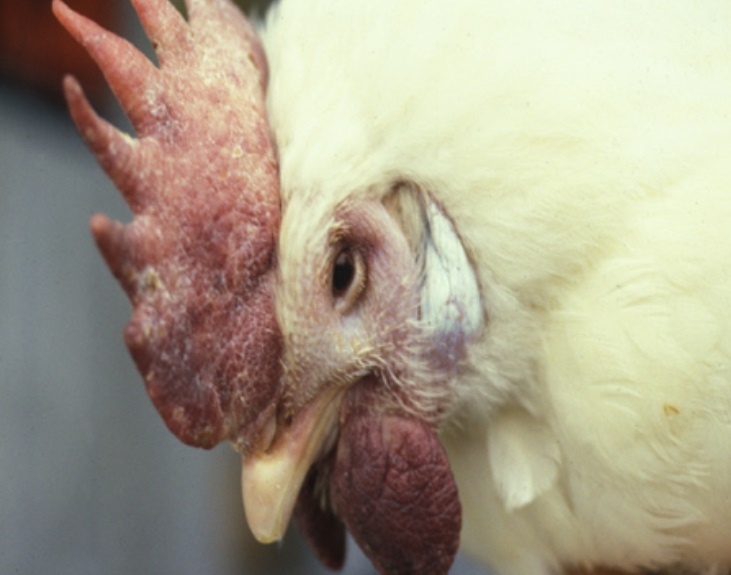
HPAI may cause sudden deaths without a long visible illness. Other possible findings include marked depression, reduced appetite, difficulty breathing, swelling of the head or eyelids, purple discoloration of combs or legs, poor balance, twisted necks and changes in droppings or egg production.
The USDA Defend the Flock signs page provides examples and instructions to report unusual illness. A flock does not need to show every feature for concern to be justified.
Do not wait for a distinctive purple comb or a particular death percentage. An unexplained cluster of sudden losses or severe neurological and respiratory disease warrants immediate assessment. The same applies to a small food-producing flock as to a commercial house.
The first response is contact and separation
Contact the flock veterinarian or relevant animal-health authority promptly. In the United States, USDA directs owners to their State veterinarian, APHIS contact or the toll-free reporting line, 1-866-536-7593. Other countries use their own reporting systems; follow the local official instruction.
While seeking help, reduce unnecessary movement of birds, eggs, manure, equipment and people from the affected area. Do not take a sick bird to a swap, sale or another holding for an informal opinion. Tell a veterinary clinic about the concern before transporting any animal there.
Maintain essential animal care with the least necessary contact and follow official directions for access. The point is to protect birds and people while a proper response is organized, rather than allow ordinary traffic to continue because a diagnosis is not yet confirmed.
Similar signs require laboratory differentiation
Newcastle disease, fowl cholera, infectious laryngotracheitis and other conditions can cause overlapping severe signs. Toxic and environmental events can also produce sudden group losses.
Diagnosis uses authorized veterinary testing. Owners should not attempt a home necropsy or collect tissues without instructions from the veterinary authority. An unofficial negative test or a single normal-looking bird cannot establish that the flock is clear.
The APHIS avian-influenza resource is a starting point for current US response information. Local investigation determines the actual case and movements; a general website article cannot issue clearance.
Ducks and wild birds need a nuanced explanation
Wild aquatic birds are important in influenza ecology. Depending on the virus and bird, infection may be unapparent or severe. Domestic ducks and geese should not be presumed harmless carriers that can never become ill, and a healthy-looking waterfowl group should not be used to dismiss exposure risk.
Protect poultry feed and drinking water from wild-bird contamination. Consider shared water, accessible feed stores and manure carried on equipment or footwear. Separate domestic production areas from unnecessary wild-bird contacts without attempting to capture or handle sick wildlife.
The duck overview, goose overview and chicken overview provide species husbandry context. Animal-health advice should reflect the actual species and local outbreak situation.
Protect the people providing care
Some avian influenza viruses can infect people after exposure to infected animals or contaminated surroundings. CDC prevention guidance advises avoiding direct or close exposure to sick or dead animals and using the recommended protective equipment when contact is necessary.
This includes respiratory and eye protection where advised, not just a pair of gloves. Follow the current public-health and occupational instructions for the task rather than improvising protection for handling carcasses or contaminated litter.
If illness develops after a relevant exposure, contact a healthcare professional and the local public-health service promptly and explain the animal contact. Human diagnosis and preventive medication decisions belong with those services. A seasonal influenza vaccine should not be assumed to provide specific protection against H5 bird flu.
Treatment and recovery are part of an official response
HPAI is not a flock problem to manage with an ordinary antibiotic course. Antibiotics do not treat influenza virus. Official responses may include movement controls, testing, humane depopulation, disposal and supervised cleaning according to the jurisdiction and case.
Do not begin disposal, slaughter or redistribution of suspect birds or products independently. The appropriate route must protect animal welfare, workers and neighboring holdings. Compensation or restocking arrangements, where available, are determined by the relevant program rather than a generic promise.
Vaccination policy also belongs within authorized animal-health programs. It does not replace surveillance or provide permission to move exposed birds. Check current official guidance because strategies and products vary by country and can change.
Prevention should work on an ordinary working day
Control access to poultry areas, maintain a practical clean boundary for equipment and footwear, and review introductions and shared services. Keep the wild-bird interface, feed delivery and mortality handling within the same plan.
The biosecurity collection supports these everyday measures, and the turkey overview provides another susceptible production setting. Use current official surveillance for regional status; this reference does not assert that a particular area is free of infection.
Can a bird have HPAI without a long obvious illness?
Yes. Sudden deaths can be the first noticed sign. Report unusual losses promptly rather than waiting for a complete checklist.
Should I move apparently healthy birds away from a suspect flock?
Not without veterinary or official advice. Exposed birds can carry risk even if they look normal, and moving them may spread infection.
Cite this reference
LivestockDefense. “Highly pathogenic avian influenza: urgent action for poultry owners.” Updated 2026-11-02. https://livestockdefense.com/threats/highly-pathogenic-avian-influenza/
Add the date you accessed the page. This identifies the current reference; keep a permitted saved copy if your work depends on its exact wording. A citation alone does not establish support for a claim.
How to cite a page and its revision ↗Sources & boundaries
Read the evidence in context.
These documents support the statements identified in this reference. Check their scope and dates when deciding whether they answer your question.
- USDA APHIS: Avian influenza
Source update: 2026-10-06. Most recent check: 2026-11-03.
Document scope and recorded checks
Avian influenza categories, poultry signs and official status destinations. Program-page document navigation only: separate current-status and historical-report destinations, with revision date distinct from an incident date. No current detection count, disease mechanism, laboratory/collection/control procedure, individual status, deadline or movement permission adopted.
Entries retain the date and scope of each recorded inspection.
- 2026-11-03 — Official disease overview, surveillance/detection resources and reporting context; no live counts, disease-freedom claim or movement authorization asserted.
Exact primary/official publisher page or its indexed text inspected for these bounded statements on 2026-11-03.
- 2026-10-31 — Program-page document navigation only: separate current-status and historical-report destinations, with revision date distinct from an incident date. No current detection count, disease mechanism, laboratory/collection/control procedure, individual status, deadline or movement permission adopted.
Exact official page inspected: displayed revision date and Current Status/Historical Information headings and links. Original fictional screenshot example is editorial illustration.
- 2026-10-28 — Avian influenza categories, poultry signs and official status destinations.
Exact source page inspected; bounded editorial summary
- 2026-11-03 — Official disease overview, surveillance/detection resources and reporting context; no live counts, disease-freedom claim or movement authorization asserted.
- USDA Animal and Plant Health Inspection Service: Defend the Flock: how to spot sickness
Source update: 2026-09-21. Most recent check: 2026-11-02.
Clinical identity, signs, diagnostic interpretation and prevention statements bounded to the sections mapped in the pig/poultry condition article.
- World Organisation for Animal Health: Avian influenza
Source update: Not provided. Most recent check: 2026-11-02.
Clinical identity, signs, diagnostic interpretation and prevention statements bounded to the sections mapped in the pig/poultry condition article.
- US Centers for Disease Control and Prevention: Preventing bird flu infections
Source update: 2025-04-23. Most recent check: 2026-11-02.
Clinical identity, signs, diagnostic interpretation and prevention statements bounded to the sections mapped in the pig/poultry condition article.