
This reference uses the specific documents linked in the article and listed below. Check their scope, publication dates and the statements they support.
Animal at a glance
| Topic | Overview |
|---|---|
| Animal group | Large flightless ratites with their own management context |
| Production roles | Specialist food, breeding and other product chains |
| Life stages | Breeder, egg, young bird and growing animal |
Keep the emu system distinct from the ostrich system
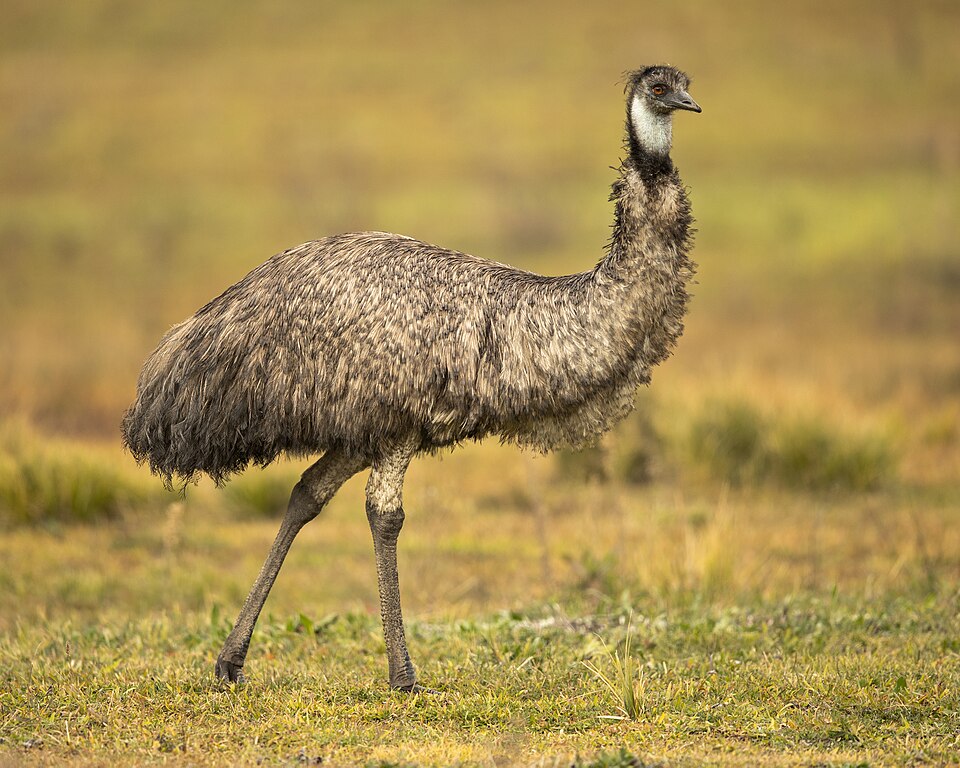
Emus are not small ostriches. They differ in body size, breeding behavior and production background. A useful farm plan identifies the intended market and the resources needed to rear chicks, house growing birds and retain breeders before eggs are bought.
The MSD ratite management reference is a starting point for the species' care and handling. Similarities between ratites do not make every feeding, incubation or restraint method interchangeable.
Chicks need movement as well as warmth
Provide an appropriate warm rearing area with dry, nonslip footing and enough room to move normally. Check the chicks' gait, interest in feed and distribution within the enclosure. A chick that sits while its companions explore may have a nutritional, environmental or health problem; it should not be left behind simply because most of the group is active.
Arrange exercise and transition to larger areas in a way that suits age and weather. Avoid sudden exposure to wet ground or difficult surfaces. Keep the environment free from loose wire, string, nails and other material that inquisitive birds could swallow or become caught in.
Leg development, ration balance and movement need to be considered together. Adding a supplement without assessing the actual diet and flooring can delay the right intervention. See the ratite chick and leg-health guide for the practical questions to work through.
Suitable feed, water and access
Use a ration appropriate for emus and their production stage. The requirements of a growing bird, breeder and adult being maintained are different. Avoid relying on a feed sold for another ratite unless a competent adviser has checked its specification and intended use.
Protect feed from damp and pests. Ensure particles or pellets suit the birds' ability to consume them, and observe actual feeding rather than the amount placed in the trough. Water equipment must work at bird level and remain accessible to subordinate individuals. An oversized container can still be unsuitable if its rim prevents chicks from drinking safely.
When changing feed, make the transition gradually and review any change in intake. Poor growth warrants an assessment of feeding access, ration quality, environment and health; repeated unplanned switches make the problem harder to resolve.
Design pens for powerful birds and practical care
Use strong, visible fencing, sound gates and layouts with room to turn. Avoid sharp projections and narrow passages where a bird can panic or trap a leg. Maintain dry resting areas and drainage around feeding and watering points.
Provide weather protection appropriate to the site without forcing incompatible birds into one crowded shelter. Plan how a sick or injured emu can be separated safely. A spare pen must be usable before the emergency, not blocked by stored machinery or accessible only through a group of breeders.
Breeding and health management
Choose sound breeding stock and plan eggs, incubation and chick care using emu-specific advice. Male emus have an important incubation and parental role; the management arrangement needs to account for the behavior of the actual pair rather than assumptions based on chicken hens.
Breeding-season behavior can make an animal harder to approach. Use trained handlers and suitable barriers instead of attempting improvised capture. Australian ratite biosecurity guidance provides a framework for new arrivals and movements, while local veterinary advice should determine disease and parasite prevention.
Seek prompt help for an animal unable to stand, showing severe lameness, refusing food, breathing with difficulty or developing neurological signs. Sudden mortality should not be treated as a routine feeding problem without investigation.
Does an emu ration need to be changed for breeders?
The feeding plan should reflect breeding condition and stage. Do not assume one maintenance or grower product fits the entire life cycle.
Can emus be restrained like domestic chickens?
No. Their size, strength and leg action require appropriate facilities and experienced handling.
Continue reading
Further husbandry sources
Field guides for this animal
Browse all Emus field guides for husbandry advice, health explanations and practical farm routines.
Cite this reference
LivestockDefense. “Farmed emus: chick rearing, feeding, breeding and safe pens.” Updated 2026-11-02. https://livestockdefense.com/animals/emus/
Add the date you accessed the page. This identifies the current reference; keep a permitted saved copy if your work depends on its exact wording. A citation alone does not establish support for a claim.
How to cite a page and its revision ↗Sources & boundaries
Read the evidence in context.
These documents support the statements identified in this reference. Check their scope and dates when deciding whether they answer your question.
- FAO: Ostrich production systems
Source update: Not provided. Most recent check: 2026-11-02.
Bounded production identity and species context cited in the global livestock hubs. Practical examples are editorial suggestions. Historical sources do not establish current local market permissions or clinical protocols.
- MSD Veterinary Manual: Management of ratites
Source update: Not provided. Most recent check: 2026-11-02.
Bounded species biology, feeding context and production or husbandry statements attributed to this document in the animal overview sections. No numerical feeding, medication, restraint or breeding protocol reproduced.
- Animal Health Australia / Plant Health Australia: Ratites: national farm biosecurity resources
Source update: Not provided. Most recent check: 2026-11-02.
Ratite-specific biosecurity, movements and sector guidance; not a replacement for regional veterinary care.
- Merck Veterinary Manual: Chick management (ratites)
Source update: 2024-09. Most recent check: 2026-11-02.
Bounded husbandry statements mapped in the buffalo-comfort or ratite-chick guide; planning explanations are editorial synthesis. No dosing, invasive procedures or universal construction dimensions reproduced.
- Merck Veterinary Manual: Nutrition in ostriches, emus, and other ratites
Source update: 2026-07. Most recent check: 2026-11-02.
Bounded husbandry statements mapped in the buffalo-comfort or ratite-chick guide; planning explanations are editorial synthesis. No dosing, invasive procedures or universal construction dimensions reproduced.
- Rutgers Cooperative Extension: Ostrich, emu, and rhea production (FS886)
Source update: Not provided. Most recent check: 2026-11-02.
Bounded husbandry statements mapped in the buffalo-comfort or ratite-chick guide; planning explanations are editorial synthesis. No dosing, invasive procedures or universal construction dimensions reproduced.