
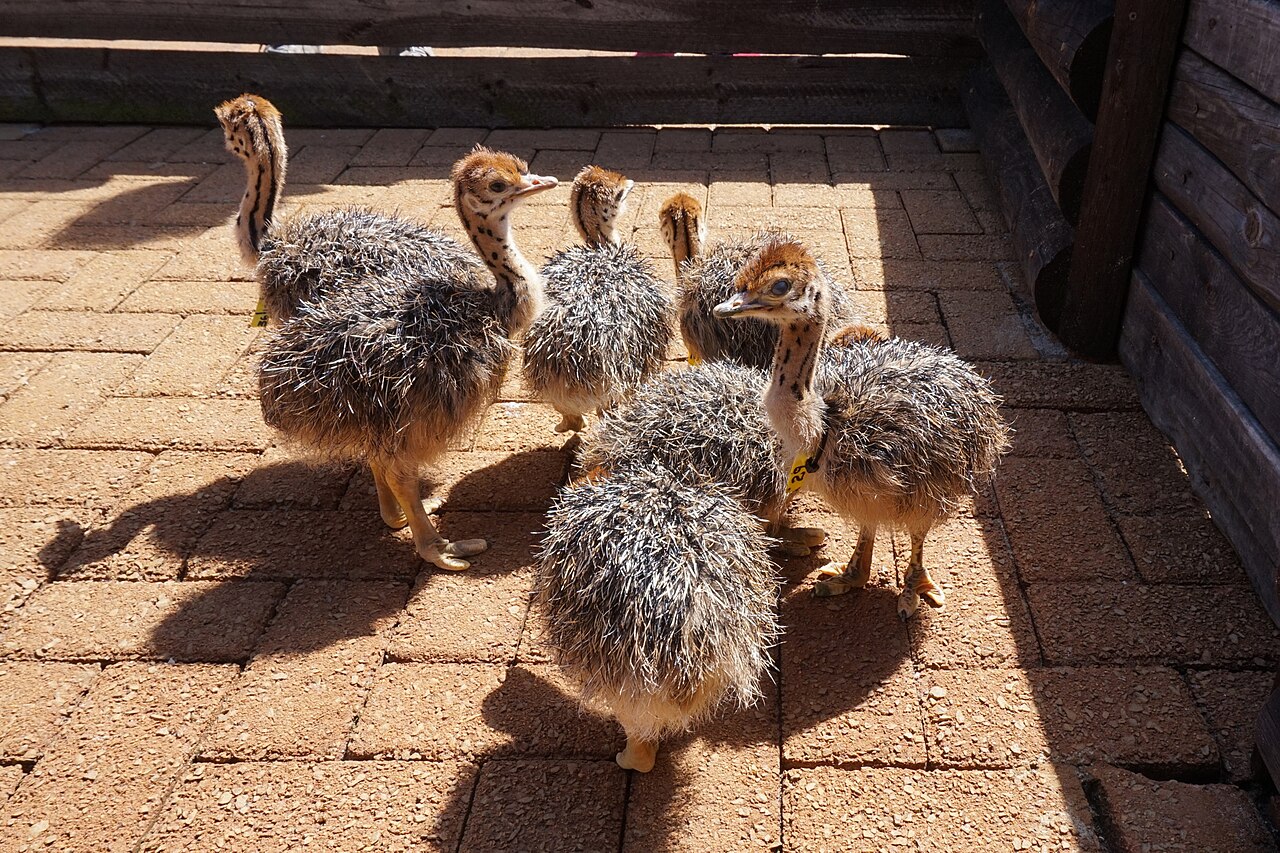
This reference uses the specific documents linked in the article and listed below. Check their scope, publication dates and the statements they support.
Animal at a glance
| Topic | Overview |
|---|---|
| Animal group | Large flightless ratites, distinct from emus and rheas |
| Production roles | Meat, breeding birds and other specialist farm products |
| Life stages | Breeder, collected egg, incubating egg, chick and growing bird |
An ostrich enterprise starts with facilities, not eggs
Adult ostriches require strong, visible boundaries, suitable gates and enough space to move without being driven into obstacles. Before buying birds, decide how they will be fed, moved, examined and transported. An enclosure that holds calm birds may fail when a bird is startled or an adult becomes territorial.
FAO's ostrich production reference provides a foundation for understanding the enterprise. Treat its production examples as context, not as a promise that a new farm will reach the same output or market conditions.
The first rearing area must support normal movement
Chicks need suitable warmth, dry secure footing and room for appropriate exercise. A slippery floor is not corrected merely by adding more heat. Inspect whether young birds stand and walk normally, reach feed and water and rest without piling into a corner.
Prepare the next rearing area before the chicks outgrow the first. Moving a growing group abruptly onto rough, wet or hazardous ground can undo careful brooding. Keep surfaces free of loose strings, sharp debris and other material birds may investigate or swallow. The ratite chick guide discusses feeding, movement and leg health together.
Feed for a ratite and its stage
Use a ration formulated for the species and growth stage, with suitable forage or other components advised for that system. Do not compensate for poor growth by repeatedly adding protein, vitamins or minerals without reviewing the whole ration. Excesses and imbalances can be as important as deficiencies.
Provide feed in a form the chicks can recognize and consume, and ensure water is accessible. Watch the smallest birds directly. A full feeder is not evidence of intake, and a flock average can conceal individuals falling behind. As birds mature, adjust the feeding system for breeders, growing birds and animals being maintained rather than offering one diet indefinitely.
Paddocks need drainage and a safe perimeter
Inspect the places where birds turn, gather and enter shelter. Wet gateways, deep ruts and abrupt changes of footing make movement harder. Shade and weather protection should be usable by the entire group, including a subordinate bird unwilling to stand close to the dominant individual.
Remove hazards before turnout rather than assuming a bird will avoid them. Drainage, fencing and maintenance are part of welfare, not simply construction details. A larger paddock does not solve unsafe gates or insufficient feeding access.
Breeding and handling require experience
Breeding behavior can change the risk posed by familiar birds. Separate incompatible animals with a planned system and never rely on one person physically blocking a large adult. Arrange safe routes for people and use experienced handlers for capture or restraint.
The MSD management chapter describes specialized clinical handling. These are professional techniques, not a reason for an untrained keeper to attempt restraint after reading a few steps. Prepare access to veterinary care before an injury or retained egg becomes an emergency.
Health prevention and early decisions
Keep new stock separate for assessment and manage the movements of crates, equipment and staff between age groups. The ratite biosecurity resources are useful because generic poultry arrangements can miss the way ratite farms operate.
In chicks, persistent sitting, abnormal leg position, reluctance to walk or poor feeding require prompt investigation. In any age group, an animal unable to stand, breathing with effort, injured or suspected of swallowing a foreign object needs veterinary attention. A medication program cannot correct an unsafe surface or an unbalanced ration.
Can ostrich chicks be fed like broiler chickens?
No. Choose a ratite-specific feeding and rearing plan rather than transferring a chicken ration or growth target unchanged.
Is a quiet adult safe to handle alone?
Not necessarily. Size, strength, breeding behavior and the setting all affect risk. Use appropriate facilities and trained people.
Continue reading
Further husbandry sources
Field guides for this animal
Browse all Ostriches field guides for husbandry advice, health explanations and practical farm routines.
Cite this reference
LivestockDefense. “Farmed ostriches: chick care, feeding, paddocks and welfare.” Updated 2026-11-02. https://livestockdefense.com/animals/ostriches/
Add the date you accessed the page. This identifies the current reference; keep a permitted saved copy if your work depends on its exact wording. A citation alone does not establish support for a claim.
How to cite a page and its revision ↗Sources & boundaries
Read the evidence in context.
These documents support the statements identified in this reference. Check their scope and dates when deciding whether they answer your question.
- FAO: Ostrich production systems
Source update: Not provided. Most recent check: 2026-11-02.
Bounded production identity and species context cited in the global livestock hubs. Practical examples are editorial suggestions. Historical sources do not establish current local market permissions or clinical protocols.
- MSD Veterinary Manual: Management of ratites
Source update: Not provided. Most recent check: 2026-11-02.
Bounded species biology, feeding context and production or husbandry statements attributed to this document in the animal overview sections. No numerical feeding, medication, restraint or breeding protocol reproduced.
- Animal Health Australia / Plant Health Australia: Ratites: national farm biosecurity resources
Source update: Not provided. Most recent check: 2026-11-02.
Ratite-specific biosecurity, movements and sector guidance; not a replacement for regional veterinary care.
- Merck Veterinary Manual: Chick management (ratites)
Source update: 2024-09. Most recent check: 2026-11-02.
Bounded husbandry statements mapped in the buffalo-comfort or ratite-chick guide; planning explanations are editorial synthesis. No dosing, invasive procedures or universal construction dimensions reproduced.
- Merck Veterinary Manual: Nutrition in ostriches, emus, and other ratites
Source update: 2026-07. Most recent check: 2026-11-02.
Bounded husbandry statements mapped in the buffalo-comfort or ratite-chick guide; planning explanations are editorial synthesis. No dosing, invasive procedures or universal construction dimensions reproduced.
- Rutgers Cooperative Extension: Ostrich, emu, and rhea production (FS886)
Source update: Not provided. Most recent check: 2026-11-02.
Bounded husbandry statements mapped in the buffalo-comfort or ratite-chick guide; planning explanations are editorial synthesis. No dosing, invasive procedures or universal construction dimensions reproduced.