
This reference uses the specific documents linked in the article and listed below. Check their scope, publication dates and the statements they support.
Animal at a glance
| Topic | Overview |
|---|---|
| Animal group | Filter-feeding bivalve molluscs, including distinct farmed species |
| Production roles | Food shellfish and production seed |
| Life stages | Seed, growing unit, partial or complete harvest and dispatch |
Mussels attach rather than simply sit in a container
Blue mussels, Mytilus edulis, are one important food species. Other farmed mussels differ in their environmental needs, so a general mussel label should be followed by the species and local growing context. NOAA's blue mussel overview describes their filter feeding, attachment threads and farming methods.
The threads commonly called the beard allow mussels to attach to a surface. In production, that ability can be used in rope, raft or other suspended systems. It also means that attachment, crowding and the suitability of the support become animal-care questions as the crop grows.
Spat collection and nursery care
Some production systems obtain young mussels from naturally settling larvae; other supply arrangements may involve hatchery seed. The word spat describes settled juveniles, not a single universal size of stock. Small seed needs protection and gear that retains it while allowing suitable exchange with the surrounding water.
FAO's bivalve hatchery guidance provides the wider life-cycle context. A farm should decide which seed source and size fit its facilities before ordering. A successful collection of tiny seed does not remove the work of nursing it toward a size suitable for the final growing system.
Seed quality is more than the number delivered. Condition, attachment, the handling history and the environment into which it will be placed all matter. Receiving arrangements should avoid preventable drying, heat exposure or prolonged waiting while equipment is prepared.
Ropes, rafts and bottom-growing systems
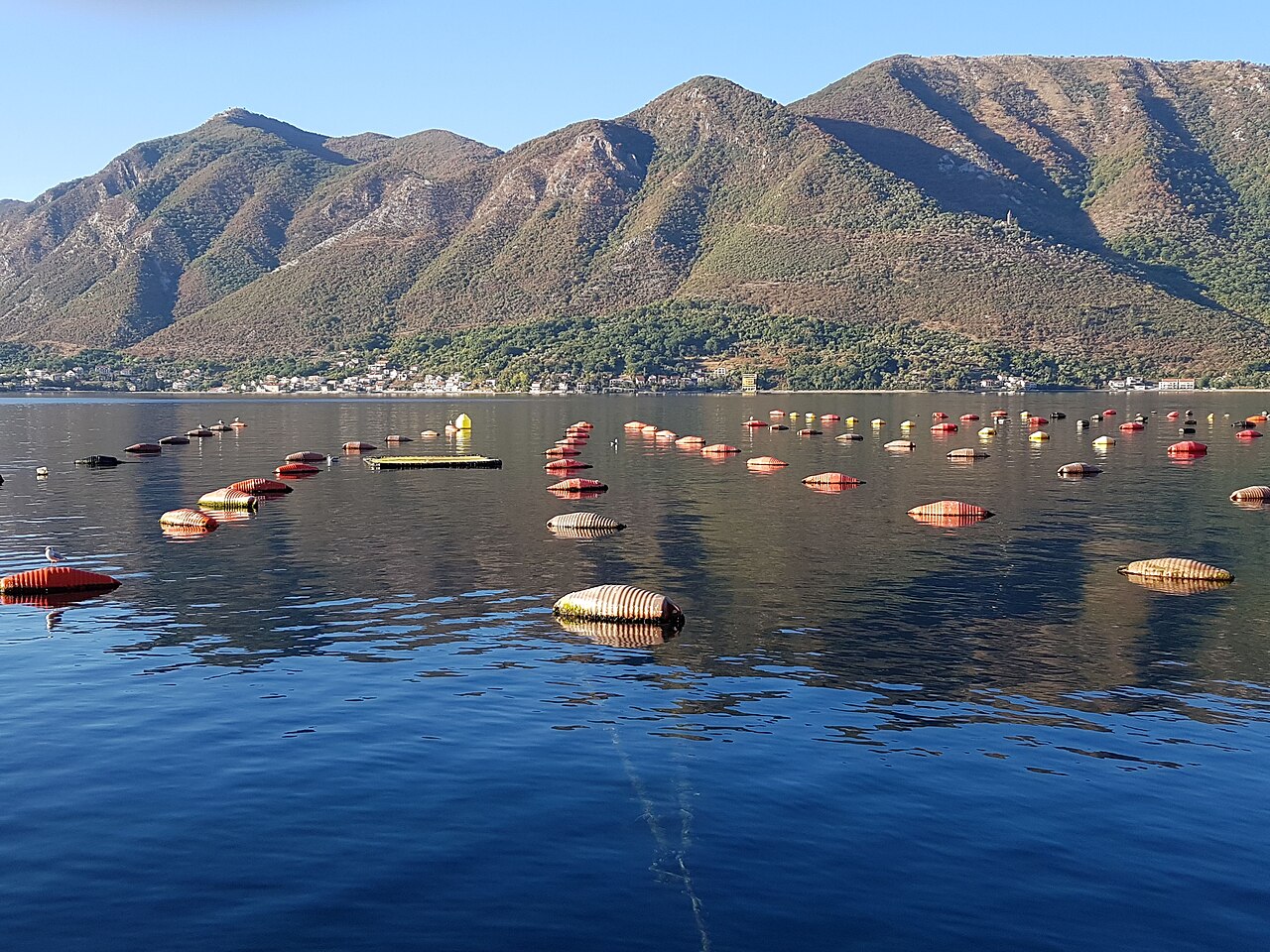
Suspending mussels can place them in moving, food-bearing water and keep them away from some bottom conditions. Bottom culture has its own advantages and constraints. The choice should fit the species, the site's exposure and depth, maintenance access and local approvals.
Ropes and support structures must carry the growing crop safely. Their loading changes as the animals grow and as other organisms settle. A support that looks ample at stocking may need adjustment well before harvest. Equipment failure can become both an animal-loss event and a hazard for workers or navigation.
Inspect the crop as a living population rather than as a uniform weight on a line. Thin, crowded or weakly attached sections can need a different response from well-performing sections. The objective is good access to food-bearing water and adequate space, not simply the maximum possible loading.
Natural food has a carrying capacity
Growing mussels do not normally receive manufactured feed. They filter particles, including phytoplankton, from the surrounding water. That does not make food unlimited. Several densely stocked units can compete for what currents bring through the growing area.
Consider water exchange and local productivity before increasing the crop. Slow growth may reflect food supply, environmental conditions, fouling or the seed itself. More gear alone cannot correct a site that does not bring enough suitable food to its animals.
Fouling organisms can add weight and interfere with husbandry. Management methods should be appropriate to the species, gear and stage and should limit unnecessary stress to the mussels. Ask local extension or technical support which methods have been evaluated for that production system rather than applying a treatment from a different shellfish industry.
Animal losses and human-health hazards
Storm damage, predators, poor environmental conditions and disease can all affect a crop. An unexplained decline in attachment or a rise in dead shells warrants inspection and specialist advice. A photograph of a mussel bed cannot establish the cause or show how many live animals remain within it.
Human food safety requires a separate assessment. CFIA guidance on live shellfish hazards explains that filter-feeding animals can accumulate contamination and natural toxins. A thriving crop can therefore be unsuitable for harvest during an official closure.
Follow the commercial growing-area and harvest programme that applies at the site. Do not substitute a taste test, normal appearance or a private water sample for the authority's status. A site's condition can also change after heavy rainfall or another environmental event, so yesterday's experience is not a standing authorization to harvest.
Harvest should protect the living product
Organize harvest around suitable conditions, clean equipment and timely temperature control. Limit avoidable crushing and prolonged exposure. The animals may have grown for a long period, but poor handling near the end can still compromise their condition and the product.
Do mussels need the same husbandry as oysters?
They share some filter-feeding and food-safety principles, but attachment, gear, species and local site conditions differ. Use a mussel-specific production programme rather than treating all bivalves as interchangeable.
Does a heavy rope always mean good mussel growth?
No. The weight can include shells, fouling and attached material as well as live mussels. Assess the crop's actual condition and usable product rather than treating total suspended weight as the only measure of success.
Continue with practical guidance
Field guides for this animal
Browse all Farmed mussels field guides for husbandry advice, health explanations and practical farm routines.
Cite this reference
LivestockDefense. “Mussel farming: seed, ropes, food supply and healthy growing water.” Updated 2026-11-02. https://livestockdefense.com/animals/mussels/
Add the date you accessed the page. This identifies the current reference; keep a permitted saved copy if your work depends on its exact wording. A citation alone does not establish support for a claim.
How to cite a page and its revision ↗Sources & boundaries
Read the evidence in context.
These documents support the statements identified in this reference. Check their scope and dates when deciding whether they answer your question.
- FAO: The hatchery culture of bivalves: broodstock
Source update: Not provided. Most recent check: 2026-11-02.
Bounded species biology, feeding context and production or husbandry statements attributed to this document in the animal overview sections. No numerical feeding, medication, restraint or breeding protocol reproduced.
- NOAA Fisheries: Blue mussel biology and aquaculture
Source update: Not provided. Most recent check: 2026-11-02.
Species biology, life stages and the bounded practical husbandry facts cited in the aquatic animal overview or supporting guide; no drug dose, invasive procedure, universal stocking rate or complete clinical protocol.
- Canadian Food Inspection Agency: Hazards that present a risk of contamination of live shellfish
Source update: Not provided. Most recent check: 2026-11-02.
Species biology, life stages and the bounded practical husbandry facts cited in the aquatic animal overview or supporting guide; no drug dose, invasive procedure, universal stocking rate or complete clinical protocol.