
This reference uses the specific documents linked in the article and listed below. Check their scope, publication dates and the statements they support.
Animal at a glance
| Topic | Overview |
|---|---|
| Animal group | Filter-feeding bivalve molluscs; identify the oyster species |
| Production roles | Food shellfish and seed stock |
| Life stages | Broodstock or seed source, nursery, growing area and harvest lot |
An oyster farm grows animals within a water body
Oysters draw water across their gills and obtain suspended food. They generally do not receive a grow-out pellet ration like farmed salmon. NOAA's Pacific oyster aquaculture overview explains how this feeding biology shapes farming methods. The surrounding environment supplies both opportunities and hazards, so suitable water is the starting point for the enterprise.
Pacific oysters, eastern oysters and other cultured species differ. Match the scientific name, seed and local conditions before applying a production example. A method that works for one species and tidal setting may need substantial adaptation elsewhere.
From larvae to settled seed
The hatchery phase includes tiny swimming larvae that later settle and become attached juveniles. Farmers use the word spat for young settled oysters. Seed production and nursery stages require much closer control than mature grow-out stock, including appropriate food and protection from unsuitable water.
FAO's bivalve hatchery manual explains the biological stages behind hatchery production. A grower buying seed should understand what is being supplied: larvae ready to settle, very small spat or larger nursery juveniles. Those are different products requiring different facilities.
Ask whether the seed is suited to the site's temperature, salinity and production method. Also consider the physical size the nursery gear can retain. Seed that falls through the mesh has not become a feeding failure; the equipment was mismatched to the animal at placement.
Bottom culture, bags, baskets and suspended systems
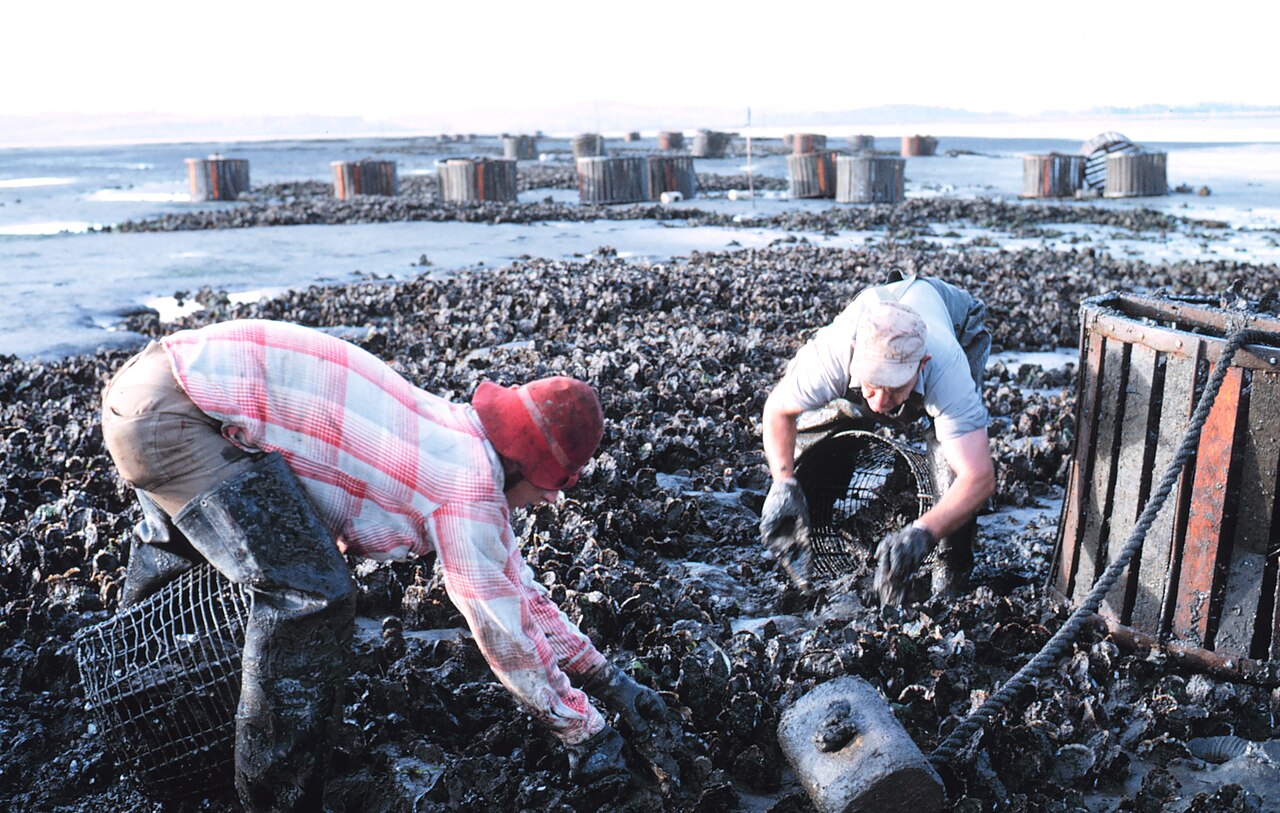
Oysters can be grown using different combinations of bottom and off-bottom methods. The choice affects access to food-bearing water, exposure to predators, fouling, sediment and the labor needed to maintain the stock. There is no single piece of gear that makes every site suitable.
The practical objective is to give oysters room and water exchange as they grow. Crowded or fouled gear can restrict that exchange and make maintenance more difficult. Nursery containers need review as animals increase in size; a setting that held seed comfortably may become too restrictive later.
Positioning also matters. Shore access, tidal exposure, storm conditions and the ability to service equipment safely should be considered before stock is placed. A site should not rely on workers undertaking dangerous visits to compensate for unsuitable design.
Feeding and the limits of natural productivity
Because oysters filter naturally available food, growers manage access to that food rather than dispensing a daily ration to each animal. Water movement, food availability and the number of oysters using the site influence the result. A large surface area is not by itself evidence of sufficient carrying capacity.
Slow growth can have several explanations, including unsuitable environmental conditions, excessive local demand, fouling or the condition of the seed. Adding fertilizer or other material to open growing water is not a routine remedy. Seek site-specific aquaculture advice and operate within the applicable environmental approvals.
The hatchery is different from the grow-out site. Cultured microalgae may be a carefully managed feed in a hatchery even though mature oysters on a farm filter food from ambient water. Statements that oysters need no purchased grow-out feed should not be stretched into claims that larval nutrition manages itself.
Oyster health and safe food are separate tests
The Canadian Food Inspection Agency shellfish-hazard guidance describes pathogens, algal toxins and chemical contaminants that can enter shellfish from their environment. Oysters may accumulate a human-health hazard without looking visibly diseased. Conversely, a mortality problem in the animals does not identify a specific food-safety hazard.
Use the relevant growing-area classification, harvest status and commercial food-safety programme. If an area closes or pollution is suspected, pause harvesting and follow the responsible authority's directions. Neither rinsing nor a normal smell establishes that the product is safe.
For animal health, unexplained gaping, poor condition or rising mortality deserves specialist investigation. Avoid assuming that every dead oyster has the same cause. Handling damage, environmental events and infectious disease can demand different responses.
Harvest and post-harvest care
Plan harvest so live shellfish are protected from contamination and unnecessary heat exposure. Suitable handling, prompt temperature control and an approved distribution chain preserve the benefit of careful growing. The site-to-market period is part of production, not an afterthought.
Growers also need a competent response when product may be unsuitable for sale. Keeping suspect animals in an improvised container of water is not a substitute for an approved purification or relaying process. Such processes have limits and should never be assumed to remove every toxin or contaminant.
Do oyster farms feed pellets?
Usually not during grow-out: oysters obtain suspended food from the water. Hatcheries and some nursery systems have different feeding responsibilities, including the provision of appropriate microalgae.
Can an oyster's appearance show that it is safe to eat raw?
No. Food safety depends on the growing area, harvest controls and subsequent handling. Shell appearance cannot replace those controls, and cooking is not a universal remedy for environmental contaminants.
Continue with practical guidance
Field guides for this animal
Browse all Farmed oysters field guides for husbandry advice, health explanations and practical farm routines.
Cite this reference
LivestockDefense. “Oyster farming: seed, growing systems, water quality and harvest safety.” Updated 2026-11-02. https://livestockdefense.com/animals/oysters/
Add the date you accessed the page. This identifies the current reference; keep a permitted saved copy if your work depends on its exact wording. A citation alone does not establish support for a claim.
How to cite a page and its revision ↗Sources & boundaries
Read the evidence in context.
These documents support the statements identified in this reference. Check their scope and dates when deciding whether they answer your question.
- FAO: The hatchery culture of bivalves: broodstock
Source update: Not provided. Most recent check: 2026-11-02.
Bounded species biology, feeding context and production or husbandry statements attributed to this document in the animal overview sections. No numerical feeding, medication, restraint or breeding protocol reproduced.
- NOAA Fisheries: Pacific oyster aquaculture
Source update: Not provided. Most recent check: 2026-11-02.
Bounded species biology, feeding context and production or husbandry statements attributed to this document in the animal overview sections. No numerical feeding, medication, restraint or breeding protocol reproduced.
- Canadian Food Inspection Agency: Hazards that present a risk of contamination of live shellfish
Source update: Not provided. Most recent check: 2026-11-02.
Species biology, life stages and the bounded practical husbandry facts cited in the aquatic animal overview or supporting guide; no drug dose, invasive procedure, universal stocking rate or complete clinical protocol.