
This reference uses the specific documents linked in the article and listed below. Check their scope, publication dates and the statements they support.
Animal at a glance
| Topic | Overview |
|---|---|
| Animal group | Marine gastropod molluscs, distinct from oysters |
| Production roles | Food animals and hatchery or juvenile stock |
| Life stages | Early stages, juvenile, graded growing groups and harvest |
A marine gastropod with a different feeding strategy
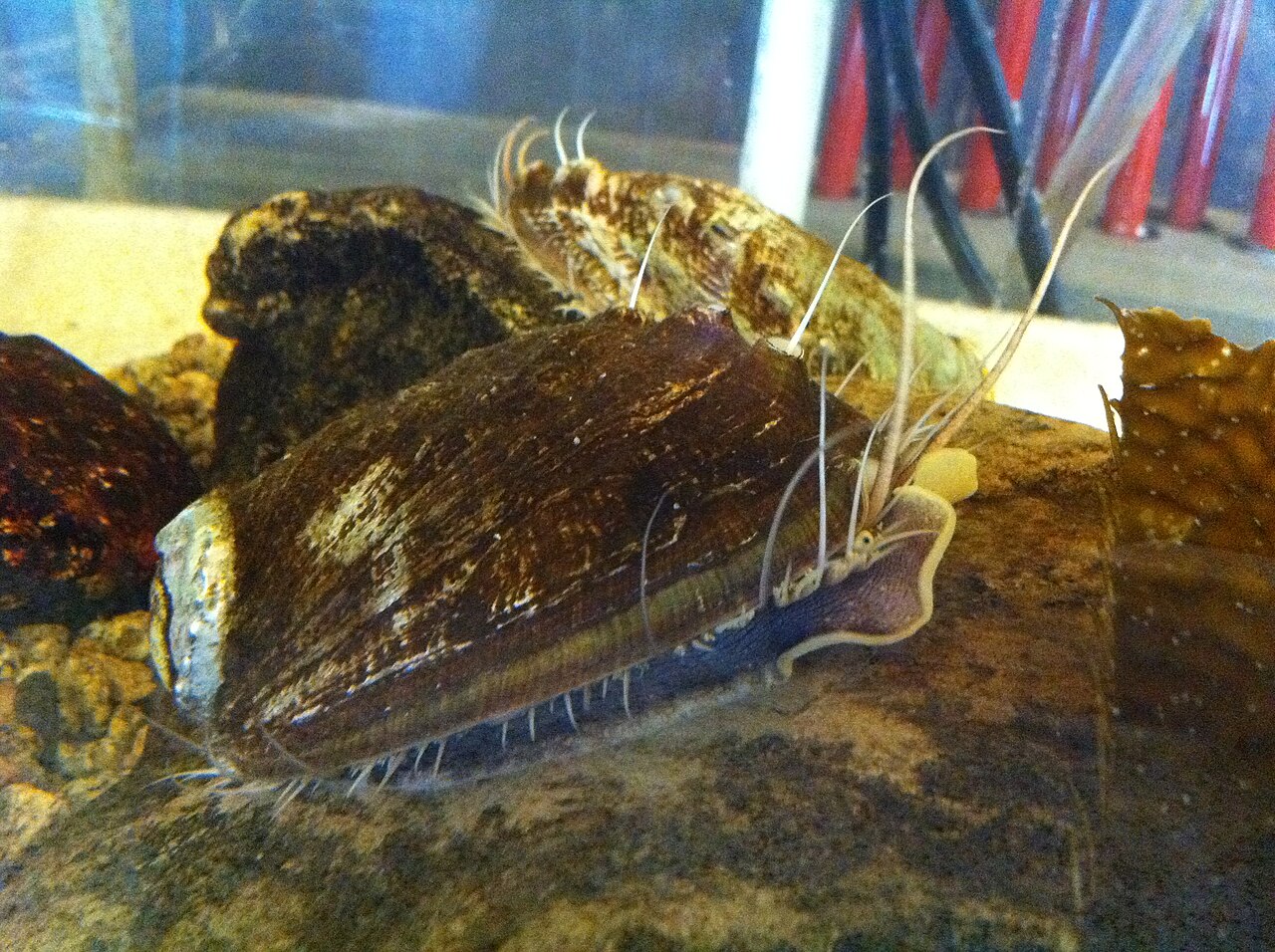
Abalone belong to Haliotis and are gastropod molluscs. Their broad muscular foot holds them to a surface. This body plan is a practical reason not to copy a bivalve management programme: the animal has to attach, graze and use the provided habitat in a different way.
SEAFDEC's abalone culture guidance describes hatchery, nursery and grow-out work with the tropical donkey's-ear abalone, Haliotis asinina. FAO's selected-species culture chapter includes other abalone. Species and climate should therefore be named when using a production example. Tropical performance cannot be promised for a temperate species or another site.
Settlement changes the animal's needs
The hatchery produces a larval stage that later settles onto a surface. The transition from a swimming larva to a tiny attached grazer is a distinct husbandry step. Suitable settlement surfaces and appropriate microscopic food are important; a piece of seaweed intended for a much larger animal does not meet every early-stage need.
Nursery systems provide surfaces and conditions for very small juveniles before they enter grow-out. Their design should allow the farmer to assess feeding, cleanliness and survival without repeatedly disturbing the animals. A nursery plate that appears empty from above may still require careful inspection rather than immediate replacement or disposal.
Grow-out producers can purchase larger juveniles instead of attempting the hatchery phase. This is often a question of facilities and expertise. Successful larval production requires a different level of control from maintaining established juveniles on suitable food.
Food must be available where abalone graze
Depending on the species and stage, production may use seaweed, appropriate formulated feed or a combination within an evaluated programme. SEAFDEC describes changes in feeding from early juveniles toward larger abalone. The important question is whether the supplied food is usable by the actual animals, not simply whether something edible is present in the enclosure.
Food should reach the grazing surfaces and remain accessible. If a growing group has little access to suitable material, adding feed elsewhere may leave the weakest animals behind. Examine distribution and the animals' condition before assuming the only problem is total quantity.
Remove deteriorating material through the system's appropriate maintenance routine. Food quality, water exchange and cleaning cannot be considered separately. A ration that becomes a decomposing accumulation does not continue serving as useful nutrition.
Where the operation depends on fresh seaweed, reliable lawful supply is part of the production plan. Seasonal shortage should be addressed through a suitable evaluated alternative or another planned adjustment, rather than sudden substitutions from an unidentified source.
Surfaces, shelter and flowing water
Abalone production can use different tank and cage arrangements. The usable attachment and grazing area is important; water volume alone does not describe capacity for an animal living on surfaces. Shelters or plates must also allow appropriate water movement and practical inspection.
Fouling can change the available surface and exchange through the unit. Maintenance needs to protect the animals rather than achieve a visually spotless enclosure at the cost of frequent injury. Plan how a surface will be cleaned or replaced before loading it with stock.
The source water, temperature regime and exposure of the site should match the species. A successful cage installation in a sheltered tropical cove does not establish the suitability of an exposed temperate coast. Evaluate the environment through the periods most likely to challenge the stock.
Protect the foot and limit disturbance
Forceful removal from a surface can injure abalone. Staff should use species-appropriate techniques taught by competent personnel and minimize unnecessary detachment. A handling plan that protects the shell but damages the soft tissues has not protected the animal.
Transfers should have prepared receiving surfaces, suitable water and a clear purpose. Avoid leaving animals waiting while equipment is assembled. Inspection should focus on attachment, feeding, visible injury and changes in the number of dead animals rather than repeated handling merely to prove that animals are alive.
Poor attachment, declining appetite or unexpected mortality needs prompt technical assessment. Temperature stress, injury, food problems and infection may all need consideration. Do not label every pale or detached animal with a named disease from an internet photograph.
Common questions
Can abalone be fed like oysters?
No. Abalone graze surfaces and suitable feeds; oysters filter suspended particles. Their early-life stages also require different hatchery arrangements.
Does a larger tank always support more abalone?
Not necessarily. Usable surface, food access, water exchange and maintenance capacity can be limiting. The design should be assessed as a habitat for attached grazers, not solely as a volume of seawater.
Continue with practical guidance
Cite this reference
LivestockDefense. “Abalone farming: grazing, settlement, nursery surfaces and gentle handling.” Updated 2026-11-02. https://livestockdefense.com/animals/abalone/
Add the date you accessed the page. This identifies the current reference; keep a permitted saved copy if your work depends on its exact wording. A citation alone does not establish support for a claim.
How to cite a page and its revision ↗Sources & boundaries
Read the evidence in context.
These documents support the statements identified in this reference. Check their scope and dates when deciding whether they answer your question.
- FAO: Biology and culture of selected species
Source update: Not provided. Most recent check: 2026-11-02.
Bounded species biology, feeding context and production or husbandry statements attributed to this document in the animal overview sections. No numerical feeding, medication, restraint or breeding protocol reproduced.
- SEAFDEC Aquaculture Department: Farming abalone
Source update: Not provided. Most recent check: 2026-11-02.
Species biology, life stages and the bounded practical husbandry facts cited in the aquatic animal overview or supporting guide; no drug dose, invasive procedure, universal stocking rate or complete clinical protocol.