
This reference uses the specific documents linked in the article and listed below. Check their scope, publication dates and the statements they support.
Animal at a glance
| Topic | Overview |
|---|---|
| Animal group | Distinct fish species and hybrids share the catfish market name |
| Production roles | Food fish, breeding and hatchery stock |
| Life stages | Broodstock, young fish, nursery and grow-out groups |
Start with the species rather than the whiskers
Catfish are a diverse group, not a single production model. A channel-catfish farm and an African-catfish unit may use different stock, equipment and assumptions about respiration. FAO's channel catfish profile and African catfish biology chapter explain why the distinction is practical.
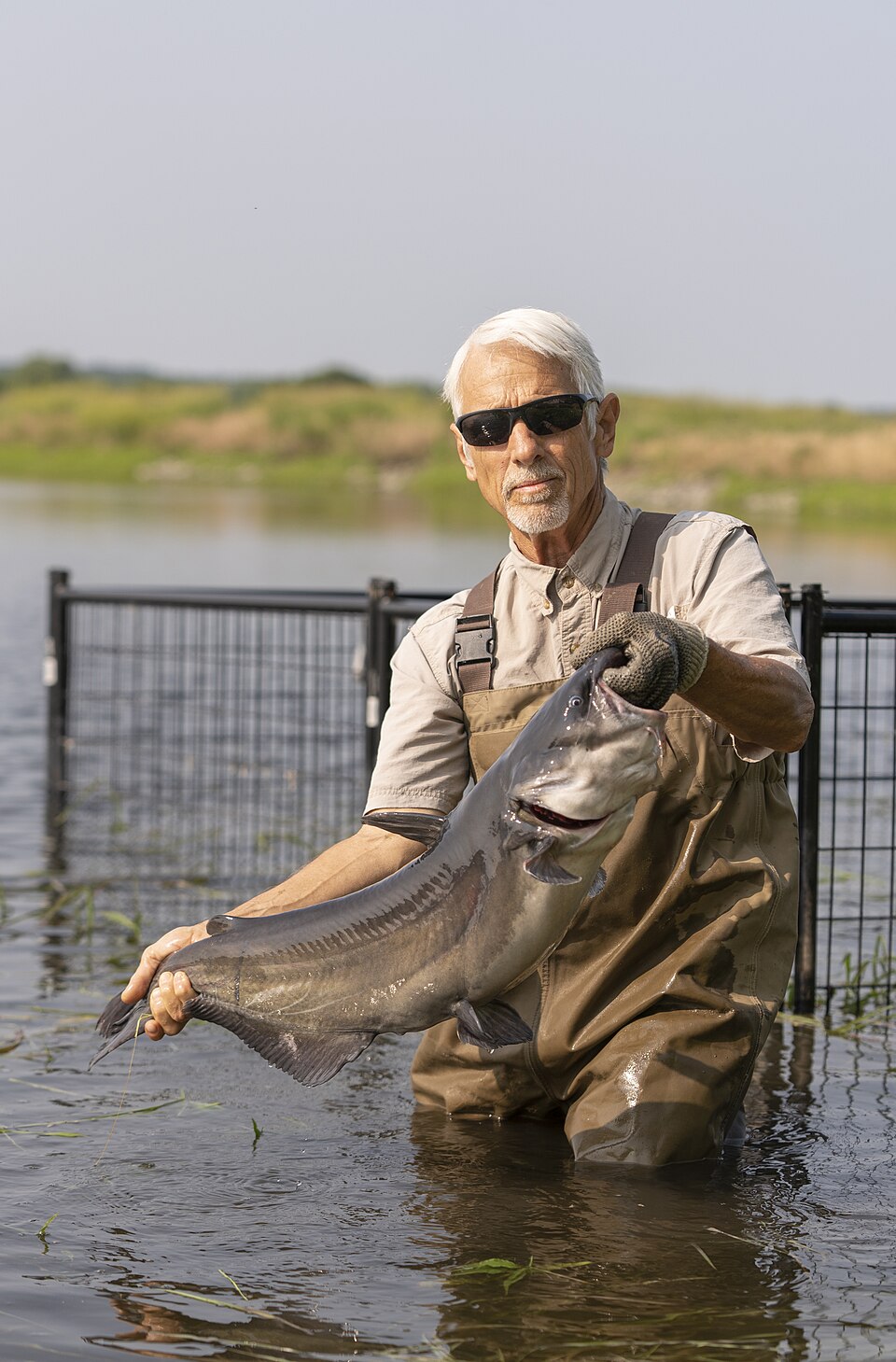
Channel catfish, Ictalurus punctatus, and African catfish, Clarias gariepinus, should be named explicitly. Where a supplier sells a hybrid, ask which parents are involved and what production guidance accompanies that stock. The blue catfish in a photograph is useful for appearance but does not represent every cultured catfish.
Some Clarias catfish can take oxygen from air using accessory respiratory structures. This is a biological adaptation, not an assurance that a crowded unit can be operated without attention to water quality. It also means that a feeding or emergency plan borrowed from channel catfish may miss important differences.
Feed for the size and production purpose
Catfish need a suitable combination of energy, amino acids, vitamins and minerals, not simply a high number printed beside crude protein. Mississippi State University's catfish nutrition resources distinguish feeds for different sizes and include the role of plant ingredients in commercial catfish diets.
Use a ration intended for the actual stock and stage. Fry, small fingerlings and large grow-out fish differ in the physical feed they can eat. Particles that are too large waste feed; material that disintegrates before fish can consume it creates a different kind of loss.
Feeding behavior is a useful daily window into the unit. Spread feed in a way that gives fish access rather than producing a few crowded feeding points. A sharp fall in feeding activity should prompt an environmental check and inspection of the fish. More feed is not a remedy for low oxygen, poor water exchange or a developing disease problem.
A productive pond also consumes oxygen
Catfish ponds support fish, algae and a large community of microorganisms. Mississippi State's water-quality guidance describes how a heavily productive pond can develop substantial oxygen demand. Feed has consequences beyond the fish that eat it: waste and uneaten material become part of that pond community.
Aeration planning should account for the largest biomass expected during the growing period. The equipment that was adequate after stocking may no longer provide the same margin near harvest. Position, maintenance and the ability to respond at night all affect whether installed equipment offers real protection.
Check what happens if a power supply, aerator or pump fails. Spare equipment should be accessible and suitable for the task. A telephone alarm can alert someone, but it cannot supply oxygen to fish while the operator searches for a missing connection or fuel supply.
Nursery management and size differences
Small catfish require protection, appropriate feed and a receiving system that allows close observation. In species or groups where larger fish can prey on smaller fish, a wide size range creates additional risks. Grading can help in suitable production systems, but it is a handling event that must be planned around animal condition and water quality.
Do not buy seed solely because the quoted number is high. Robust fish of an appropriate size, supplied by a competent hatchery and placed into a prepared system, may provide a better starting point than smaller or uneven stock that arrives stressed.
When performance differs within a unit, consider whether all fish can reach feed and whether hiding, crowding or repeated disturbance is affecting part of the population. The average growth figure can hide a persistent group of poorly performing animals.
Skin, spines and safe handling
Catfish lack the protective scales seen on many familiar food fish. Minimize abrasion and support fish appropriately during transfers. Rough nets, abrasive floors and unnecessary crowding can damage the skin and complicate later health problems.
Handling plans also need to protect workers from fin spines and from slipping around wet equipment. Use training and equipment intended for the species and size. A large catfish should not be improvised into a demonstration of strength or handled casually because it is described as hardy.
Health questions that need professional help
Persistent appetite loss, unusual surface behavior, damaged skin, swollen areas or increasing deaths warrant prompt advice from an aquatic veterinarian or extension specialist. Water problems, injury, parasites and bacterial disease can overlap. Keep the investigation open until the evidence separates them.
Can African catfish be grown without oxygen management?
No. Air breathing changes part of the respiratory picture; it does not remove the need to manage water, waste, feeding and animal welfare. A system should be designed for the actual stock, not for the most extreme condition an individual fish might survive.
Should catfish receive raw fish scraps?
A complete, appropriate feed provides a more controlled nutritional starting point. Raw materials can introduce storage, hygiene and nutritional problems and should not be substituted casually for a formulated ration.
Continue with practical guidance
Field guides for this animal
Browse all Farmed catfish field guides for husbandry advice, health explanations and practical farm routines.
Cite this reference
LivestockDefense. “Farmed catfish: species, nutrition, pond oxygen and grow-out health.” Updated 2026-11-02. https://livestockdefense.com/animals/catfish/
Add the date you accessed the page. This identifies the current reference; keep a permitted saved copy if your work depends on its exact wording. A citation alone does not establish support for a claim.
How to cite a page and its revision ↗Sources & boundaries
Read the evidence in context.
These documents support the statements identified in this reference. Check their scope and dates when deciding whether they answer your question.
- FAO: Biology and culture of African catfish
Source update: Not provided. Most recent check: 2026-11-02.
Species biology, life stages and the bounded practical husbandry facts cited in the aquatic animal overview or supporting guide; no drug dose, invasive procedure, universal stocking rate or complete clinical protocol.
- FAO: Channel catfish cultured aquatic species fact sheet
Source update: Not provided. Most recent check: 2026-11-02.
Species biology, life stages and the bounded practical husbandry facts cited in the aquatic animal overview or supporting guide; no drug dose, invasive procedure, universal stocking rate or complete clinical protocol.
- Mississippi State University Extension: Catfish nutrition, feeds and feeding
Source update: Not provided. Most recent check: 2026-11-02.
Species biology, life stages and the bounded practical husbandry facts cited in the aquatic animal overview or supporting guide; no drug dose, invasive procedure, universal stocking rate or complete clinical protocol.
- Mississippi State University Extension: Catfish water quality
Source update: Not provided. Most recent check: 2026-11-02.
Species biology, life stages and the bounded practical husbandry facts cited in the aquatic animal overview or supporting guide; no drug dose, invasive procedure, universal stocking rate or complete clinical protocol.